It’s that time of year again, where I review all of the books that I read during the second half of the year and tell you whether or not you should read this book or that book.
I gave myself the lofty goal to read 80 books this year. Unfortunately, instead of reading 80 books, I read 58. If reading my master’s thesis counted towards my reading goal then I would have read 300 books this year.
I’m reminding myself that I still read more books this year than your average American has read since graduating high school and that I still read more books than there are weeks in the year.
The books I read this year ranged from the light, feely-goody to the denser, more intense novels.
Here are all of the books that I read during the second half of 2025.
Have you read any of these books? Let me know what you think in the comment section.
FCC Disclosure:
If you click on one of the links embedded in the book titles and purchase a book, I may receive a commission. Enjoy!
Lessons in Chemistry by Bonnie Garmus– I’m a little late to the game when it comes to Lessons in Chemistry. After experiencing every setback imaginable as a result of her sex, Elizabeth Zott goes from brilliant chemist working in a lab to daytime cooking show personality. Never one to back down without a fight, Zott takes the opportunity to educate the housewives of America on the basics of chemistry, manifestly changing society. I did not plow straight through this book like I did with Taylor Jenkins Reid’s modern historical fiction novels, but I found it inspirational and enraging with a satisfying ending. The plot was more complex than I had expected, weaving together numerous storylines seamlessly.
Giovanni’s Room by James Baldwin–I read this American classic as my first Baldwin novel. It is one of the first mainstream American novels that explicitly incorporated a same-sex relationship at the heart of the story. I loved the Parisian atmosphere utterly and completely and wish that I read it before venturing to Paris myself earlier that year. This felt like a nice foray into Baldwin and I can’t wait to dive into his other works. I could tell that I was in the presence of a great author from the jump.
The Poisonwood Bible by Barbara Kingslover– If you enjoyed Purple Hibiscus by Chimamanda Ngozi Adichie, a novel that takes place in Africa and focuses on an abusive, hyperreligious patriarch, told from the perspective of a young girl, then this is the book for you. It oscillates between perspectives, assuming the voices of children, as they follow their pastor father to the Congo where he hopes to save souls. Kingsolver is excellent at writing in different voices, letting you know which characters are young and which ones are stupid without coming right out and saying it.
Rejection by Tony Tulathimutte– This book hurts. Rejection is a collection of short stories and is a national book award winner. Each story is told via escalation as the character’s lives get progressively worse. Each short story contains a chronically lonely character that digs themself into a deeper hole, unable to escape the modern hellscape in which we are all collectively living. Tulathimutte’s writing is smart and confident as he makes sharp observations about the trials of modern-day dating and superficial friendships. He points out the ways in which we muzzle out all intimacy and meaningful relationships through the ubiquity of porn and the intersection of internet culture into our daily lives. Despite how tried and true this expression is, Tulathimutte “holds a mirror up to society.” Upon reading this collection you will never want to touch porn, social media, and dating apps ever again in an attempt to get your life back. He uses many conventions of modern writing: the obligatory short story that is told in second person, playing fast and loose with the quotation marks, and, of course, being meta.
Bloom by Delilah S. Dawson– I have been left physically unwell by this book. It is a horror novel and it is indeed horrifying so it is successful in its aim. I proceeded to watch Golden Girls as a chaser once I was done reading it. The protagonist ignores a series of red flags in pursuit of a beautiful, alluring stranger. I spent the entire time reading it, saying the Whoopi Goldberg quote from Ghost over and over again in my head: “you in danger girl.” I am not sure why I decided to read a horror novel. I do not like horror novels and yet I read it, so I should probably not leave a review of something that I am biased against. It is a slim novel and if horror novels are your thing, you can knock this out in a matter of days or hours.
The Maid by Nita Prose– Everyone shits on the protagonist for the duration of the novel, making it brutal to read at times. This novel has much to do with grief. If you enjoyed Convenience Store Woman by Sayaka Murata you will like this one as well, with its chronically misunderstood protagonist that is heavily implied to be autistic, and the way in which no one around her can comprehend how she finds her menial job fulfilling. The novel turns into a whodunnit in the end and I did not like who did it, but other than that, the novel is an enjoyable read.
My Dead Book by Nate Lippens– After losing his friends to drug addiction, suicide, and AIDs, the narrator reflects on his relationships. This novel serves, not just as an elegiac story about his deceased friends, but also as a reminder of what life was like in the 80s and 90s, offering no nostalgia for an era marred by the AIDS epidemic. For the narrator, it was a lawless, thankless time as a teenage sex worker. The prose is neat and pretty. I felt like the book could have been longer, so that I could sink my teeth deeper into the topic of lost friends and grief, but I enjoyed what I did read.
Same Time Next Summer by Annabel Monaghan– Monaghan does a great job of depicting people as stodgy without coming right out and saying it. This book is for lovers of Every Summer After by Carley Fortune and Love and Other Words by Christina Lauren, but who want to read a version with less trauma and less sex.
It’s A Love Story by Annabel Monaghan– In order to bring her dream project to fruition, Jane must work with her annoying coworker who also happens to be smoking hot (eyebrows raised). Monaghan keeps her sex scenes as broad strokes, never getting too graphic. If you like endless discussions of The Notebook– the film, not the book– then this book is for you. If you enjoy depictions of child stardom, ala I’m Glad My Mom Died by Jeanette McCurdy, then this book is also for you.
This Summer Will Be Different by Carley Fortune– Like Carley Fortune’s other books, this book is sweet and hopeful. There is hot sex, sexual tension, and more sex. It is repetitive at times, as the narrator feels something every time she looks at the novel’s brooding male love interest. The main character is a woman who is on the wrong path in life and, through the events of the story, learns how to prioritize herself.
One Golden Summer by Carley Fortune– Carley Fortune is a master of female-centric beach reads. The men are hot. The women are relatable. It is escapist fiction. This novel is a sequel to Every Summer After, which was heavily inspired by Love and Other Words by Christina Lauren, but the book is good fun.
Post Traumatic by Chantal V Johnson– Despite being about a lawyer who represents children in psychiatric care, the novel focuses more heavily on the day-to-day life of a woman as she diets and dates, all in the shadow of her past traumas, hence the novel’s title. This novel leans too heavily into the mundane: dating, possibly having an eating disorder, snooping on someone’s instagram page, getting high with your best friend, having sociopolitical, echo-chamber-clad conversations with said best friend, and feeling self-conscious about your partner’s ex. It is, unfortunately, not interesting. Her past traumas are never fully explained, leaving a gap in the narrative. This novel contains so much commentary on social issues throughout, being conveyed mainly through dialogue, but in a manner that feels clunky and sanctimonious.
Sandwich by Catherine Newman– Sandwiched between her parents’ generation and her adult childrens’ generation, Rocky reflects on her life before and after having kids and the choices that she has made while on a family vacation to Cape Cod. She is expected to act as a caregiver to her children, parents, and to a lesser extent, her husband, stretched thin across them. The story is very frank about abortion and miscarriage, making for a strong commentary on motherhood and womanhood.
Man’s Search for Meaning by Viktor E. Frankl–In this acclaimed memoir, Frankl describes what life in the concentration camps was like and his search for meaning afterwards as a Holocaust survivor. As a neurologist and psychologist, Frankl is able to break down purpose in human life, which he yokes into three categories. This is obviously, not a light, rompy read, but a serious examination of life as we know it, told from a narrator who has faced suffering that most of us, hopefully, will never be able to fathom. Pick this book up and see if it enriches your human experience. Fingers crossed that it will.
How Not to Drown in a Glass of Water by Angie Cruz– Long live Cara Romero. This novel takes place in the shadow of the 2008 recession as the protagonist, Cara Romero, tries to find work. She is likable and interesting even as she confesses to some unsavory things, while rattling on about her day. It was a bit of a nail biter for me as she tried to get a job and keep her apartment in a terrible job and housing market.
Christmas Crimes at the Mysterious Bookstore, edited by Otto Penzler– Is a short story collection of 12 mysteries, each written by various authors. Every story is centered around the holidays and the mysterious bookstore, the oldest mystery bookstore in the world. Like most short story collections written by multiple people, the stories are pretty hit-or-miss, but what’s clear is that every author is very talented. This is a fun, cozy read before the holidays about a bookstore that I have personally been to and enjoyed. If you like mysteries and the holidays, I would pick up this collection.
Favorite Short Story: Here We Come A-Wassailing by Thomas Perry
Atonement, ft. a friend’s cat
Atonement by Ian McEwan– Atonement is a stylish novel set against the backdrop of World War II and is all about how one lie can ruin countless lives. The novel deals openly with children being in danger, false accusations, and warfare. It’ll make you question what truly counts as atonement. Those familiar with the Kiera Knightly and James McAvoy film will know all about the iconic green dress, but there is also serious betrayal and heartbreak.
My Darkest Prayer by S.A. Cosby–This self-published debut is the start of my reading of Cosby’s work. For those who don’t know, he’s a thriller writer who sets his novels in the south. The novel is gory and violent, filled with vigilante justice. I felt that this novel was a strong debut, even if it was lacking in a few places. I look forward to reading more of Cosby’s work in the future.
Prep by Curtis Sittenfeld– This novel sums up the pains and awkwardness of adolescence: the crushes, the insecurities, and the bad decisions that only present themselves as bad decisions years after the fact. For all of her faults, the protagonist, Lee, feels honest and believable, as she gets in her own way at every turn. The novel investigates class, race, and first romances (if they can even be called that) in a way that feels organic. Sittenfeld captures the gut-punches of growing up, set against the backdrop of an elite prep school, a world that I don’t know and, based on this book, do not want to know.
I read so many great books this year that I found it hard to narrow it down to a top three.
For the second time this year, I got my passport stamped. This time, I was traveling to Singapore, to visit my aunt, following my completion of my classes at Columbia.
It was my first time traveling to Asia and I have been wanting to see Singapore ever since my aunt moved there nearly a decade ago. After meticulously researching all of the best cites, I made my way across the world to visit this island nation atop the equator.
I touched down in Singapore and discovered a nation of hawker centers, towering skyscrapers, and sweltering heat. It also is a nation of facial recognition at the airport, indoor shopping centers a la Rodeo Drive, and a concrete jungle, surrounded by actual jungle.
It is a one-party system that takes pieces of democracy, socialism, and capitalism and combines them for their own style of government. It shouldn’t work, and yet, it works almost too well, being one of the cleanest and safest countries in the world.
After more than 19 hours of travel, I landed in Singapore Changi airport, an airport that puts all other airports to shame. It is a tourist attraction in and of itself with its butterfly garden and waterfall, making for a very warm welcome into the country.
From there, I got my bearings, going to the Ngee Ann City Civic Plaza in the Orchard Road shopping center, where I spent hours at Kikokuniya Books. I got lost in the rows of books and found a pretty stack of books to bring home, as I can be counted on to do wherever I am in the world.
On my first night there, I went to a Hawker Center, one of the main things that I wanted to try when visiting Singapore. A hawker center is an open air market, filled with dozens of food stalls, as seen in the movie Crazy Rich Asians. I waded through the crowds, trying out all of the different kinds of incredible food while my mouth watered. Steam wafted up from nearly every food stall. I drank out of a coconut and ate, among other things, some of the best Indian food that I have ever had.
The Raffles Place Hawker Center was the perfect place to start my adventure in Singapore. There would be many hawker centers in my future, as well as more bookstores and shopping centers, all of them explored to the fullest extent.
I would be going everywhere from nature sites to urban centers. Keep reading for tales of monkey forests, super trees, and botanical gardens.
The Tragic Queen, Raquel
P.S.: Check out my blog post about my recent travels to France
We interrupt your regularly scheduled program to bring you the first half of my book review for the year.
This post has been a long time coming, since I have been busy with my thesis, but I finally have finished my review, clocking in at forty books.
I spent much of my free time reading this year. I assembled this reading list the same way that everyone else does these days– by checking out the New York Times Bestsellers List, Tik-Tok sensations, Reese’s Book Club picks, and Good Morning America Book Club picks, as well as from the guy who sells books on the sidewalk outside my apartment, books for class, classics, and a handful of books that looked good in window displays. A few of these books were nominated for the Booker Prize, the Women’s Prize for Fiction, and the Pulitzer Prize and the ones that weren’t were oftentimes just as good.
Even the books that I didn’t like still brought me joy in the way that books do. Spending time in bed with a good book while my cat makes biscuits on my lap or being tucked away in the corner of a cafe reading is always a luxury.
Whether I loved them or hated them, all of them made me think.
Here are my unvarnished opinions on everything that I have read so far this year.
Judge for yourself…
FCC Disclosure:
If you click on one of the links embedded in the book titles and purchase a book, I may receive a commission. Enjoy!
Dirty Diana by Jen Besser and Shana Feste–Once a wild and passionate artist in her youth, Diana Woods has since settled down as a suburban mom with a disappointing sex life and a predictable routine. I was clearly not the target audience for this book, since I cannot yet relate to the need for marriage counseling, a husband that you are no longer attracted to, and the death of all of your dreams, but it was an interesting glimpse into the ways in which one woman tries to fight against it. Based on the number one fiction podcast, this novel deals with what it takes to start re-exploring your passions through your sexuality and artistry. It is part of a trilogy, which I don’t think I am going to continue, but it was still enjoyable as a stand alone novel.
Mexican Gothic by Silvia Garcia Moreno–If you’re a fan of Bad Cree by Jessica Johns you’ll like this novel. After receiving a distressing letter from her newly-wed cousin, Noemi Taboado, a socialite from Mexico City, decides to visit her to see for herself what has gone wrong. Her cousin lives in an eerie castle in a desolate, far-off town. The novel is disturbing, focusing on eugenics, incest, and colonization, compelling the reader to ask if the problems that abound in the novel are supernatural or psychological. It is an engrossing read, set against the backdrop of a creepy place, during a bygone era.
When She Was Good by Philip Roth–This book will have you taking your birth control. This is one of the earliest books to get into the pro-choice debate in the 1960s and comes from a singularly unexpected source. This is Roth’s only book with a female protagonist and not only did he make the protagonist a woman but he dealt with women’s issues, depicting a promising young woman who was cajoled into sex, impregnated, and then forced to live a miserable, domestic life. The shocking ending is well worth the wait.
100 Boyfriends by Brontez Purnell–A memoir that grapples with profound loneliness. The narrator experiences a revolving door of 100 boyfriends that blur together, leaving him miserable. People keep suggesting to the narrator that he get a boyfriend, rather than rely on meaningless hookups, which is easier said than done. The novel explores the difficulties of getting someone to commit to you and what it feels like when no one does.
Haroun and The Sea of Stories by Salman Rushdie– I am not a very big fan of magical realism. Rushdie writes with an eccentric tone, straddling the line between parable and satire. This fantastical novel was not the type of thing I usually read, but even I can see that Rushdie is a master at his craft.
Is Mother Dead by Vigdis Hjorth– This Norwegian novel explores the judgment that sometimes comes from your family when you move away, divorce your spouse, and pursue your dreams… and also when you expose your family’s dysfunction in a world famous painting that you make. The novel’s pacing could be stronger, as the narrator watches her family from afar, imagining their lives and the place that she occupies within it, but never approaching them until the end. Overall, it raises many questions about your own personal happiness versus the personal happiness of your family and whether or not the people in your life are entitled to privacy when it comes to making art.
Problems by Jade Sharma– This novel about a disgruntled, pessimistic woman with sad sexual preferences and an insatiable drug appetite felt like such a messy woman’s story. The protagonist is a self-destructive woman whose life spirals further into disrepute without reprieve. A happy ending is too much to hope for.
A Farewell to Arms by Ernest Hemingway– I picked up this old paperback in advance of my trip to Paris. Parts of it don’t hold up as much to a modern reader, but it is still a good novel to pass the time reading. In case you’ve ever wondered what it would be like to fall in love with a nurse during World War 1, this novel answers that question.
Jillian by Halle Butler–is a pared down novel that reads like a screenplay at times, and tells the perspective of every character, at times simultaneously. Anyone who has ever had to work an office job will relate to the characters in this story.
Here is a book that I listened to on Audible. I prefer not to listen to audiotapes, because I feel like I absorb them less, but, in a pinch, I listened to this one for class.
Mother for Dinner by Shalom Auslander– Adult children come together after the death of the matriarch of their family, only it’s not to bury her. It’s to eat her. They are a family of cannibals due to their strange religious beliefs. The mother is a garden-variety bigot. The novel depicts what it means to have a sense of familial obligation, while poking fun at identity politics. It is intentionally politically incorrect and will likely offend many, many people. Overall, it comes across as an intellectual exercise from Auslander that does not fulfill every promise that it makes, but it goes to interesting places.
The Delan Deck by Matt Bucher– captures the ouroboros-like way in which humans invented AI, the thing that will eventually ruin human life (if it hasn’t already). Bucher fills the pages with loosely-connected trivia facts in order to illustrate the ways in which technology muzzles out human life. This story is short, making it difficult to really sink your teeth into the rich topic of how we’re stymied by technology.
I Hate the Internet by Jarett Kobek– Similarly, this book captures the waking nightmare that we have subjected ourselves to by relying on technology. Kobek points out the hypocrisy of those who post about human rights abuses on the internet using a phone that was built with slave-labor and how every time we complain about gentrification on twitter, we fuel twitter’s gentrification of San Francisco. At times, the novel doesn’t make as strong of a point as it thinks it does, complaining about war crimes in the same breath as it complains about cosplayers.
The Wedding People by Alison Espach– A depressed woman goes to a luxury hotel to kill herself only to instead become enmeshed in the lives of the wedding party that have occupied the hotel for the week. Despite this premise, the writing never becomes painstaking or desperate. The narrative is actually funny throughout. It is a nail biter until the end with incredibly well-drawn characters that put an interesting spin on the marriage plot. This is one of the first novels that I have read that actually acknowledges the pandemic and its repercussions. Unlikable characters are made redeemable enough to root for. I’m impressed by Espach’s ability to convey chemistry between two characters and a lack thereof between others. She is skilled at showing each characters’ perspective. 10/10 would recommend.
The Berry Pickers by Amanda Peters– The Berry Pickers is about a Native American family being rocked by the sudden disappearance of their youngest daughter. I read it in just a few days because that’s what a quick read it was. It was good overall, but I have questions about the realism of it. I imagine that the characters would be so much more upset by the emotional fallout of the events in this novel.
Minor Detail by Adania Shibli (trans. Elisabeth Jaquette)–This novel is based largely on a true story about a teenage bedouin woman during the days of the Nakba. It doesn’t shy away from the horrors of war, depicting a graphic rape scene. The victim’s perspective is completely muzzled out, conveying the way in which she was silenced, unknown, and disregarded. The book is only about a hundred pages long and divided into two sections. I do feel like the author could have expanded it in order to make the ending less rushed, while at the same time, she has slow beginnings in both halves of the book. The author does a good job writing subtext overall.
The Bluest Eye by Toni Morrison– I’m not sure what there is to say about The Bluest Eye that hasn’t already been said before. To me, it is a brilliantly written novel that never lets up. What I was struck by most while reading it was the total lack of shock value, despite the novel’s heavy subject matter. Morrison treats the horror of a young girl’s life as a matter-of-fact, which, in many ways, it is.
In the Dream House by Carmen Maria Machado– is part collection of essays, part poetry, part short story, but all memoir. It tackles the subject of emotionally abusive, queer relationships and the danger of making them public. Machado knows that the perception will be that the gay community is eating their own.
Good Girl by Aria Aber– I read this book because it was shortlisted for the Women’s Prize in Fiction. Much of the story is a litany of parties and nightclubs that the protagonist attends and all I can say is… yeah, we’ve all done that. Most modern day women have had disappointing hookups with men who have pathetic sexual predilections, and most have gone to nightclubs and done ketamine or some other designer party drug. I don’t think that it’s that deep. She dates a man who treats her poorly. I do not understand why the protagonist is attracted to him. Aber writes vaporous prose, so if that is your thing, then pick this book up.
Migrations by Charlotte McConaghy– After the world has been ravaged by climate change, a woman with a past follows some ailing fisherman throughout the world to try and find the last remaining arctic terns. It feels like the author made an assortment of choices with the intention of publishing a bestseller and she was successful. It felt like at times there were transparent attempts to make her story appear more diverse without any real exploration of identity, the slightest push of the envelope to give the impression of a deep, transgressive story about social change, and a pile of dead bodies that were added into the story to turn the book into a thriller. The novel looks at the detrimental effects of climate change, which I believe should be talked about and written about more, but I wish that she had gone into further depth on the topic.
The Namesake by Jhumpha Lahiri– The novel follows a first generation Indian family in the United States. It focuses on assimilation and the ways in which we have to compartmentalize parts of our identity in order to make ourselves more palatable to the people in our lives. Lahiri’s prose glide off the page with perfect clarity. This book was a breezy, but palpable read that asks the question: what’s in a name?
The Virgin Suicides by Jeffrey Eugindes–At times his prose is clunky as he revels in an indulgent amount of details about each character that he introduces, but overall the details make the story feel vivid and real. I was mostly struck by the way in which the neighborhood boys idealize the young girls around them and, as a result, misunderstand them. The novel overall makes a strong point about sexualizing young girls and ignoring their suffering, though I still wish I had more insight into why those virgins killed themselves.
Small Things Like These by Claire Keegan– This petite book could be devoured in just a few hours and it probably will be. In a small, coal mining town in Ireland, an honest working man uncovers a devastating secret about his local church and must decide what, if anything, he will do about it. The harsh Irish winters jump off the page even in the dead of summer. The pain and suffering inflicted by the Catholic Church against young women will fill you with rage (I hope).
Liars bySarah Manguso– the narrator outlines a litany of abuses from her husband, who is a failure in many respects. In all likelihood, this book will be uncomfortably relatable to many. After pulling your hair out while reading the book, the story at least has a happy ending.
First Love by Gwendoline Riley–is a well-written, messed up tale of an emotionally-abusive age gap relationship that explores the very real way in which women can struggle to leave bad relationships when they rely on their partner for their income. It is depressing to slog through the emotional abuse that the protagonist experiences, but it is an unflinchingly honest story.
Stone Yard Devotional by Charlotte Wood–I read this Booker Prize shortlist nominee because of the New York Times review praising the book’s use of interiority. A woman at a monastery recounts the strange happenings that take place over the span of several days and poses lofty questions, such as “what is forgiveness” and “can people be morally good?” The praiseworthy interiority, while well-written, sometimes does not come with enough present action to warrant such internal monologuing.
Who Will Run the Frog Hospital? by Lorrie Moore– This novella tells the story of two female friends. It captures so much about female friendship, as the girls spend their summer carefree, laughing constantly amongst themselves, until life has other plans for them.
Convenience Store Woman by Sayaka Murata– In this novella, the protagonist, Keiko, is a thirty something convenience store worker. She has never been in a relationship and yet she is perfectly content, stocking shelves on display racks and never having feelings for any man or woman. Those around her fail to see anything other than what they consider to be an unfulfilling life. It is all about being misunderstood and conforming to societal expectations.
Bliss Montage by Ling Ma– A collection of short stories, each one quirkier than the last. There is little that can be said about this book other than the fact that you have to read it to understand for yourself what is going on. This collection of short stories is definitely not for everyone with its experimental and abstract writing, but many can probably find a piece that they enjoy. Favorite short story: G
📍 Bali, Indonesia
Nightbitch by Rachel Yoder– I have read many stories about women who are discontent with their lives and marriages. I had never read one where said woman turns into a dog. In many ways, this novel adheres to many tropes about motherhood: a numb-nuts husband who does not understand what she is going through, the exhaustion that comes from chasing around a lovable, but tireless toddler, and the sacrificing of a dream job for her family. But in this novel, the stresses of motherhood turn the protagonist into a carnivorous, feral creature. It is about how motherhood connects women back to the primal feelings within them. It will make you question whether you want kids and whether or not you’ve chosen the right partner in life.
Swimming in the Dark by Tomasz Jedrowski– There’s nothing like coming home at the end of a long day and cracking open a nice gay love story that takes place in 1980s Poland. Two young men fall in love in their youth, but disagree when one of them supports the nation’s socialist regime and the other one supports the promises of capitalism. It’s a tale as old as time. It was a place and an era that I knew nothing about, so I decided to read it and in doing so learned about Poland’s recent history. I felt like the first half of the story was stronger than the latter half, but that it was still good.
Election by Tom Perrotta– Those familiar with the Matthew Broderick and Reese Witherspoon film from the 90s should know about this epic story of a high school election gone wrong. Even though the story is about a high school election for student body president, you keep turning the page, hooked from the first paragraph. You sit on the edge of your seat, because you just have to know who wins the election and what it will mean in the grand scheme of things. Perrotta has a smooth turn of phrase and many tongue-and-cheek witticisms throughout the book, as he writes what should be a dull topic in such a compelling way that it becomes fascinating.
My Friends by Frederik Backman–I was absolutely down to give this book a four out of five stars review until the ending. The main character makes a worse decision than when the protagonist in Happy Place by Emily Henry decides to quit being a surgeon so that she can make pottery. The novel was charming throughout, conveying a genuine love of art and childhood, but I also felt like it was a little sappy for my tastes. Those who love art and don’t mind a questionable book ending should read this book as well.
Jaws by Peter Benchley– Midway through summer, I decided to pick up the ultimate beach read: Jaws, the novel, and then the movie, that made everyone afraid to go into the water. Reading about vicious shark attacks can send a chill down your spin, even without the tight shots and iconic theme music that made the movie so legendary. Benchley is a great writer, even if he didn’t come up with the infamous “you’re going to need a bigger boat” line or the monologue about the U.S.S. Indianapolis. It is a smooth, quick read that is both entertaining and serious. To my surprise, this novel had much to do with class, infidelity, and mob dealings, being more tawdry and complicated than the simple man versus nature story that I was expecting.
Purple Hibiscus by Chimamanda Ngozi Adichie– Brutal. Chilling. Haunting. Deeply upsetting. Purple Hibiscus tells the story of a wealthy, privileged family living in Nigeria during a time of political unrest. Nambili, the fifteen year old protagonist, lives a troubled life, devoid of any joy. Her father, who is a radical, fundamentalist Christian abuses his wife and children. The whole time I was reading it, all I could think to myself was, “this better end with his death, preferably his murder.” I won’t say whether or not that comes to pass. You read this book with a lump in your throat, filled with dread for the protagonist’s well being.
People We Meet on Vacation by Emily Henry– I read this book as a chaser after reading Purple Hibiscus when I decided that I needed to read something light and rompy. Like Emily Henry’s other rom coms, this book was cute and sweet, filling you with romantic hope. My copy was rife with typos, including getting the male love interest’s name wrong at one point (Emily Henry, fire your editor) but it was still fun to read. The men are charming. The women are quirky and relatable. The plots are endearing.
Malibu Rising by Taylor Jenkins Reid– For whatever reason, I had been fantasizing about surfing in exotic locations. Particularly, I wanted to surf in Malibu, despite having no plans, in the near or distant future, to ever go there. So when I picked up this book with Malibu in the title and surfers on the cover, I knew that I had to read it. The story really builds on itself, giving each character a backstory that is compelling to read. I understand why this book was chosen as the number one book on goodreads the year that it came out, being entertaining and reasonably thought-provoking. Anyone who feels nostalgic for the 80s will probably like this book.
Atmosphere by Taylor Jenkins Reid– Atmosphere confirmed for me something that I already knew, which was that you couldn’t pay me to ever go to outer space. I do not like enclosed spaces, wide open spaces, math, or science, all of which seem pretty essential to space travel. I also have such bad motion sickness that I can’t swing on a swing for more than a minute. Space travel is just not in the cards for me, but Reid makes it seem like you are there, leading a mission through the solar nebula as you float through time and space or leading mission control in Cape Canaveral, Florida. I was on the edge of my seat, dying to know not just how the space mission ends, but how the relationships at the heart of the novel resolve themselves.
Carrie Soto is Back by Taylor Jenkins Reid–It should be clear by now that I am having a love affair with the writing of Taylor Jenkins Reid. I appreciate Reid’s clean, clear prose, the pop culture savviness of her work, and what can be described as the female-centricness of her narratives, which she never deviates from. This work in particular features a father-daughter relationship at its heart and looks at the obsession and drive of a tennis pro. This novel, which will test your knowledge of Spanish, tackles the vitriol that female athletes face, what it means to be considered past your prime, and shows not only what it takes to have a great career, but what it takes to have an even greater comeback. If you are a fan of The Queen’s Gambit by Walter Tevis, you will likely enjoy this book as well.
Last but not least:
The Idiot by Elif Batuman–Some books are ruined by their endings. This book was enhanced by its final sentence. This novel is entirely about language and communication, the irony being the narrator’s inability to communicate meaningfully with the people in her life. The book is praised for its wry humor, which is to say that it isn’t laugh-out-loud-funny but that it thumbs its nose at society.
Even if a book isn’t in my top three or my honorable mentions, that doesn’t mean I won’t still recommend it. Here are some books that I can’t recommend enough:
Despite the diverse array of books I have read so far this year, there were some oddly specific similarities between a few of them.
Novels in which a mother is struggling with motherhood because her husband is failing her in some way and the story is so indicative of so many women’s reality that the baby isn’t even given a name:
People in a European country reflecting back on a relationship that they once had when they were younger and exposed a conflict between who they really were and the life they wanted to live:
And yet, despite all of these similarities, I still read many things that were new to me. For the first time in my life, I read books that took place in Nigeria, Poland, and Australia. Naturally, now, I would like to visit.
I am slightly behind on my reading goal (gasp) and will therefore need to have my nose stuck in books until the year’s end.
Do you agree with my review? Leave a comment (nicely) with your take on these books.
Happy reading!
The Tragic Queen,
Raquel
P.S.: Check out my previous book review of all of the books I read at the end of last year.
“When spring came, even the false spring, there were no problems except where to be happiest.”
–Hemingway, “A Moveable Feast”
After my couple of days of art museums, opera, and a cemetery, I decided to focus on purchasing two of the main things that I love: books and paintings.
Together, my aunt and I went in search of art. I’d seen enough movies and tv shows that romanticized the Parisian art scene to make me believe that there would be a starving artist on every street corner, hawking their wares to only the truest of art lovers (I’ve seen Titanic). That is a pretty old brochure for the city of love, as I learned when I walked the streets not seeing any intrepid young painters with easels sketching in the streets.
Undeterred, we ventured up Montmartre, one of the most picturesque parts of Paris, in order to get a view of the city from the basilica on top of the hill. We didn’t find any art there, but continued on throughout the city.
No trip to Paris would be complete for an aspiring writer without making a pit stop at Cafe De Flore, an old stomping ground of Hemingway, Simone De Beauvoir, and Sartre, among others.
Despite what other people will tell you about how the cafe is stodgy, overrun with tourists, and Instagram-famous (the biggest cardinal sin) I am willing to defend it.
It is still a cute, charming French cafe with a lot of history. And, most importantly, it remains a good place to get a glass of wine.
After lunch, we walked down the street to Shakespeare & Co., an English-language bookstore that supported the likes of Hemingway, Fitzgerald, and Joyce back in the day. It sold Hemingway’s first novel and still maintains a line out the door most days. It sits across the street from Notre Dame Cathedral right along the Seine.
Walking down the street in the late afternoon, my aunt and I found an art gallery, which is how I wound up buying a nude painting of a woman. It is an incredibly beautiful piece of art that I want to hold onto forever and pass on to my family members once I die.
It was a good day of shopping, drinking, and art purchasing. My new books are on my shelf. My painting will soon be on display in my apartment. The day left its mark.
The Tragic Queen,
Raquel
P.S.: For more ideas about what you can do in Paris, check out my previous blog post about my trip to the Musée d’Orsay and Opéra Bastille.
FCC: psst! As an Amazon Affiliate I earn money off each qualifying purchase. Embedded in the book titles are links to a place where you can purchase a book and I will get a commission. Buy yourself something pretty.
This year, my goal was to read 50 books, nearly one for each week of the year. Instead, I blew that out of the water with a whomping 62 books.
Most of the 62 books
This list is an amalgamation of what I had to read for school, New York Times Bestsellers, and whatever I purchase off the guy who sells books on the street near my apartment.
Hopefully, I won’t ruin any of your favorite novels while recommending you your new favorite one.
You kids enjoy…
Pizza Girl by Jean Kyoung Frazier–This book is awesome. A pregnant 18 year old pizza delivery girl becomes fascinated by an eccentric mother who buys the same pickle-covered pizza for her son every week. It is at times melancholic, making you feel for the desperate people who were struggling in very real ways as the novel careens toward its inevitable ending.
Twisted Love by Anna Huang– Y’all need therapy. The male love interest belongs on a watch list and I would have had a restraining order against him by page 40. He spends the entire novel policing the main female character’s sexuality under the guise that he has to “look out for her because she can’t look out for herself.” He protects her from an abusive stalker by being an abusive stalker himself. He belongs in prison and that’s where he would be if he wasn’t rich or white. The female character is an absolute doormat and allows this to go on without sticking up for herself and I’m so disappointed that this depiction of women persists in so many examples of contemporary women’s narrative fiction. This novel also brings all of the melodrama. From a crafts perspective, it is poorly-written and meets the skill level of a YA novel, reading like a first draft, but no one is reading this novel “for the craft.” That would be like reading Playboy for the articles. Oh and one of the main character’s best friends is a princess.
Coco at the Ritz by Gioia Diliberto– this is an itsy-bitsy, teeny-weeny novel about Coco Chanel’s Nazi ties. It is a fictionalized dramatization about what Coco Chanel may have been up to during the Nazi occupation of France, which has been the subject of much speculation over the years. Meticulously researched, this novel does not stray away from investigating her sordid relationship with a known Nazi, slotting in nicely with our modern-day discussions about complicated legacies. It recognizes Coco Chanel as the creative genius who popularized the Little Black Dress, costume jewelry, sun tans, female suits, and not wearing evening gloves, all of which have changed my day-to-day life, but characterizes her Nazism far too gently in my opinion. You can enjoy it as the rompy and entertaining book that it is, or you can question the ethics of taking the spectacle of a person and relitigating history through them. It depicts Chanel as a complicated woman, but this posthumous defense is nullified by the fact that Coco Chanel was an anti-semite before, after, and during this time in her life, calling into question how much it even matters if you clear her name of Nazi-sympathies. You decide for yourself whether or not it matters.
The Margot Affair by Sanae Lemoine–I nearly closed the book on the third page when I encountered the first line of dialogue that didn’t have quotation marks. But I was the one who paid for the book, so I kept reading. I understood at times why she omitted the quotation marks, although I still disapproved. The characters kept talking, passing the narrative baton to whatever character was speaking, thereby transforming the novel briefly into an omniscient narrative that dips into everyone’s perspective. This blurs the line between a character speaking and experiencing the story that the character is describing, as the characters speak in a way that no one ever talks; every person you encounter is not going to describe a beautiful, lush scene in vivid detail, using the same linguistic style and tone of voice. I think that this is just Lemoine playing around with form and I will be forgiving, because as I have learned, this is really, really hard.
Highlands High by Victoria Okonek– My coworker self-published a YA book that she asked me to read. It is a proper teen angst book, like if Jay Asher and Laurie Halse Anderson had a love child. It was a quick read, making it a great choice for what to buy your teenage reader.
Summer Sisters by Judy Blume–If you have any strong, negative feelings about Judy Blume, keep them to yourself. This bitch helped raise me. Are You There God? It’s Me Margaret was a rite of passage for me and so many other girlies over the decades. Tiger Eyes traumatized and educated me in equal measure (I learned the word rape from this book at age ten). Tales of a Fourth Grade Nothing made me feel an unnecessary amount of hurt and then there were all of the other Fudge and Sheila Tubman books, which dominated my bookshelf when I was ten. So, when I learned that a few years ago, she’d published another book that hit number one on the New York Times Bestseller’s List, I snatched it up in a heartbeat. The main character Vix experiences the biggest twist in fate when she befriends Caitlin, the most popular girl at school, setting into motion a series of events that promises to change the course of both of their lives forever. Years later, their friendship has fizzled, but they come together for a reunion. With this novel, Judy Blume did what she does best: writing a coming-of-age-novel about young girls who are waiting with bated breath for their breasts and sex lives to begin. It’s Are You There God? It’s Me, Margaret but with teeth, as she takes a look at privilege, the different directions life can take, and the choices that befall women and girls.
No One Left to Come Looking for You by Sam Lipsyte– This falls into that genre of white suburban kid that wasn’t hugged enough as a child and no that’s not a criticism. It depicts what I imagine was a big part of life in the 90s and 2000s. I swear sometimes, all of my professors had the exact same adolescence: one where dabbling in the world of punk rock and the pseudo-politics it spouts was the height of cool.
The Ask by Sam Lipsyte– Is a novel about that time in your life when you have accepted that you will never be a great artist, despite it being what you worked toward in college and believed with every fiber of your being. Somewhat of a have and have-not story that takes a look at a crumbling marriage and the disappointments of life.
The Wildest Sun by Asha Lemmie– As you all should know, Asha is my friend from Columbia, making me super biased in my review of her sophomore novel. This book made me want to read Hemingway. It also made me want to travel to Cuba. And Paris. Anyone who reads this book will know what I’m talking about, as it is a love letter to all of the above. It is a story about a woman plotting her own course through life and has a satisfying, rewarding ending for the protagonist in which she gets her cake and eats it too.
Good Morning, Destroyer of Men’s Souls by Nina Renata Aron– This book, with its slightly clickbaity name, is actually a memoir about “women, addiction, and love” by its own description. It looks at what it means to have a partner and a family member who is an addict, the angle of which is the gendered expectation of women and girls as caregivers, priming them to be codependent. By comparing her devotion to her drug addict partner, she highlights the intersection of codependency and addiction, as she struggles to stop enabling her boyfriend’s behavior.
The Ghost Writer by Philip Roth– I don’t mind work that is deeply offensive when it is in the service of making a broader point. This novel, in which a man fantasizes that the hot woman working in the house that he is staying in is actually Anne Frank after she faked her own death, falls into the category of offensive-but-for-the-sake-of-a-good-story. It isn’t just there to make people squirm. What is the point he’s trying to make, you ask? Read it and decide for yourself.
That Time of Year by Marie N’Diaye– similar to The Castle by Kafka in the way that the story’s meandering flow makes you realize that the protagonist isn’t going to get where they need to go and neither are you, as the reader.
Who Was Changed and Who Was Dead by Barbara Comyns– This novel was read for my “Elastic Realities” class, in which I had to read about the vastly different worlds we all live in. This book was no exception. Please read and let me know what you think happened to the grandmother. I have my theory.
The Ravickians by Renee Gladman–all about language and architecture and society. This book doesn’t just do world building; it is world building.
The Lying Life of Adults by Elena Ferrante– I need friends who have read this book so that I can discuss the ending with them. What was up with the ending? (not that I dislike it)
Bad Cree by Jessica Johns– If you don’t enjoy dream sequences in novels then don’t read this book. It is chock full of them. A young Cree woman wakes up with the severed head of a bird in her hand after waking up from a terrifying dream. Her dreams continue and in order to make them stop, she needs to confront her past family trauma.
Luster by Raven Leilani– I love a good messy woman story. Edi, a self-proclaimed “office slut,” embarks on an affair with her coworker in an open marriage and finds herself in the unique position to help raise his adoptive daughter who has no other Black influences in her life.
Duplex by Kathryn Davis– When reading this novel, it’s hard to find your footing. There’s an elusive narrator, an amorphous plot, and the fact that the novel never feels the need to explain itself. The novel’s robots, centaurs, fairies, and sorcerers are all treated with a “nothing to see here” attitude. On top of all of this, the novel has a strong American lilt, emphasizing the suburban setting, which lends itself to the title. This is not a skimmable book. If you zone out while reading and miss the wrong sentence, you will be lost at sea.
Elizabeth of East Hampton by Audrey Bellezza and Emily Harding–A modern day Pride & Prejudice. With sex. Lots of sex. It gets a lot of things right: the embarrassing family, Elizabeth Bennett’s confidence, Mary’s sanctimoniousness. The Pride. The Prejudice. It is extremely clever, taking place in the Hamptons.
Quietly Hostile by Samantha Irby– In this essay collection, Irby dissects the intricacies of porn, gives forensic detail analysis to the show Sex and the City, discusses the trials and tribulations of being a dog mom to an unruly dog, exposes the lack of bladder control as you approach middle age, and takes a look at overly-elaborate lingerie, all with a no-holds barred attitude. She is unyielding in her frankness. This is the first book I have ever read that made me have to pee. Do with that what you will.
Mrs. Caliban by Rachel Ingalls–A story about profound loneliness. A woman falls in love with a sea monster in what was clearly the basis for the film The Shape of Water. Oddly, this novel reminded me of Mrs. Bridge by Evan S. Connell, in the way that it shows the unfulfilling life of a housewife, albeit in the most interesting way possible.
Love by Hanne Ørstavik– This book, with its extremely ambitious title, is a Norwegian novel about a mother-son duo. It will make you feel cold in 90 degree weather as the author describes the Norwegian winter. This novel was depressing.
Henry and June by Anais Nin–“A desire for orgies.” This comes up frequently in this memoir, which is a diary of the year that author Anais Nin spent having an affair with Henry Miller and his wife June. There is much about being a writer, being a woman, and exploring your sexuality.
Wild Game: My Mother, Her Lover, and Me by Adrienne Brodeur– Having finished this book on December 30th, I was able to get it in under the wire as my final book of 2024. Brodeur was right about one thing; her relationship with her mother was “wild.” It is hard to conceive of a mother as self-absorbed as the narrator’s, as she unwittingly drags her 14 year old daughter into her extramarital affair with her husband’s best friend, making her daughter a co-conspirator in all of her life’s problems.
Pssst! FTC Disclosure: Embedded in each book title is an affiliate link and if you click on it (and purchase a gently-used book) I will receive a commission.
Feel free to do that…
We interrupt your regularly scheduled program of me discussing my time in San Francisco to bring you part one of my 2024 book review.
Welcome back to This Book, That Book, the place where I tell you whether or not you should read this book or that book.
Last year, I read 43 books, topping my reading goal of 30 books.
This year, so far, I’ve read 36 books.
Hold your applause.
I’d be lying if I said that I enjoyed every single one of these books, but I loved so many of them and am excited to spend the latter half of the year reading more so that I can reach, if not surpass, my goal of 50.
Many of the books I read were about sad, desperate people, and only occasionally did the authors restore hope in the end. So many of them featured ugly people doing ugly things, depicting people as they are, and not always how they ought to be. Regardless of the type of novel, I frequently got inspiration for how I should write my own books and how I should live my life.
So, here is my review of all 36, keeping it light on the spoilers and constructive in the criticism.
Ripe by Sarah Rose Etter– Positions itself as a dystopian novel based in our modern times. It depicts the soul-crushing, cut-throat tech companies that exist around homeless encampments, the need for recreational cocaine to keep up with the grueling demands, and the ridiculousness of modern-dating. The message is clear: we live in dystopian times. Craftwise, the dialogue is a little weak, at times bordering on cartoonish for the evil tech bosses. The ending, as bizarre as it is, firmly cements the story in the magical-realism genre.
Short People by Joshua Furst– gets to the crux of how children are: the literalness, the earnestness, the honest-to-a-fault-ness, and the fundamental desire to do no harm. I’m a tad biased, having taken this professor’s class, but it remains a very good collection of short stories. Favorite story: This Little Light
Death in Venice by Thomas Mann– A famous German writer ventures to Venice, where he promptly falls in love with a young Polish boy (and by “young” and “boy,” I am being literal). The story is him obsessing over the child and, at times, making the effort to interact with him. It is a short, well-written novel, using the high-falutin language of the time, even in translation.
Citizen: An American Lyric by Claudia Rankine– I had read this book years ago for class and had to read it for another class this year, but it is worth reading twice. This “American Lyric” dives into Rankine’s personal experiences as a woman of color in America.
Exaltedby Anna Dorn– *spoiler alert* This was a super light and rompy book about astrology up until all of the incest. On a lighter note, this novel will teach you everything you need to know about zodiac signs, and is a love letter to Leos in all of their attention-seeking glory. Meanwhile, I was likened to a wounded puppy, as a cancer. This novel has it all: a self-loathing lesbian character, an obsession with Heathers-era Winona Ryder, incest, and a shit-ton of astrology.
The Lonely Passion of Judith Hearne by Brian Moore– This novel takes place in Ireland and examines the life of one Judith Hearne, a woman who has not done much with her life. This book is deliberately offensive, using racial slurs. It will depress you, by asking questions about your life decisions and whether or not you’ve truly lived a life.
The Pure and Impure by Colette– opens, like many great stories, in an opium den. In what is one of the earliest examples of autofiction, a writer gets inundated with all of the things that the people in her circle do and writes about them.
The Ha-Ha by Dave King– You will not ha-ha very many times during this book. A man who cannot speak or write due to an injury sustained in Vietnam is tasked with looking after the nine year old son of his ex-girlfriend when she goes into rehab. He is profoundly lonely, being completely articulate in his head, but not out loud, the one place where it counts.
Can’t We Talk About Something More Pleasant? by Roz Chast– Written in comic-format, this memoir outlines cartoonist Roz Chast’s experiences taking care of her aging parents. Chast takes you panel-by-panel, showing you how difficult taking care of elderly relatives can be, especially when they were always difficult people to begin with. After reading this book and seeing what was in store for me, should I make it to my 90s, I bought bok choy with apple cider vinegar and started doing laps in the pool. This book had a real eat-your-greens-and-do-some-push-ups effect on me. I also then proceeded to call my parents to tell them how much I loved them and to also recommend that they start putting aside some money for assisted living right now.
In A Free State by V.S. Naipaul– Anyone who says they have an interest in colonization, emigration, and dislocation should read this book. It’s a fictional story about people living in an unnamed African country, Haiti, and Washington D.C. and covers what it is like to be in those places.
The Secret Lives of Church Ladies by Deesha Philyaw– When I first started reading this, I was expecting something more dramatic and exciting, but as I read along, I appreciated the lack of pretense and melodrama. This collection of short stories was down to earth and realistic, telling the stories of desperate people trying to get through life. Each story was a fascinating character study. Favorite story: How to Make Love to a Physicist
The Storied Life of A.J. Fikry by Gabrielle Zevin– This cleverly-titled novel tells the story of a profoundly lonely book shop owner who is tasked with looking after a child. The novel is wholesome and hopeful. I read it in a day, which is a testament to how good it was. Reading a book in a day is what a sick day is for. This novel really tests your knowledge of books, making near-constant references to classic literature in a way that is not pretentious.
The Guest by Emma Cline– After she is ditched in Long Island by her rich boyfriend, a young woman can’t move back to the city, where her abusive ex-boyfriend, whom she robbed, is on the hunt for her. Instead, she plots to have her nice ex-boyfriend take her back, staying in Long Island by intuitively flitting from one group to the next and putting on airs as a blasé member of the same social circle. It was hard at times to read as the character inconceivably makes a mess of things. Syntactically, Cline uses copious amounts of fragments that weaken her work, while also, at times, writing lines that are too wordy and overwritten. This, oftentimes, lulls the reader instead of compelling them to read further. Cline always has beautiful, glittery descriptions, but they occasionally get lost in the less special details that clog her narration. I still recommend this book as it was very entertaining and hit the right pressure points when there’s tension in the story.
Writers and Lovers by Lily King– Generally speaking, I do not like novels in which the protagonist is also a writer (yes, the title should have tipped me off). Like everybody else, I read to escape, so I don’t want to read about another person’s crippling bout of writer’s block, which the author probably had while writing the novel in question, along with a contractual obligation to write the novel in the first place. It is the quintessence of “write what you know,” taken to the upteenth degree. The end result is usually a few ramblings about the creative process, and, in this case, a starving artist who ends up victorious with a book deal. Writers and Lovers is a far less egregious example, but an example nonetheless.
The Fox by D.H. Lawrence– Have you ever watched that scene in North By Northwest and thought to yourself: this is cool and all, but is running someone over with a crop duster really an effective way to kill them? I had a similar thought when reading The Fox, namely *spoiler alert* is chopping down a tree and letting it fall on someone an effective way to kill them? Still enjoyable to read.
The Senselessness by Horacio Castellanos Moya– A political-exile must edit thousands of pages of testimony from witnesses of the genocide of indigenious people for the Catholic Church, an institution that he hates. Naturally, this story grapples with some serious themes, so only read it if you too are angry with the world and in need of having those feelings validated.
Chronicle of A Death Foretold by Gabriel Garcia Marquez– I read (skimmed) Chronicle of a Death Foretold in high school and had to give a group presentation in which we invented a literary interpretation as to what really happened in the book. Between me and my two group members, we’d read enough of the book to come up with the idea that Angela Vicario was actually a virgin who broke her own hymen. (If you haven’t read the book, I cannot imagine what that must sound like to you). The three of us stood in front of our class and, with complete confidence, told everyone that the female character in the story broke her own hymen to get out of a marriage, something that is not at all supported in the text, and could only be said by three fifteen year old virgins who thought that hymens were highly-breakable pieces of the female body that would shatter like cut glass stemware when, one day, a penis poked it. Actually reading the book as an adult leaves you with a *slightly* more nuanced impression. You focus more on the senselessness of the crime being committed, the sense of community, the culpability of bystanders, the way that the information is laid out so effectively despite the novel’s commitment to ambiguity, and the many, many layers of commentary that Marquez brings to the story. But the hymen thing is good too.
Ethan Frome by Edith Wharton– Poor Ethan Frome, man. In between a rock and a hard place with a marriage that he hates and a woman that he loves, Ethan navigates some treacherous waters and does so very poorly. It is not exactly a warm-and-fuzzy beach read, but it is still a worthwhile read.
The Pisces by Melissa Broder– I love dysfunctional women stories and this novel about a codependent woman who is court-ordered to go to group therapy after punching her boyfriend in the face hits that target pretty well, in my opinion. Some of you may remember that last year I read a book that had a naked woman spooning a dead bird on the cover, so it is only fitting that I should pick up this book in which a fully-clothed woman, in the throes of passion, embraces a silhouetted fish. Reading the description, I learned that it was actually a story about a woman who has a lot of sex with a merman and I thought to myself, “I’ve never read a book like that before.” That said, there was so much mermaid sex in this one. (The word pussy gets thrown around a lot). It was snarky and scathing at times in the narrator’s internal monologue, never going full-tilt, tawdry romance novel. And in case you ever wondered about the rudiments of sex with a mermaid, this book answers those questions for you in vivid detail.
The Blind Owl by Sadegh Hedayat, trans. D.P. Costello– you read the book byliving inside the narrator’s opium-addled waking-consciousness. I would like to ask my professor what the deal is with many of the books he assigned dealing with opium. There was a lot of existential nihilism in this one, so get ready to feel depressed.
Black Water by Joyce Carol Oates– Blatantly based on the Chappaquiddick incident, a woman dies in a car after being left there by the drunken senator that left her there to die. RIP.
The Chill by Ross Macdonald– Is a noir-style mystery. It uses some dated terminology and describes the appearance of every woman he meets in ways that you couldn’t get away with today. The vibe is very much I-went-out-looking-for-dames. The novel has sparse details and is very dialogue heavy, but I appreciated the lack of meaningless stage directions. There is a complicated cast of characters, making it difficult to keep the names straight at times. The ending will take you by surprise.
The God of Small Things by Arundhati Roy– underedited in the best possible sense, being lyrical, fragmented, and non-linear in an almost un-authorial way that maintains the novel’s style. It is completely uninhibited in its descriptions, using unique details to describe a scene. I was most interested in Sophie Mol’s place in the story. It takes over a hundred pages for her to appear, we learn very little about her, and her death, which the entire story revolves around, happens so quickly it has a blink-and-you’ll-miss-it-quality.
Water For Elephants by Sara Gruen– This novel had such a satisfying ending that’ll make you believe in second acts in old age and karma for those who abuse animals and women. After being tormented by the evil business practices of a dysfunctional circus, animal cruelty, and the cruelty of age, the story redeems itself in the end and will make you believe that you truly can run away and join the circus.
Hula by Lisa Shea– There was so much I appreciated about this novel, such as how the idyllic moments of childhood are juxtaposed against horrifying ones and the narrator’s incomprehension of them as a result of her age. The father is treated like a mythical figure throughout the story, in and out of the girls’ lives for better and for worse in equal measure. At times I thought that the prose were a little over-groomed, the result of meticulous editing, but I still enjoyed reading about these girls’ tumultuous childhood.
Love and Other Words by Christina Lauren– Like many novels in the contemporary romance genre, Love and Other Words is about as formulaic as a Hallmark movie, but still very fun to read. The girl’s mother who always lit up a room is dead, the heroine runs into the guy from her youth who was her first love and has suddenly turned dreamy, she keeps hinting at the big event that went down in their past that you must wait hundreds of pages to read about, and, guess what: they both love books. I was impressed by how she could always find new ways to wax poetic about the way the guy smiles and blushes. Apparently men with “lopsided smiles” are straight up perfect.
Every Summer After by Carley Fortune– I had deja vu while reading this one, as it was nearly a shot-for-shot remake of Love and Other Words. It was not like the author lifted whole passages from the text, but the premise was unmistakably derivative. Both stories go back and forth between “now” and “then,” telling the story in both past and present tense, and tease the reader about “what happened” between the protagonist and her love interest, for whom they were each others’ whole world. In both stories, the man grows into a flawless adonis who listens to every word she says and comes back even dreamier once they’re adults, at her beck and call. It is female wish fulfillment in its purest form. The parents were so much more fun in this novel than in Love and Other Words, as they were drinking red wine on their dock and eating hot fondue at the drop of a dime. That’s the dream right there.
Beach Read by Emily Henry– All hail Emily Henry, the patron saint of the contemporary romance genre. I don’t consider myself to be a romantic person, so making me read a contemporary romance novel is a little bit like making an atheist read the Bible; I might like parts of the story, but I’m just not a believer. This book did not convert me, but I still enjoyed it. The novel tells the story of two writers and I typically hate novels about writers (scroll up in case you’ve forgotten), but this one was so much more charming. Once again, the male character is attentive and perfect, being attractive, good in bed, and head over heels for the female protagonist.
Happy Place by Emily Henry– Here we have another rom com full of people in a situation that I would never find myself in. There is miscommunication, selfishness, and going with the flow just to appease others. The main character made terrible life decisions in this book, in my own personal opinion. I give it about a year before her character realizes the massive mistake that she made and gives up on life. I preferred Beach Read over this one.
The Sabotage Cafe by Joshua Furst– In an ode to punk rock culture, Sabotage Cafe tells the story of a delusional mother imagining what her teenage daughter is going through after she runs away from home. I appreciated the way in which the mother’s imaginings of what her daughter is going through reflects her own adolescence and how it is made clear throughout the story that the mother is deeply confused. Even though I knew it wasn’t real, I was still engrossed all the way through, wondering what was going to happen to the daughter even though nothing was actually happening to her. I also appreciated the suburban kids, fighting the system, despite not knowing anything about the system in question.
The Hour of the Star by Clarice Lispector– is a 70 page hailstorm of a novel that waxes poetic about the secrets of the universe over a very thin plot that turns a simple girl into something complicated through the narrator’s perception of her.
Book of Eve by Carmen Boullosa– reimagines the book of Genesis from Eve’s perspective. In doing so, Boullosa challenges the Bible’s ideas of womanhood. It depicts Adam and Eve out in the wilderness following their exile from the garden of Eden. Boullosa offers creative new interpretations about what really went down in the Bible, such as Cain being created in Eve’s image, as a lover of fruit. I felt that there were some missed opportunities to comment more on pregnancy, menstruation, and Eve’s role in that as the original giver of life.
Moving Kings by Joshua Cohen– After getting out of the IDF, Yuav and Uri work for Yoav’s cousin David King (an inverted King David) at his moving company, Moving Kings, where they evict predominantly people of color from their houses following the 2008 housing crisis. In doing so, the novel makes the comparison between the occupation of homes in New York City and the situation in Gaza, with occupation and displacement being the central themes of the novel. At times, I wasn’t sure what the author’s views were on Israel and Palestine, although trying to psychoanalyze a writer through their novel is usually a fruitless task. (It’s worth mentioning that the novel also came out in 2017). I know that it’s pretty low hanging fruit to compare Cohen to Philip Roth since they both write about the Jewish experience, but I think that with this novel it is an apt comparison for several reasons: grotesque writing about sex, total lack of political correctness, flippant tone, and not having very many plot points in what still manages to be an eventful novel.
FTC Disclosure: Embedded in the words “The Wildest Sun” at the end of the post is an affiliate link and if you click on it (and purchase the book) I will receive a teeny-tiny commission. Happy reading!
I am back again, with yet another story about a book launch party in the city, making me two for two when it comes to book launches within the same week.
A few days after attending Elizabeth Topp’s book launch at The Corner Bookstore, I went to the launch of my friend Asha Lemmie’s sophomore novel, The Wildest Sun, at Book Club Bar.
Asha and I attend the creative writing MFA program together at Columbia, which is how I know all about her New York Times Bestselling debut Fifty Words For Rain, a novel that has had members of my mother’s book club gushing ever since its release.
For those who’ve never been to Book Club Bar, it is a book bar, where people can drink cocktails while reading books. This would be when my family and friends would say “enough said.” Sitting with a good book while having some wine is what many people dream of, so my friends and I poured one out while listening to Asha explain her genius to the room.
Asha was charming and poised as she answered her editor’s questions, dressed in her fabulous, and signature, pink. Asha’s writing, which I have the privilege of reading more often than you all, deals heavily with “cultural rejection” as she puts it, making for very rich topics to explore. I am currently in the midst of finishing The Wildest Sun, a novel that explores that topic and more, in depth.
We parted ways early in the evening, as Asha was due at NBC news the next morning.
My itinerary has been full of literary events, with hopefully more to come as the year progresses. I will also be making another pilgrimage to NYC Book Club in times to come in order to spend way too much of my money on wine and books.
Aaaand, if you would like to check out The Wildest Sun by Asha Lemmie,click no further:
FTC Disclosure: Embedded in the word “here” at the end of the post is an affiliate link and if you click on it (and purchase the book) I will receive a teeny-tiny commission. Happy reading!
Come one, come all to the Corner Bookstore on 1313 Madison Ave, where I had the great pleasure to attend the book launch party for Elizabeth Topp’s latest novel City People several weeks ago.
Liz is a friend of a friend who was kind enough to tell me about the event, so I stopped by to check out her book release.
Topp is the author of Perfectly Impossible, of which my mom is a fan, and a born-and-bred New Yorker, spending her entire life in the same New York City apartment, thereby making her very well-equipped to write this novel. I have since read City People (check out my 2023 book review post) and can therefore tell you that it is a fantastic little novel about Upper East Side parents vying to have their kids accepted to an elite elementary school, and do so by fighting tooth-and-nail within the confines of their shallow social circle. There is other commentary as well: the trap of the lives these women lead, the trap of being an influencer, affirmative action in applications, and just overall being a woman in this context, but I don’t want to spoil it for you.
I got a copy of my book signed, getting cut off in line by Al Franken (a shameless name drop, I know, but he was there). I purchased a few other books from The Corner Bookstore, which I will be able to read in about five years when I get done reading all of the other books I’ve purchased but have not read yet.
Topp gave a quick speech about how this book came to be and how city people are secretly the best kinds of people. Hard to disagree.
And if her novel sounds like it would appeal to you, be sure to purchase it here
The Tragic Queen,
Raquel
P.S.: Be sure to check out my most recent blog post Drunk Shakespeare
Pssst! FTC Disclosure: Embedded in each book title is an affiliate link and if you click on it (and purchase a book) I will receive a teeny-tiny commission.
Feel free to do that…
Everybody’s a critic.
I’m not sure about everybody, but I most certainly am.
It’s that time of year again, where I do “This Book, That Book,” where I divulge whether or not you should read this book or that book.
Or if you should read none of the above.
I decided that 2023 will be the year of nonstop reading. Despite not meeting my reading goal of 25 books last year, I set a higher goal this year of 30 books and blew that out of the water with a whopping 43.
I am overly-proud of myself for this and would now like to tell you all what I thought of each and everyone of them.
Let’s get started…
The Girls by Emma Cline– is the most original coming of age story that I’ve ever encountered seeing as it is about a teenage girl who joins a cult. The novel speaks to the universality of teen angst since, at its core, it is a story about a teenage girl dealing with her parents’ respective partners in the wake of their divorce, the disillusionment of a friendship with a former best friend, and her impending move to boarding school at the end of the summer. The main character gets indoctrinated into a cult when she gets positive attention and a reprieve from her teenage feelings of inadequacy. I’d heard that the book does a beautiful job of describing the bodies of the young girls and it truly does. The book describes the pubescent bodies of the girls and how they interact with them, devoid of any of the nauseating men-writing-women lines that we’ve all come to recognize and make fun of on the internet (her breasts, which often stood proudly, were now withdrawn and sullen blah, blah, blah). Told from a distinctly female point of view, the story wraps in ideas of girlhood, female puberty, female sexuality, and the self-doubt that comes with being a girl. There is the author’s love affair with sentence fragments and one-sentence-long metaphors, making it at times overwritten, but with inventive verbs and adjectives to describe everyday sensations.
The Island by Adrian McKinty– was the definition of a page-turner, brutally keeping you guessing and on the edge of your seat in every scene. It was a less experiential book than I would have liked; they’re stuck on an island off the coast of Australia in a kill-or-be-killed scenario. I wanted to read about the salty sweat dripping off them, stinging the scratches on their bodies, or their sizzling sunburns that are boring into their shoulder blades (those are not examples of lines from the book. Those are examples of the type of lines that I wish were in the book). If you like The Hunger Games or The Most Dangerous Game then this is the type of novel for you.
The Wife Upstairs by Rachel Hawkins–is a modern-day retelling of Jane Eyre and, I am not going to lie, I did not see the plot twist coming. I spent much of the novel confused as to why the author was revealing the information that she was, only to be blindsided when the story went in a completely different direction. Hawkins pulls it off extremely well, making the reader think something entirely different has taken place. She also captures modern-day southern living so well that it might as well have taken place in my hometown.
The Silent Patient by Alex Michaelides– is a psychological thriller told from the perspective of a psychologist as he works with a patient who shot her husband and stopped speaking for several years. The pacing at the beginning of the novel is significantly slow, forcing the reader to get 60 pages into the story before your interest is truly piqued. The ending, however, will take you completely by surprise, scrambling your brain, and forcing you to either hate the book or love it. For my part, I’ve decided that I love it. The novel plays with perspectives and timelines, making for a juicy plot twist that shouldn’t work but somehow does. With the way that people were obsessing over this novel, I was expecting smooth, lyrical writing, but found that the language was regular and accessible, and that is not wholly a bad thing. Between the allusions to Greek mythology, focus on art, and central theme of human psychology, The Silent Patient seems like the type of novel that you’d read when you want to look smart, yet surprisingly it manages to avoid being obnoxious and pretentious, with all of these elements working together.
McGlue by Ottessa Moshfegh– Is intentionally very confusing. It’s written from the perspective of a blackout drunk with a massive head injury as he awaits trial for the murder of his best friend in 1851. The writing sobers up with the character, going from choppy writing to more articulate, and yet the story is a mass confusion from start to finish. Given the time period of the story, the novella is very liberal with its use of slurs. Nearly the entire story takes place on a ship as the narrator is forced to travel around. It is definitely a very different type of novel and you should absolutely read it if you’re in want of a change of pace.
I’m Glad My Mom Died by Jennette McCurdy–(TW: eating disorders and sexual abuse) I read I’m Glad My Mom Died by Jennette McCurdy and I too am glad that her mom died. After forcing Jennette into child-acting at the age of six, her mothers also forces her into calorie-restriction, while abusing her into adulthood. This was a serious bloodletting from Jennette, making it no surprise that she managed to gain the respect of so many. At times it was hard to read, given its subject matter, but she writes in such a compelling way that it is equally hard not to continue. This narrative vastly improved my understanding of eating disorders, dispelling all kinds of misconceptions I’d previously had. Overall, it is a harrowing survivor’s story. Many have stated that this memoir is nothing short of culturally important because it not only tells her story, but the story of what happens to talented young girls in the industry, almost as a rule, and I do not dare to disagree. One thing is for sure: Jennette McCurdy was and remains goated for this book.
Outer Dark by Cormac McCarthy–This was a book read for class. It was grotesque, distasteful, and, yes, very dark. Initially, it committed all of my literary turnoffs: no quotation marks, intentionally-ambiguous opening pages, and distractingly folksy dialogue. In order: the lack of quotation marks means you get mid-sentence before realizing that what you’re reading is dialogue, forcing you to reread and reconceptualize the line that you already read. Side note: you are not quirky or moody if you as a writer exclude quotation marks from your work. You’re just pretentious. The ambiguity in the beginning is clearly there for dramatic effect but resulted in my immense confusion. Finally, the Appalachian jargon that is laden throughout, which has been hailed as being dead-on-balls accurate for the region and era, just annoys me, (my knee jerk reaction is to say that unless your name is Flannery O’Connor or Zora Neale Hurston, please don’t bother) but I can live with this last one. I therefore wanted to come on here and completely roast this novel, but McCarthy had an incredible ability to describe a scene and how things appear. He won me over, unfortunately. *Also super liberal with its slurs given its time period. (And RIP Cormac McCarthy).
Crying in H Mart by Michelle Zauner– is the first book that made me both emotional and hungry at the same time. In a truly unique portrait of grief, Michelle Zauner, the lead singer of Japanese Breakfast, relives her relationship with her dying mother through food. In doing so, she describes her Korean upbringing in the Midwest, her biracial identity, the ugliness of her relationship with her father, and the strained one she had with her mother. The descriptions of food will make your mouth water. I was expecting to give my compliments to the person who ghosted it, but upon discovering that Michelle Zauner majored in creative writing, I knew that the fluid descriptions and smooth flow of the piece came directly from her. I promise I did not do this on purpose, but I read this book during a time in which there seemed to be a lot of death going around. I started reading this book around the time of my grandfather’s funeral, at the end of which, I went home with my parents and was with them when a close family friend died. When I returned to school a week later, someone else I know lost their mother and an in-law within days of each other. This book, therefore, was a comfort, mirroring all of the thoughts that were occupying my brain waves at the time, as I sent and received sad emails explaining what we’ve been going through with the recent deaths in our lives. I am now ready to drop the needle on some Japanese Breakfast.
The Vegetarian by Han Kang–I’ve often told my vegetarian friends that while I love them and respect them, I love red meat so much that I would probably be a cannibal before I was a vegetarian. This book seemingly confirmed that feeling for me. After giving up meat because of a dream she had, Yeong-hye starts to spiral, to the bafflement of those around her, and loses a significant amount of weight. There is honestly so much to say about this novel about the theme of resistance from the protagonist, the violence that she experiences, and what it means to be truly free. I love the female perspective from Han Kang about how the main character is sexualized by the men in her life. It can be pretty heartbreaking at times. Also, and this is neither here nor there, but Yeong-hye is not a vegetarian; she is a vegan.
Detransition, Baby by Torrey Peters– Is about a group comprised of a transgender woman, a cisgender woman, and a detransitioned man, who aim to have a baby together. It takes the story a while to warm up but once it does, it is so, so good. The story is third person omniscient, dipping into the perspective of every character it encounters, and inconceivably manages to tell flashbacks inside of flashbacks. It works well because Peters writes in such a fluid, confident way that makes you feel as though you understand the breadth and width of such nuanced complexities even when you are otherwise in the tall grass. In many ways, there are not very many plot points that take place. It is a real “no plot, just vibes” type of story, but one that keeps you entertained and engrossed throughout. The story itself can be a bit agonizing to read at times, sucking you into the lives of these characters, only to break your heart along and along, but I am convinced that everyone should read this book.
Found Audio by N.J. Campbell– A very strange, mind-bending novella that makes you question what is reality and what is merely but a dream. Found Audio is perhaps the best example of metafiction I have ever encountered, being a story within a story, relayed by someone who is telling a story. Needless to say, there are layers here and you find yourself asking what the motivations of the characters are, as well as, of course, what is going on. If you ever want to read something a little off the beaten path, this might be the perfect book for you.
Sam by Allegra Goodman– I devoured this book in a few hours, not just because it has simple writing that you can easily parse, (short sentences in passive voice that border on fragments) but because it is so compelling. Sam is a regular girl, devoid of any precocity aside from her ability to climb well. From there, she goes on to be a competitive climber as the singular thread throughout her adolescence and girlhood. Sam is a regular girl with a regular name and a regular life; her relatability speaks for itself. The story begins when Sam is 7 and ends when she is 19, achieved through the surprisingly steady pace that Goodman maintains throughout. Goodman does not go into detail. You spend the entire novel unsure of what any of the characters look like with only minor glimpses into their motivations. After breaking your heart little by little, forcing you to shout “get up!” to your copy of the book as the protagonist fails to move on with her life at times, the book circles for a landing at a good spot, ends on a high note, and fills you up with hope.
My Last Innocent Year by Daisy Alpert Florin– Despite its tawdry-sounding title, the novel is about a young woman who experiences numerous violations to her person throughout the span of a year. Set against the backdrop of the Bill Clinton-Monica Lewinksy scandal, the novel draws parallels between the main character’s affair with a married superior at age 21 and Lewinksy’s. There are sneaky references to The Age of Innocence and other nods to the novel’s theme of ending youth. The story felt true to my life, as it takes place during the female protagonist’s final semester at a small, elite, liberal arts college in the Northeast where she studies creative writing. As she apartment hunts, worries about rent, applies to numerous writing gigs, and attends her graduation, this novel told the story of what I was going through at the time (minus the trauma).
My Dark Vanessa by Kate Elizabeth Russell– I’m a few years late to the My Dark Vanessa discord. This was a brutal read, but, oh, so worth it. It will leave you grossed out and sad, in sympathy with the main character as she justifies and compartmentalizes her experiences with a predator. It is sharply written, plumbing the depths of the behavior of a survivor with a satisfying enough of an ending that puts a sad smile on your face. Beyond its commentary on the Me Too Movement, the book does so many things well by giving us a complicated female protagonist who needs, receives, and benefits from therapy. I hate to refer to a book as being important and of-the-moment, since it makes it sound like a gimmicky cash grab on the part of the writer when in reality this book not only captures the anxiety and the hysteria of the moment, but also points out what ironically, and horrifyingly, gets lost when discussing survivors’ stories: the story of the survivor themself.
The Poet X by Elizabeth Acevedo– Should be required YA reading for everyone. I blazed through this book. Each page is a blank verse poem, so it is an incredibly quick read. She covers her character’s relationship towards religion, a tricky relationship with her mother, her relationship with her maturing body, and her burgeoning love of poetry. Due to my personal preference for prose over poetry, I would have preferred to have read this story as a regular novel and not a novel in verse, but I still enjoyed the story and was impressed by her ability to write a novel in verse.
Dykette by Jenny Fran Davis– I read a review of this book that said “this book would kill a straight person.” It’s hard not to see why. There is much about pronouns, a competition amongst white Americans over who has the bigger connection to Europe, and an obsession with Chloe Sevigny. Given the cover image of a naked woman spooning a seemingly dead cardinal, I had high hopes for this book. It falls into that subgenre of literary fiction where the novel is about a relationship, but isn’t at all romantic. Two people are in a relationship going back and forth, arguing pretty often, being passive aggressive, noticing things about the other person, arguing some more about it, and then apologizing to one another as they continue their relationship and I’m just sitting here thinking to myself, “wow, these two people shouldn’t be dating.” If you like Sally Rooney’s writing then you will like this.
My Body by Emily Ratajkowski– Is a great memoir about the commodification of women’s bodies and the politics behind a woman using her body to achieve fame. When is she degrading herself and when is she empowering herself? When is it okay to complain about the way that others view your body when you’re the one showing it off? Ratajkowski discusses her career as a model, taking us through the Blurred Lines music video for which she became famous, her early memories of her body and beauty, her own experiences with her sexuality before it was used by others, and her experience delivering her baby. This series of essays explores ideas of ownership, what it means to be a muse, and what it means when your image is owned by others. This is not a sleazy book about the body of a sports illustrated model. You have to bring your mind to Ratajkowski’s body. Ratajkowski writes with such clarity, but I felt that there were a few missed opportunities. Given that the memoir is all about her body, she could have opened with a description of it, giving insight into how she views it. Likewise, she does not go into the changes her body undergoes when she gets pregnant, but overall, I believe that this book achieves exactly what it sets out to do. Everyone should read this book in order to understand the feelings of growing up as a girl and the importance of feeling empowered in your own body.
The Last Wolf by Lazlo Krasznahorkai– I have no idea what to say about The Last Wolf, except that it was a 70-page one sentence long work in translation about a man pretending to be something that he is not while relaying the story to a bartender. This is not the type of story that I would read for my own enjoyment (this was yet another book for class) but that is not to say that it is a bad book or that it is poorly written. It is, however, incredibly strange, and not for the fiction-reading-faint of heart. I recommend taking an edible and then conquering this book.
Animal by Lisa Taddeo–This is a fantastic book, albeit a little predictable. It was obvious to me who she was addressing the story to, the identity of one of the characters, and her backstory. And yet, despite its occasionally predictable moments the book was still great. The novel is about women’s relationships with men who inflict pain and she explores this theme in a myriad of ways. Every character that is introduced is an extension of this theme. Masterfully done, she shows what women go through on a daily basis. Her style of writing is so specific and surprisingly well-maintained in a 321-page book. She actually uses the word solipsism in a sentence, which is never done, so good for her.
Small Town Sins by Ken Jaworowski– Set in a small town on the brink of decay, Small Town Sins tells the unforgettable story of a forgotten American town. Locksburg, Pennsylvania, and the inhabitants therein, have seen better days. This isn’t the type of story that I would normally read, so I wasn’t that interested in it when I first started reading it, but I became interested in it in the way that thrillers suck you in. I genuinely felt for the characters as they lived their small lives and tried to make them bigger. The story is told from multiple perspectives, which has become somewhat of a gimmick in modern literature. The voices are not different enough for me and none of the stories converge in anything other than superficial ways (it’s a small town so occasionally there are cheeky references to run-ins with other characters). I wrung my hands as the characters made major life choices and sometimes were rewarded for them.
Where You End by Abbott Kahler– I don’t often read thrillers and yet when I do, I usually have a good time. Kahler has a lot of balls in the air in this story, with mirror twins, amnesia, and cults, and she juggles them beautifully. This is an ambitious story, especially given that it is her debut novel, but I was successfully hooked from start to finish. I recommend reading, especially if you, like all rational people, hate cults.
Everybody’s Favorite: Tales From the World’s Worst Perfectionist by Lillian Stone– Stone’s story is inspirational in the sense that she struggled to find herself for so long and ended up not only finding herself, but getting to a place where she could write about it for the whole world to see. I appreciate how she embraces every cringey part of her adolescence, never shying away from the aggressively private, without being obnoxiously self-deprecating.
Hysterical by Elissa Bassist– is a book with a title that was made for me. Bassist tells the story of hysterical women everywhere, as she struggles profoundly with health struggles that doctors can’t put a name to, an all too familiar experience for many women. She covers her various nightmare-relationships and her quest for higher self-esteem, another all-too-familiar experience for women. In doing so she demonstrates the very real ways a woman can be made to feel “hysterical,” in this day and age.
Chaos Theory by Nic Stone– Is a teen angst, coming-of-age story that actually has some very real teen angst. Stone’s characters struggle with actually serious real world issues, such as bipolar disorder, self harm, and alcoholism. It is far less me-centered than most coming of age novels, with appropriate mental health commentary throughout. This is the type of book that every teenager should read, and yet, like most of Nic Stone’s works, it’ll probably be banned across America as well. That’s your cue to read it anyway.
Notes from Underground by Fyodor Dostoevsky– This is a character who suffers not just from a physical loneliness but, he believes at least, an emotional and intellectual loneliness as well. At times he feels superior to everybody else, while at other times, he wishes he could be more like everybody else. This story is the ramblings of a man in decline.
Cassandra at the Wedding by Dorothy Baker– I am at a loss for what to say about this one. She shows up to a wedding in a wedding dress, though, in her mind, not to stick it to the bride, her sister, and I’d have loved to have been a fly on the wall at this fictitious wedding.
A Personal Matter by Kenzaburo Oe– Is a dark story about a man whose baby is born with a disability, causing him to hope that the baby will die shortly thereafter. The story is the man waiting, hoping, and at times taking measures to bring about the death of his baby. Needless to say, this is not a warm and fuzzy book, but it has a positive ending. Skip if you’re squeamish.
The Passion According to G.H. by Clarice Lispector– If you are a no-plot-just-vibes girly then I cannot recommend this book to you enough. A woman stops to ponder the universe after seeing a cockroach roaming around the floor of her house. The addressee is a moving target and she describes crushing a cockroach and then having a paste come out of it like it’s Bavarian Cream.
Wuthering Heights by Emily Bronte– It’s hard to find something new to say about Wuthering Heights, but it is a moody, twisty novel that’s too classic not to read. Yes, it bored me to tears at times, since I am a twenty two year old woman in her prime and being holed up in my room reading books like Wuthering Heights can drain from that, but it was still worth the read.
The Crow Valley Karaoke Championships by Ali Bryan– This book was fun and if you’ve ever lived in a small town or a close-knit community then you’ll definitely find it fun as well. In Crow Valley, a town struck by recent tragedy, petty rivalries and gossip mills are a thing of legend. A man escapes from prison and a town convenes for an annual karaoke championship. Madness ensues.
Through the Groves by Anne Hull– A memoir about being gay and a woman in the south in the 60s. Pulitzer-prize winning journalist, Anne Hull, recalls what it was like to grow up on her father’s orange groves in Central Florida while the area was being cleared out for Disney World.
Ride A Cockhorse by Raymond Kennedy– Believe it or not, this book, with this name, is a metaphor for tyranny, told through the lens of a woman rising through the ranks at her local bank in the 1980s. Kennedy pulls out all of the stops when depicting a despot: control of the media, promoting inconsequential people to positions of power, gaining loyalty from workers, and discrediting and removing opponents from power. Mrs. Fitzgibbons, lean and hungry in her quest for power, works her way up through the chain of command at her local bank, being as machiavellian as they come. It is, however, a very lackluster commentary on abuse of power, barely clearing the very low bar that is Sally Rooney’s, “Capitalism is bad, let’s have sex” model of critiquing capitalism. The fact that it is satire only minimally softens the blow. Just read Animal Farm instead.
Lost Illusions by Honore De Balzac– Is a story about a city treating a young aspiring writer poorly. I have never read a book that was so boring and interesting at the same time. I did in fact have to read about the history of France through the history of the printing press, as well as about ten other ways to tell the history of France, but meanwhile people were dying so it’s cool. It’s 700 pages, so decide how cool you’d find that before trying to conquer it like I did.
The Days of Abandonment by Elena Ferrante– A man leaves his wife for a younger woman and now she has to raise the kids and the dog on her own. It is a tale as old as time, told in a way that is completely fresh. The reader gets to enjoy the ways in which the shit hits the fan within just a few days.
The Loser by Thomas Bernhard– is rambling and meandering in a way that feels like a vanity project for the author. The narrator’s circular thinking is a perfect example of how to write a mentally ill character that almost permanently resides in their own head space.
What Was She Thinking? Notes on a Scandal by Zoe Heller– A modern-day classic and well-deserved. I devoured this book within a few hours, unable to put it down. The novel, now famous, tells the story of a high school teacher having an affair with one of her students, culminating in a massive media scandal and the destruction of her marriage. What was she thinking, indeed?
Read online, hence the pic
City People by Elizabeth Topp– Elizabeth Topp takes New York life from idyllic to cut-throat in a New York minute in her latest novel, City People. The time and place is modern-day New York City. The setting is the cut-throat, best-foot-forward application process of an exclusive, overpriced private school for Kindergarteners. City People is the story of a Klonopin-addled, Moncler-clad group of moms, all vying for their children to be accepted into Kent, an elite private school. Taking place in the days following their friend’s death, each woman copes in their own way, all the while lean and hungry in their pursuit of a spot for their child at the highly-coveted Kent school. Like a fever-dream of the rich and connected, Kent is the pipeline for whatever life their kids want and every mother knows it. A born-and-bred New Yorker, Topp gives us pitch-perfect New York City commentary, showing us the New York City of our collective dreams and simultaneous nightmares. She captures a raw image of what it takes to be elite, through lives dictated by real estate decisions, brag-worthy job promotions, designer brands, and promising school prospects. City People makes a spectacle of the types of people we all know, told in true New York City fashion, against the backdrop of a transit strike.
My Heart Hemmed In by Marie NDiaye– I read this book for my “Unhinged Narrators” class and there’s something about reading a book about an unhinged person at four am in the morning that’ll make them sound pretty hinged. When the human woman gave birth to an animal, all I could think was, “who among us hasn’t felt the urge to do that?” This book, with its frenzied ending and strange antics didn’t faze me much in the middle of the night, though I still was able to get caught up in the strangeness of this woman’s place in French society.
Lord Jim by Joseph Conrad–This book is all about ambiguity, which makes me feel better since I didn’t follow it very well as I was reading it. I did however always love his beautiful descriptions of the “shimmering water” on the horizon.
Assembly by Natasha Brown–In many ways, Natasha Brown writes the way that I would like to write: with clarity and trimmed of its fat. There is drama in every line. In this novel, she emphasizes the dehumanization of assimilation as a black British woman and her relationship with her privileged boyfriend. It is a quick read at about 102 pages.
Other People’s Clothes by Calla Henkel–While studying abroad in Berlin, two American girls feel that they are being spied on by the author they rented their apartment from and decide to throw elaborate parties to mess with her, predictably getting out of hand. The novel makes frequent references to Amanda Knox, the clear inspiration for this story about an American girl who studies abroad in Europe and winds up with a dead roommate. Nearly every sentence contained two complete sentences, conjoined with a comma, not a semicolon or a conjunction, making me feel school-marmish every time I tutted my disapproval at the improper sentence structure. I loved the plot twist at the end of the story, but felt that it took the novel too long to fulfill its promise of drugs and sex parties and Berlin nightlife. Do with that what you will.
Magma by Thora Hjorleifsdottir–(TW: Self-harm, suicidal ideation, and sexual assault) You might need to read a nice rom com after this one. I felt the urge to curl up in the fetal position and swear off men– a reasonable reaction to those who’ve read it. This book is quick– easily read in about two hours– which is good since you find yourself not wanting to stay long with the narrator’s misery.
The Netanyahus: An Account of a Minor and Ultimately Even Negligible Episode in the History of a Very Famous Family by Joshua Cohen– Here I will offer the disclaimer that I am extremely biased towards this book because my professor won a Pulitzer for it in 2022. The Netanyahus is historical fiction, taking place in the 1950s, about the only Jewish American professor at a fictitious university who is therefore expected to host the Netanyahu family at his house while the patriarch, Benzion Netanyahu, interviews for a position at the university.A prepubescent Benjamin Netenyahu appears in the story, making it mild-to-moderately apropos. As I told my professor, “Judy was my favorite character, but that might just be because she was the teenage girl character and therefore is always the one I relate to. Throughout the book, I was hoping that there would be a happy ending that was, in part, about how his wife would start having sex with him again, because I was getting sad each time he was rejected. I was rooting for him. I know that I am not the target audience for this book, but your writing is very fluid and your lexicon is stupidly impressive.”
In summary and in summation:
Looking back, I see that there were a few common themes tying these books together. Women and their bodies played a significant role in the stories that I consumed. Books like My Body, The Girls,The Vegetarian, Detransition, Baby!, and The Poet X gave crystal-clear insights into how women perceive their own bodies and what they mean in the broader context of the world.
Other books focus on young girls in predatory situations, such as My Dark Vanessa and My Last Innocent Year.
Some were portraits in grief, specifically the deaths of mothers, like in I’m Glad My Mom Died and Crying in H Mart.
I’ve read more memoirs this year than I ever have in my life. Memoirs are, generally speaking, not my thing. I have always had a love affair with fiction, but this year I read My Body, Crying in H Mart, I’m Glad My Mom Died, Through the Groves, Hysterical, and Everybody’s Favorite: Tales From the World’s Worst Perfectionist, every one of them a female-centric memoir.
Freud would have a field day with my reading list of dead mothers, female bodies, and loss of female innocence, but Freud didn’t understand women so who cares.
Not long ago, I made it my mission to attend my first ever book launch party– not to be confused with the time I attended the first ever book event for Chaos Theory by Nic Stone earlier this year.
This time, the event was for Everybody’s Favorite by Lillian Stone, a comedian publishing her collection of essays. Since the collection was an homage to early 2000s cringe, a prize was being awarded to the most Y2k outfit. I wanted to look chic and fabulous for my first ever book launch party, but decided to embrace the theme.
My low-waisted, boot cut jeans are in storage and probably haven’t fit me since the seventh grade. Also, my ruffled skirt from Justice that I would have worn over my flared, boot-cut jeans wouldn’t have fit either. It’s moments like this that I wish I had a pair of crocs and a juicy couture track suit, two things that I’ve never wished for before. My knowledge that there is photographic evidence of me wearing these styles is one of the few things keeping me humble.
Full disclosure, I was busy being born in the early 2000s and only have very vague memories of the fashion from that decade, but much of it spilled into my middle school days in the early teens. These vague memories include, but are not limited to, headbands tight enough to give headaches, barrettes aggressively holding down my side part, my CD player playing nothing but Kidz Bop, my iPod nano playing nothing but Katy Perry, and my PEZ dispenser keychain on my backpack maintaining my popularity in elementary school.
There were a lot of options for what I could wear: apple bottom jeans with the boots with the fur, lips gloss that’s cool, lip gloss that’s poppin’, and whatever it is that a Hollaback Girl would wear (I’ll be here all week folks).
When the time came, I parted my hair down very far to the side, slathered on some lip gloss and frosted eye shadow, and hit the town, arriving garishly dressed downtown. Since the book launch was for a collection of essays written by a comedian, the event was a series of comedians performing their routines and other humorists that were doing readings of materials that were on theme. They covered topics such as: traveling to other countries, female orgasms, the sexual repression of the early 2000s, what it means to be an American (also in the early 2000s), and so much more.
I refuse to give the context to any of these
One piece, entitled “Hot Topic, from the perspective of my mom,” was particularly hilarious, as she referenced the satanic, but simultaneously atheist ouvre of Hot Topic, designed to terrify all mothers of teenage girls. Another referenced the fact that while in England, he got his money reimbursed when the train was late and noted that if New York City had that policy, the MTA would owe him $30,000. After the week I had, I could have purchased a new apartment.
Each time I introduced myself to someone, they informed me that they liked my name. One even told me that I had the name of “a 1960s French mermaid,” a compliment I will never forget.
Two women told me that they understood what I was going for with my early 2000s outfit. I was pleased, since I was dressed like one of the Bratz dolls I was still playing with during the actual early 2000s.
Elissa Bassist
I bought a signed copy of Hysterical from Elissa Bassist, who read aloud one of her pieces as well (she was the one with the female orgasms). I have since read her book and am declaring it the must-read book for hysterical women everywhere. When she signed my copy, she said that she couldn’t wait to be a fan of mine as well, by reading my blog posts (Elissa, I hope you’re reading this).
I also bought a signed copy of Everybody’s Favorite by Lillian Stone herself and have since read it as well. Her commentary on the early 2000s is pitch-perfect with many astute observations about growing up as a girl and the insecurities that you might face during her childhood as a result.
I arrived home around midnight, mentally-preparing to drag myself out of bed for work the next morning, while I scrubbed off my Y2k makeup.
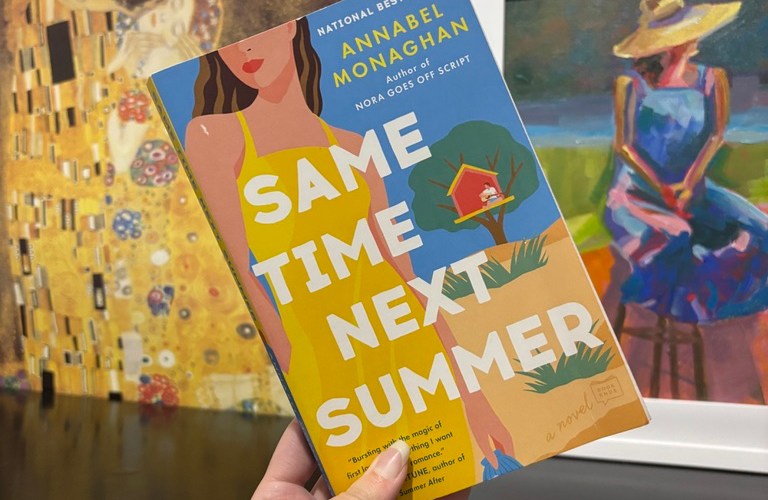
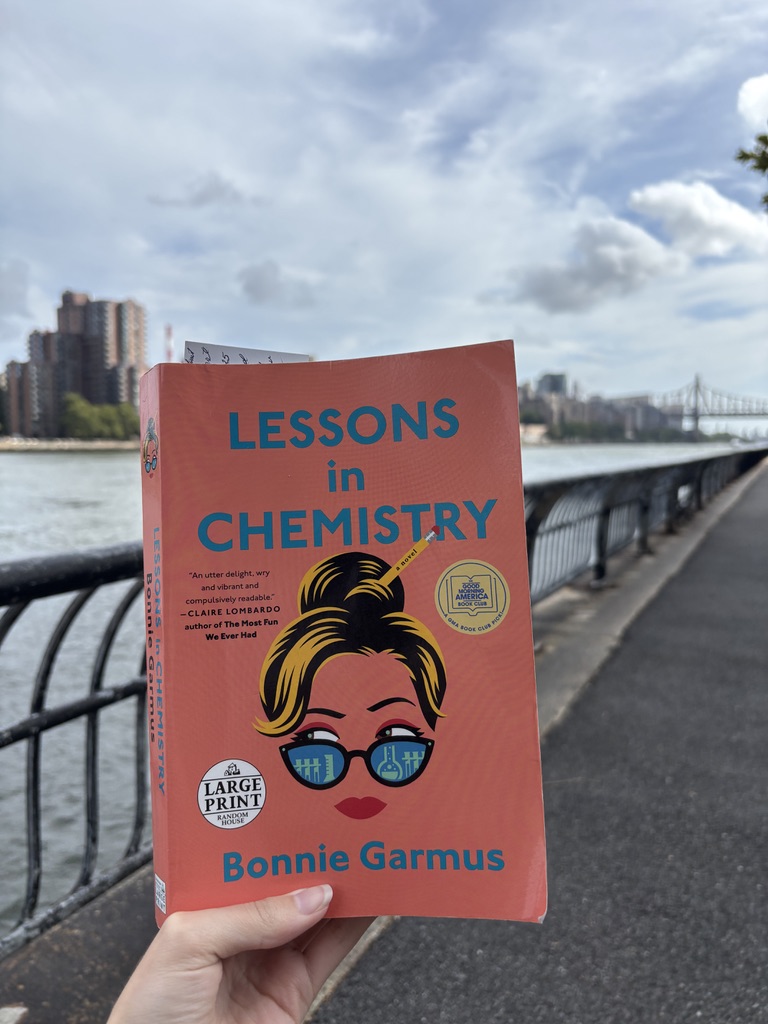

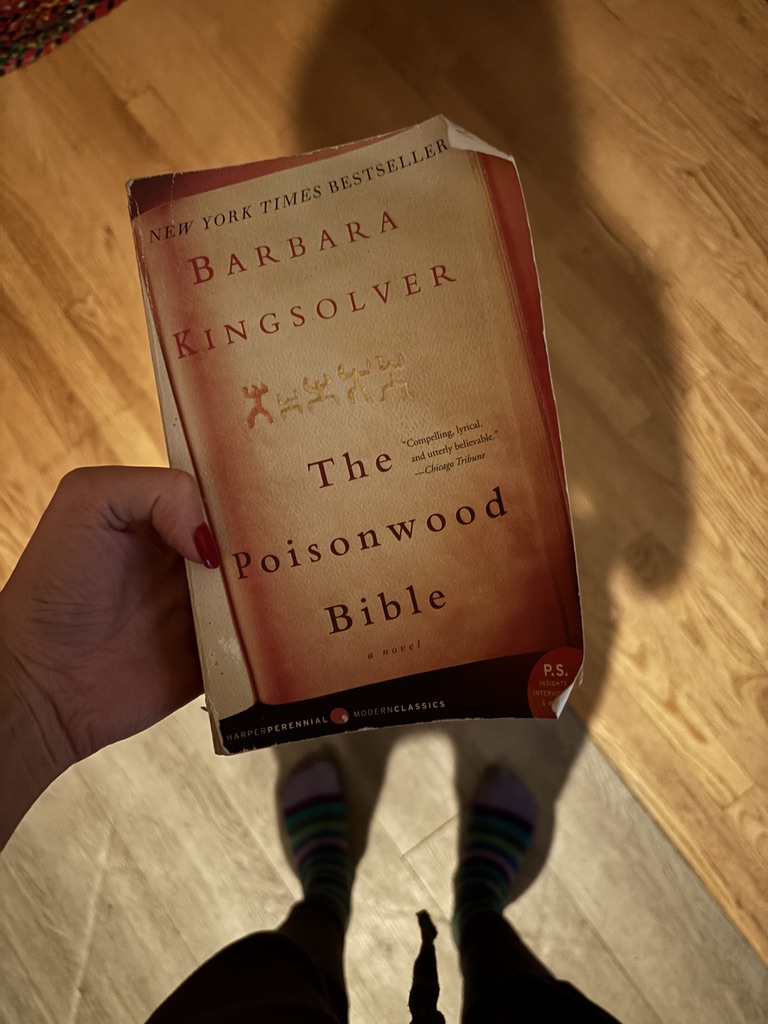
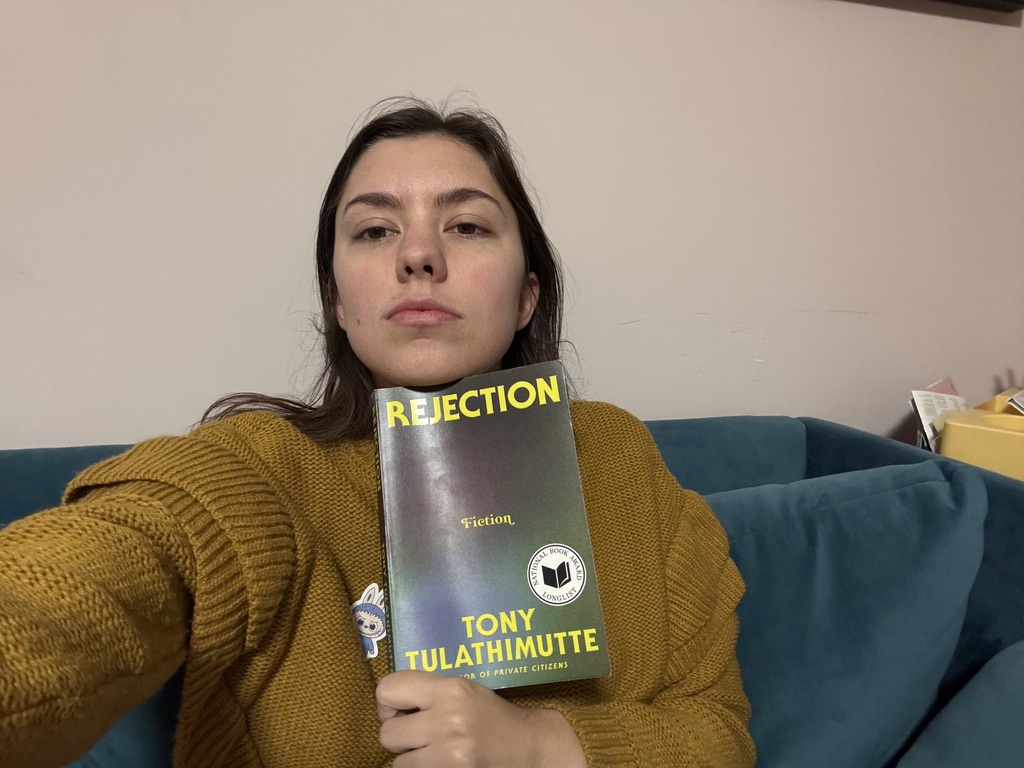
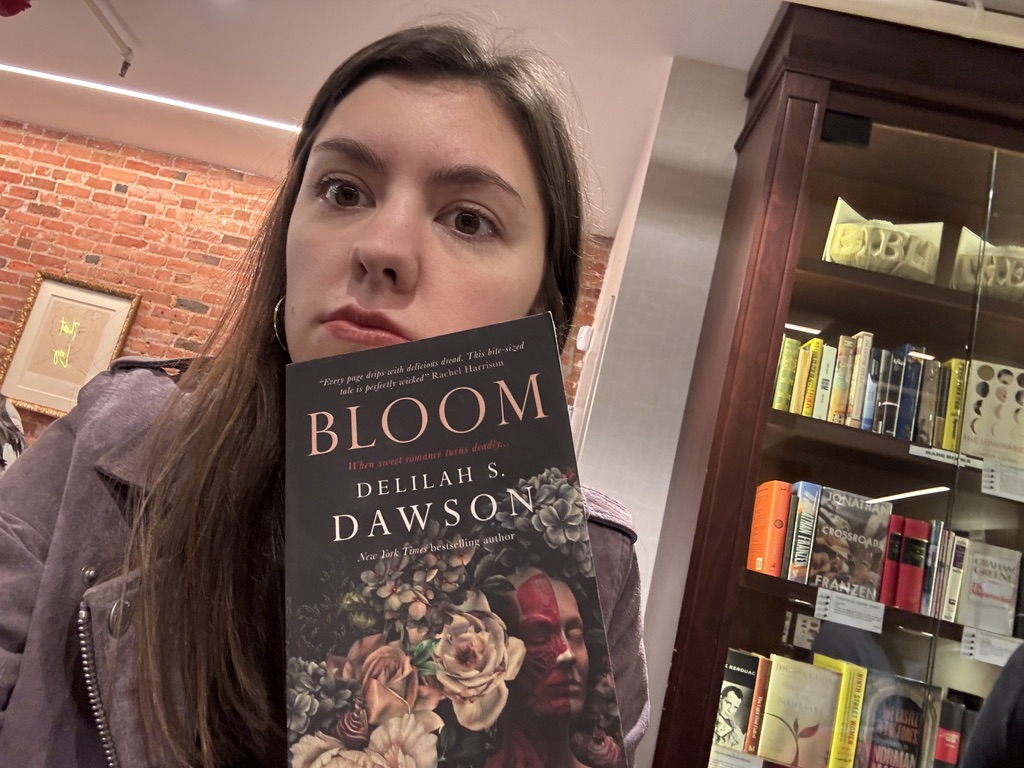
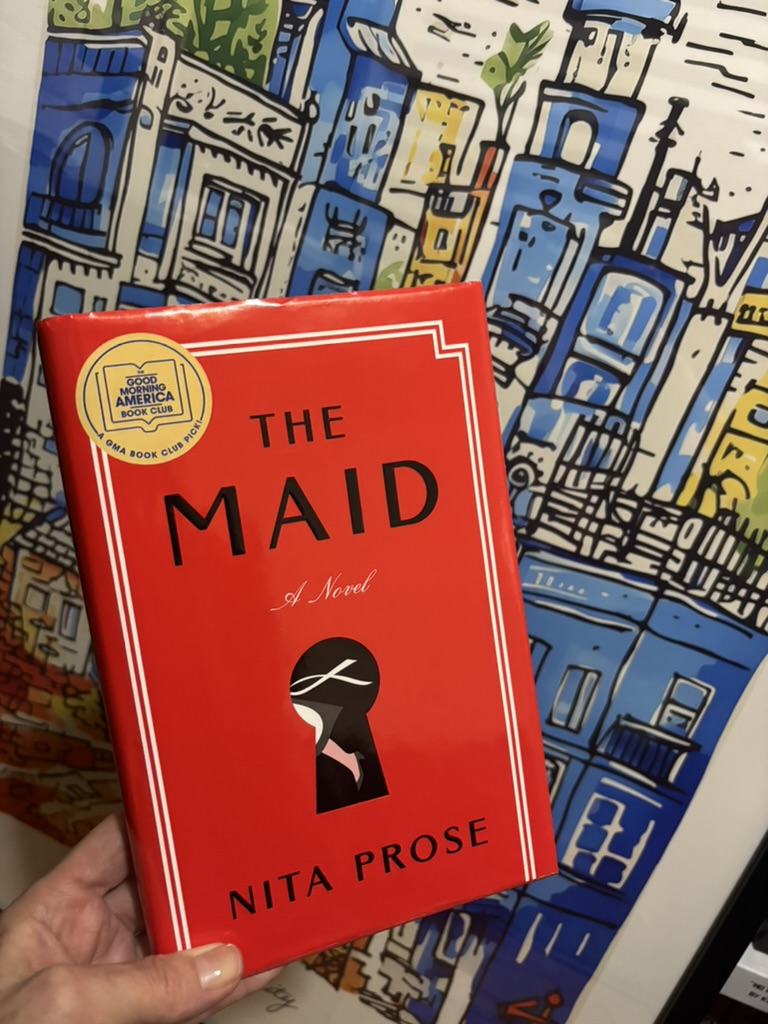
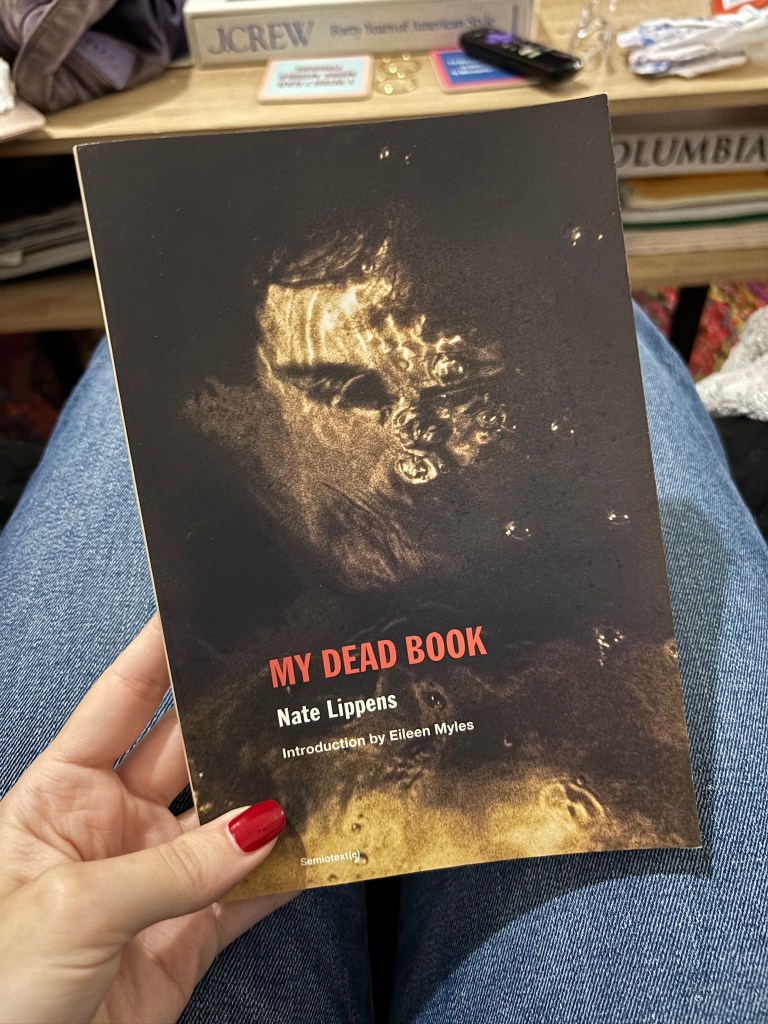
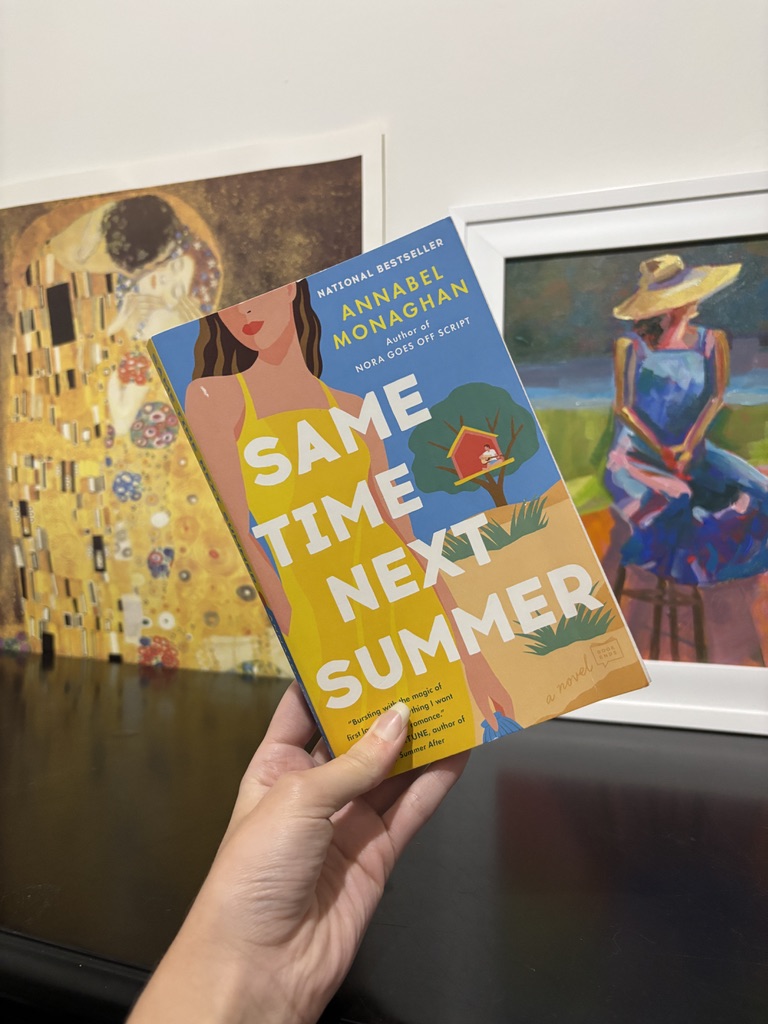

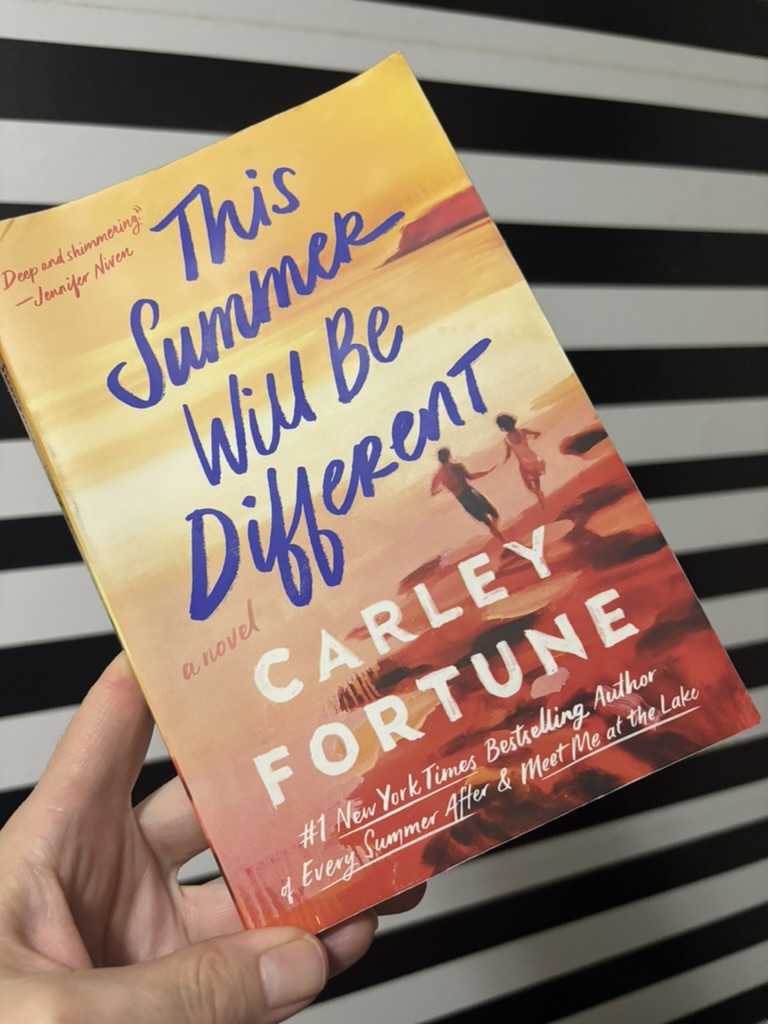
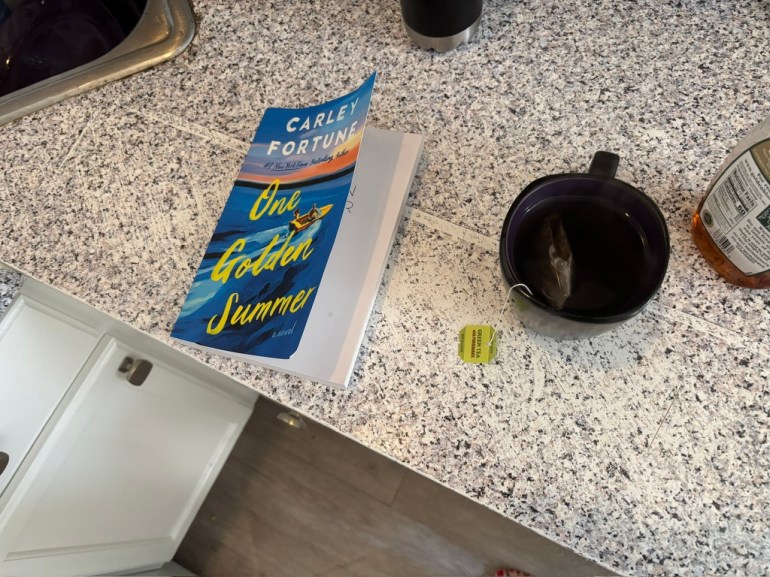
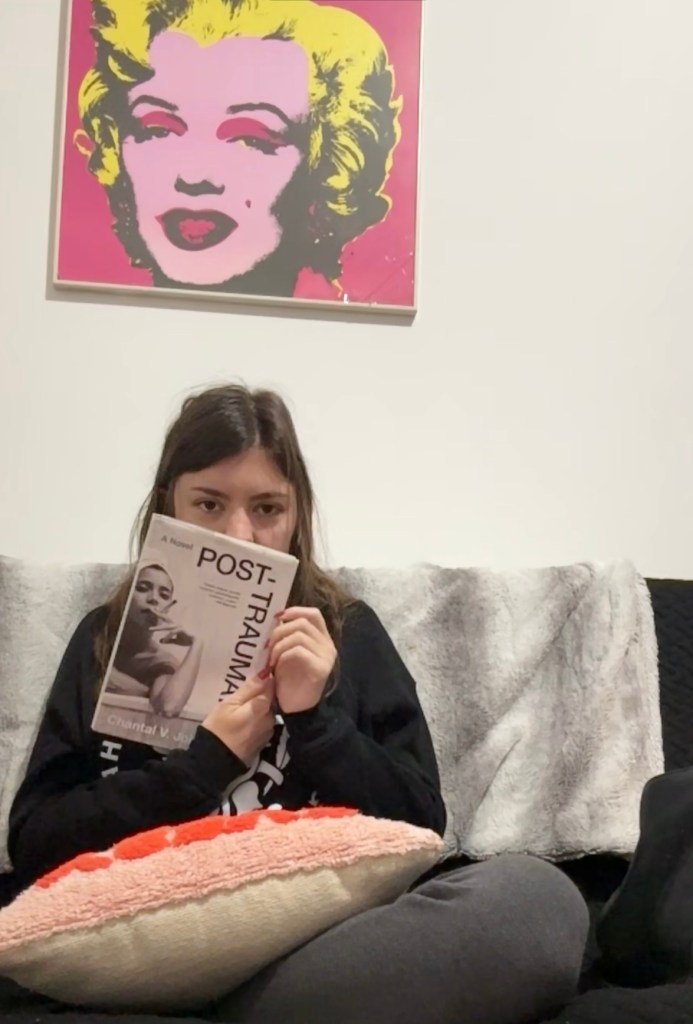
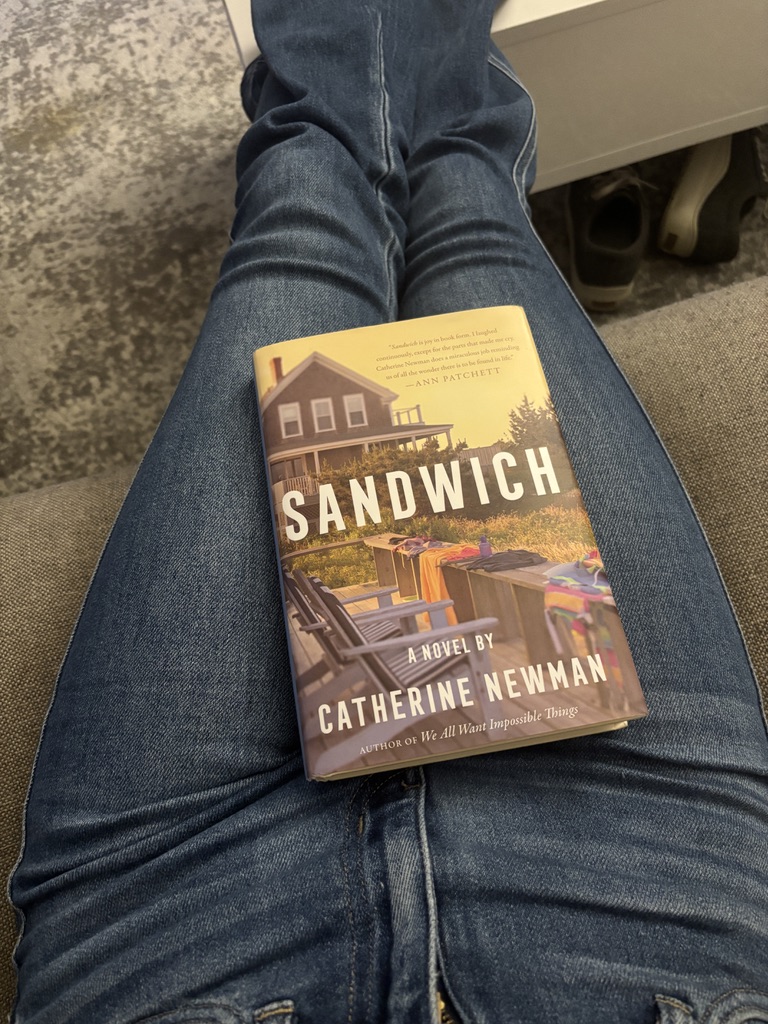
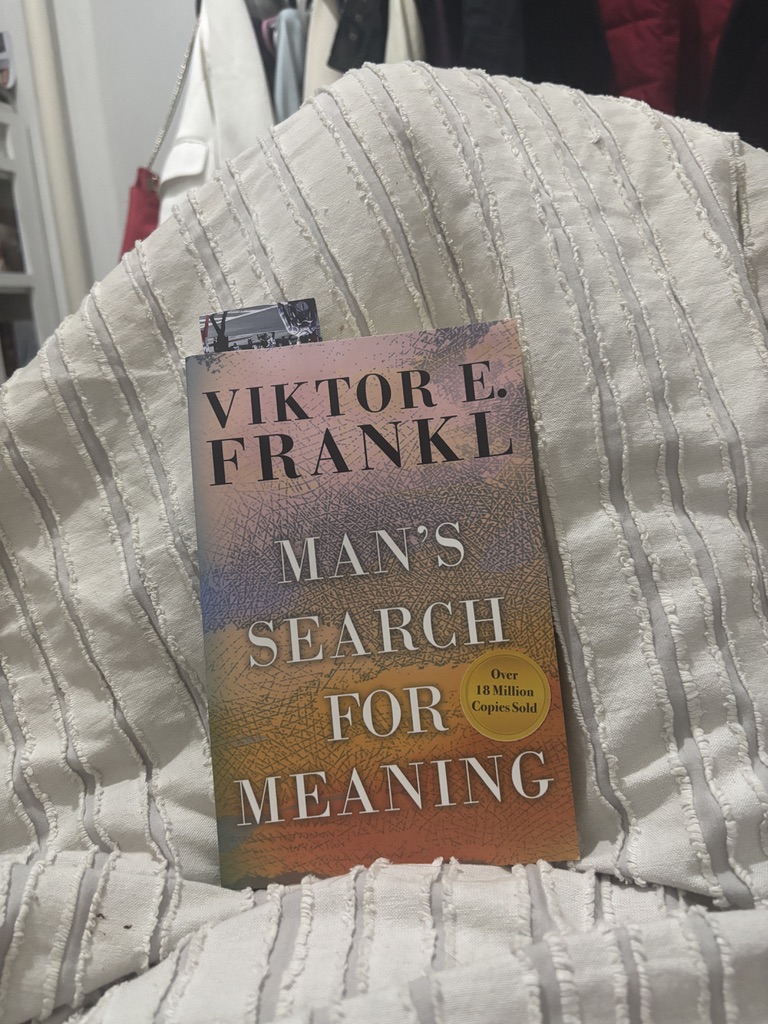
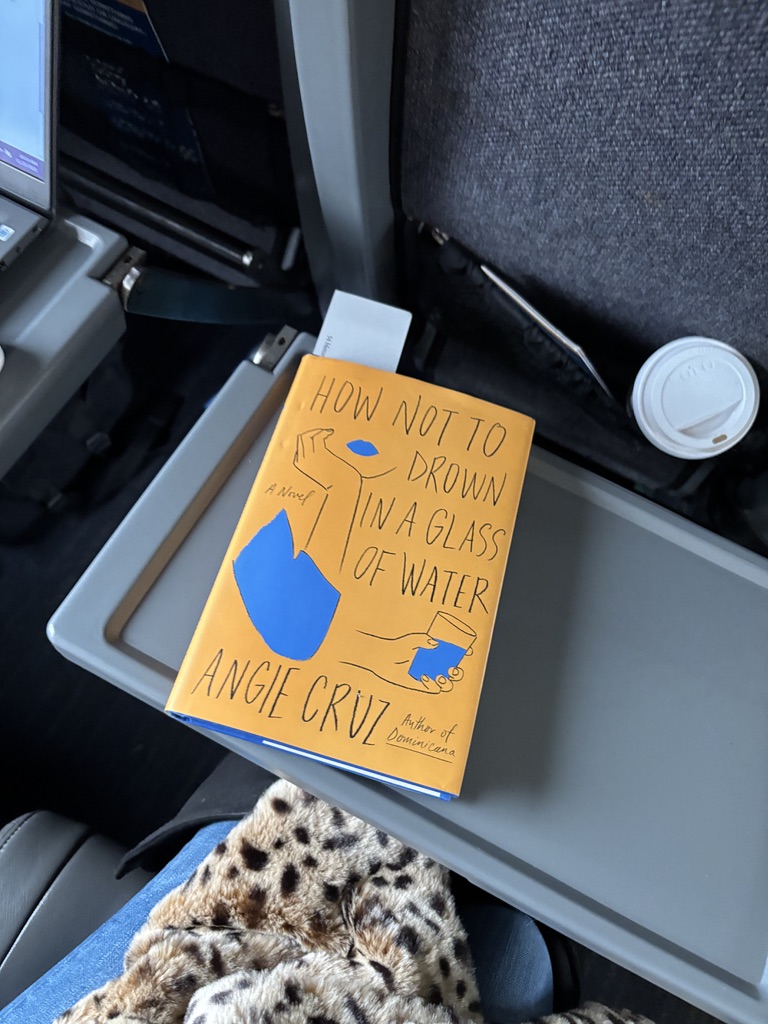
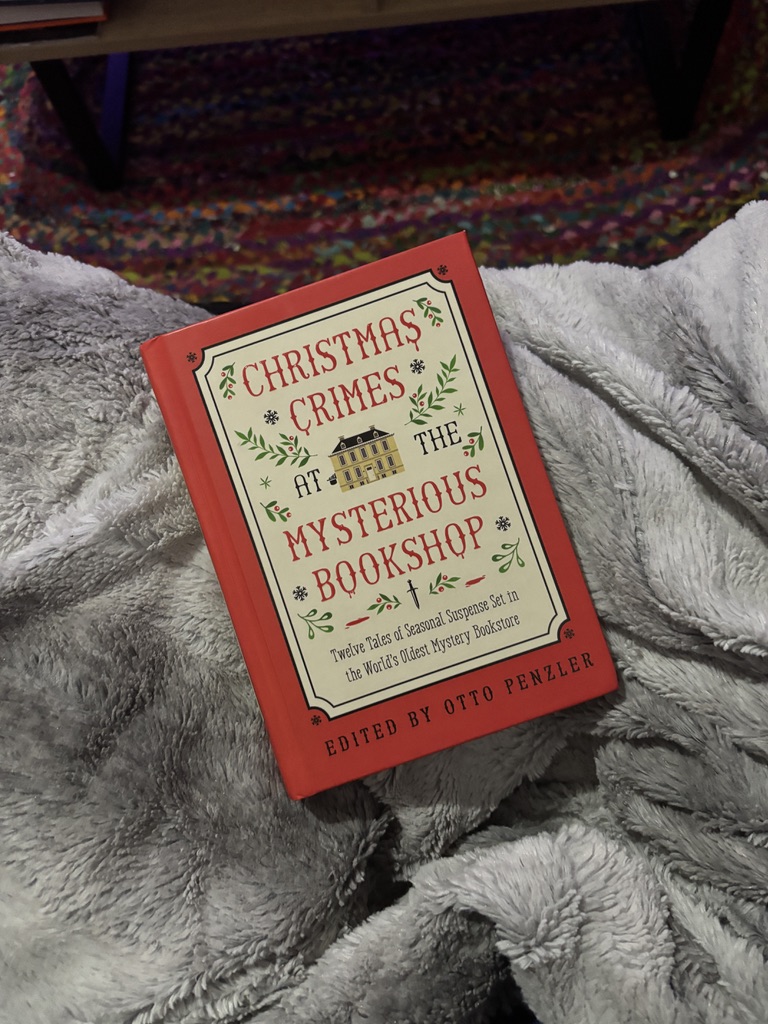
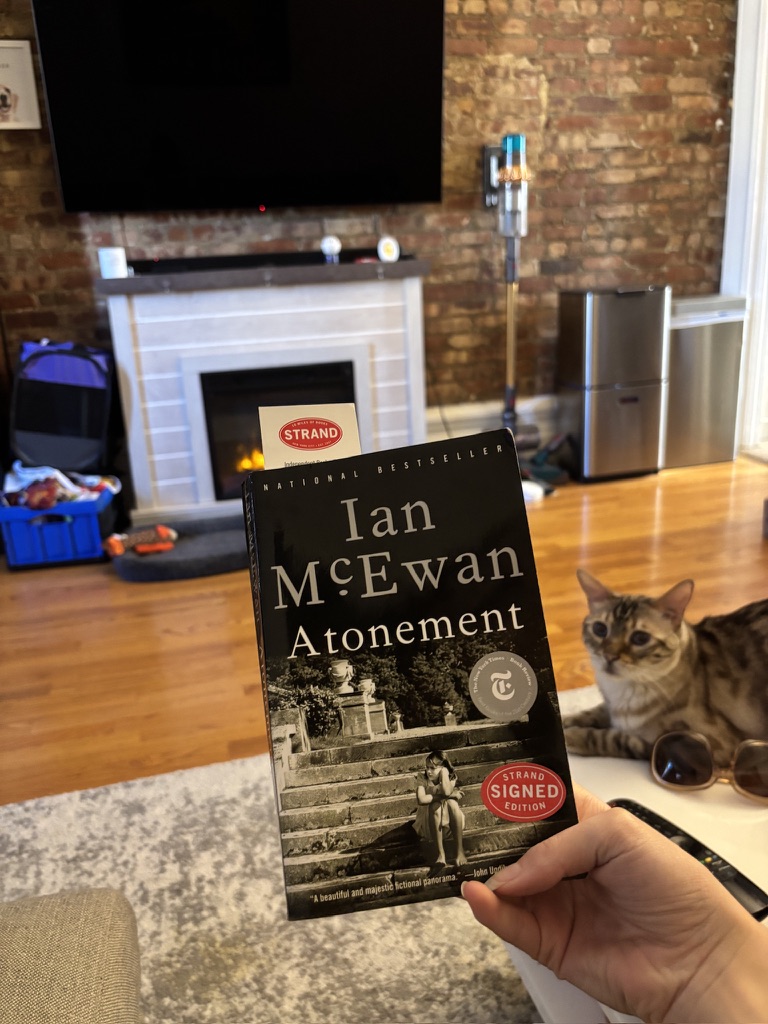
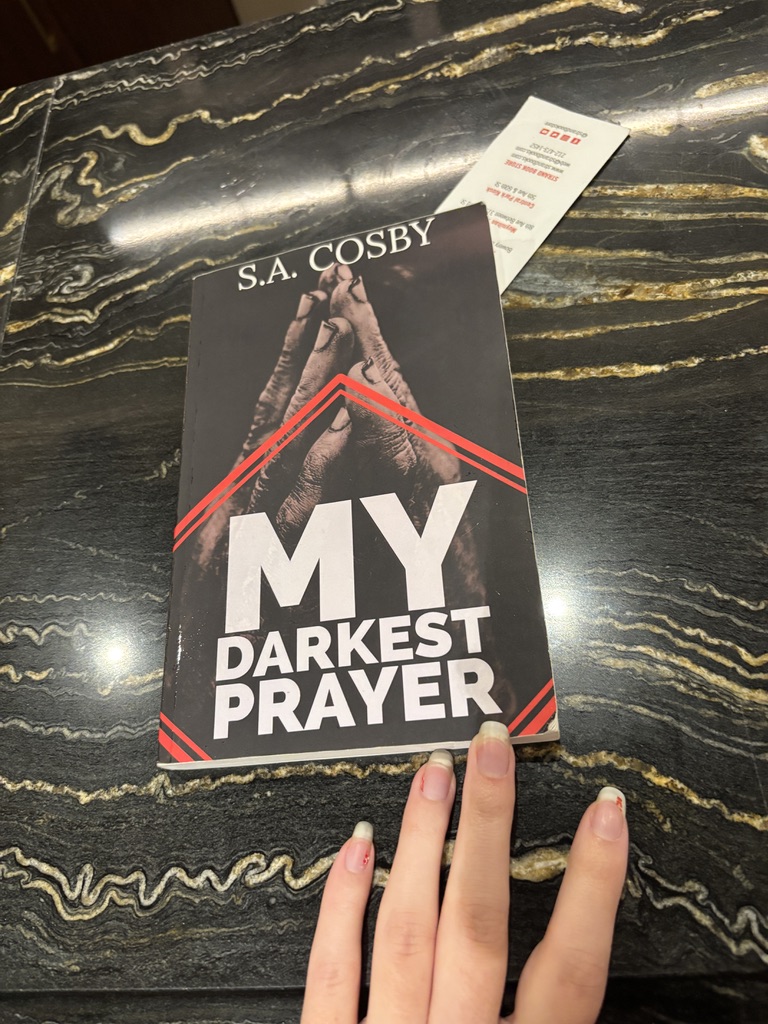
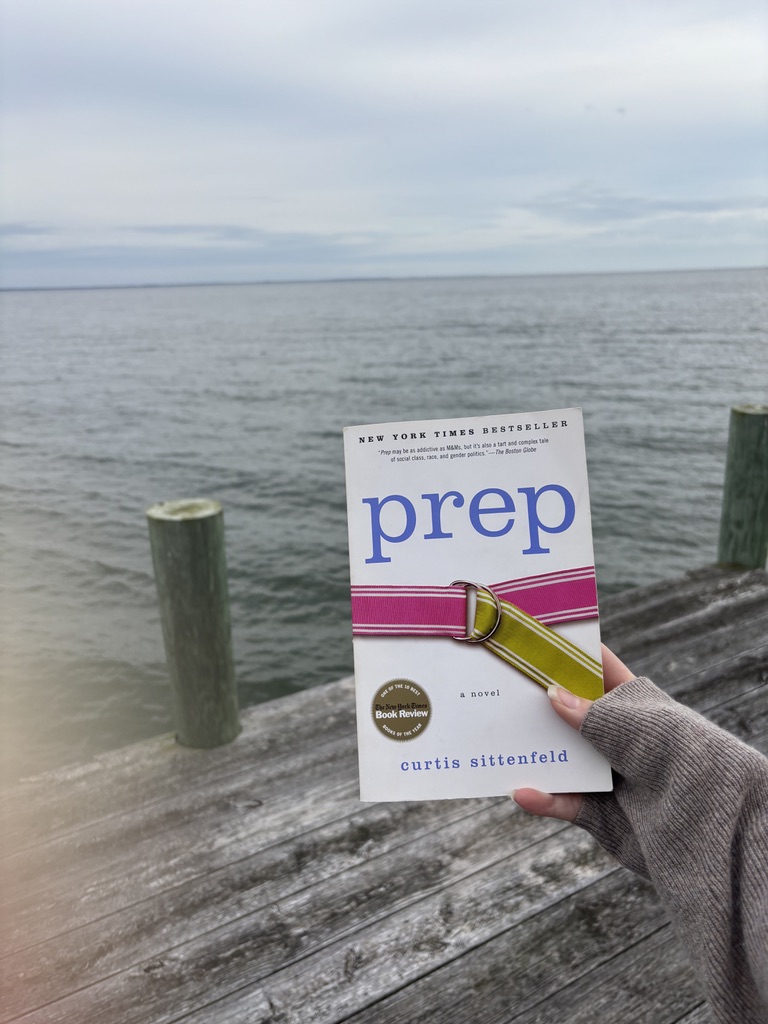
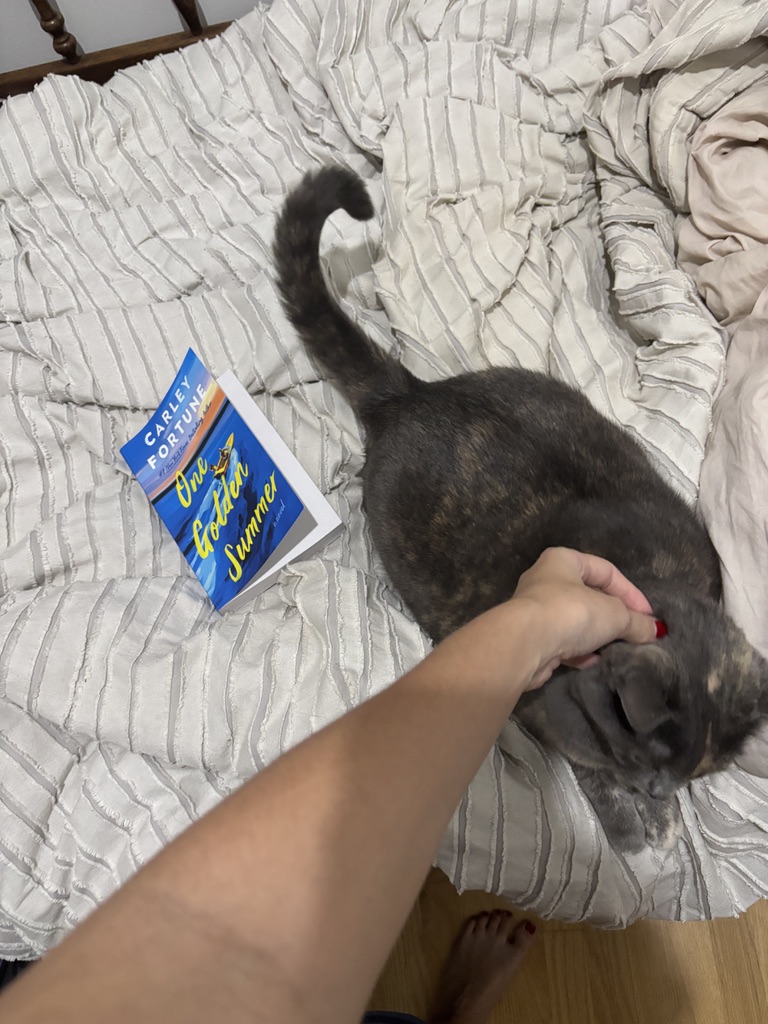
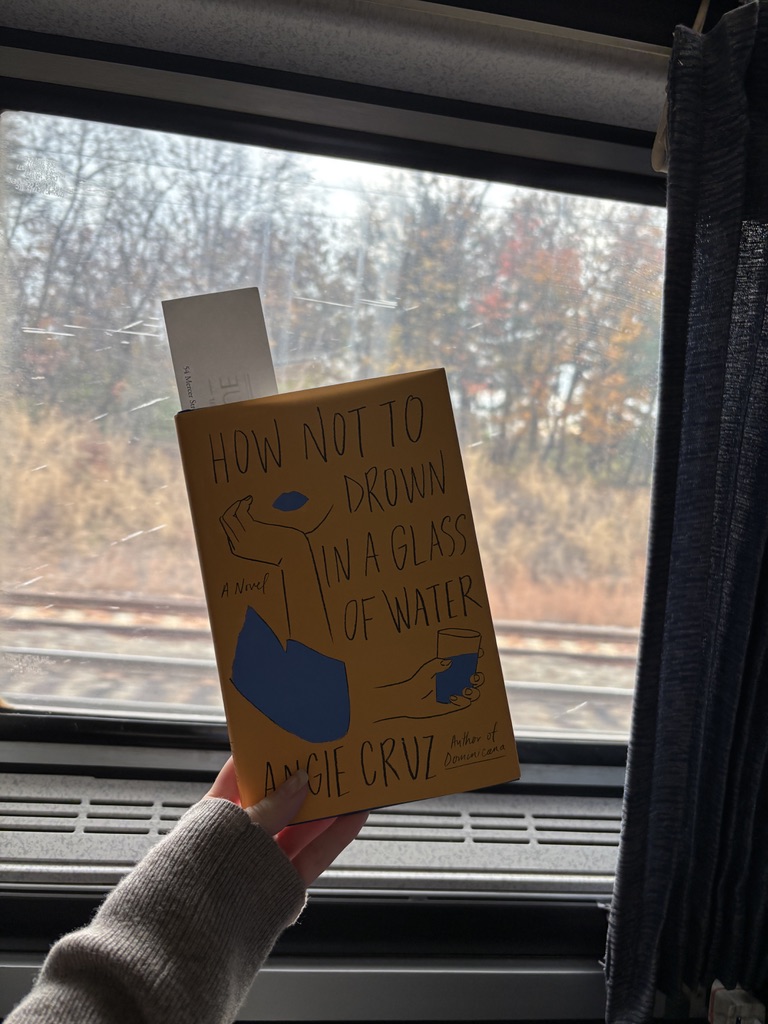
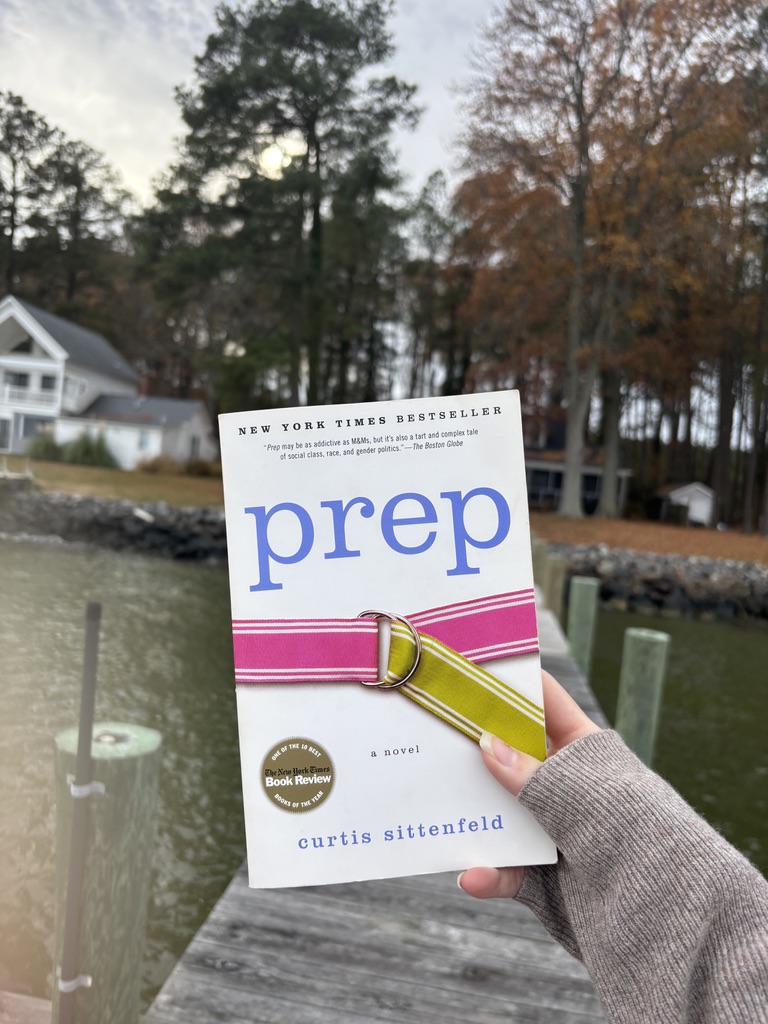
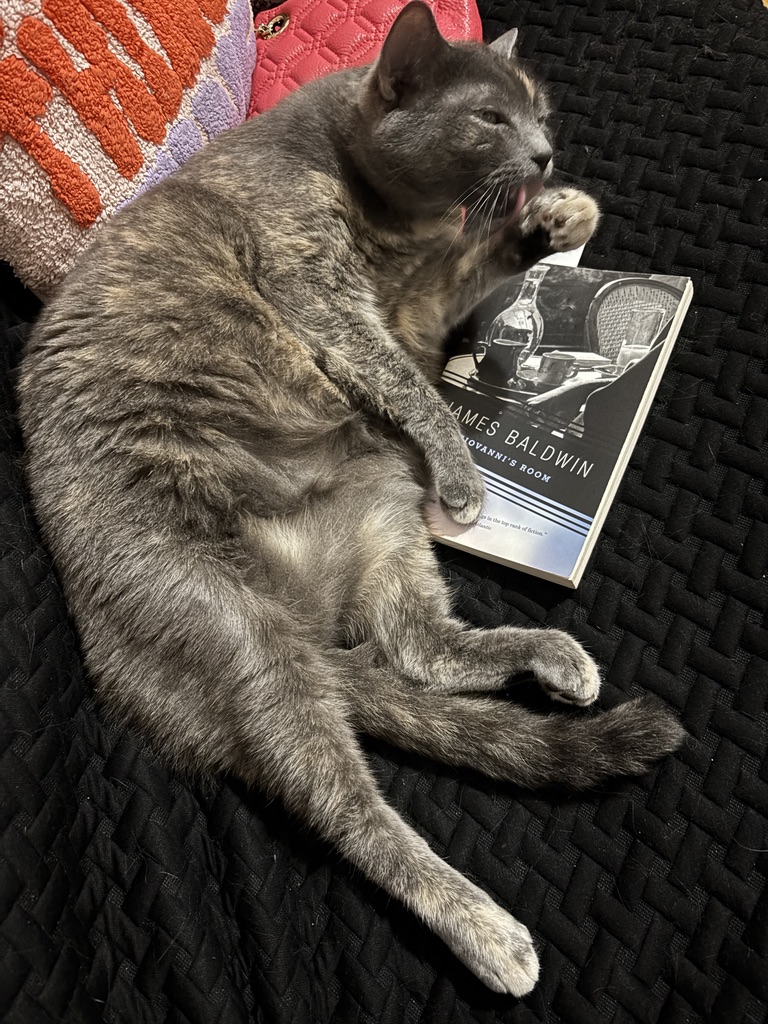





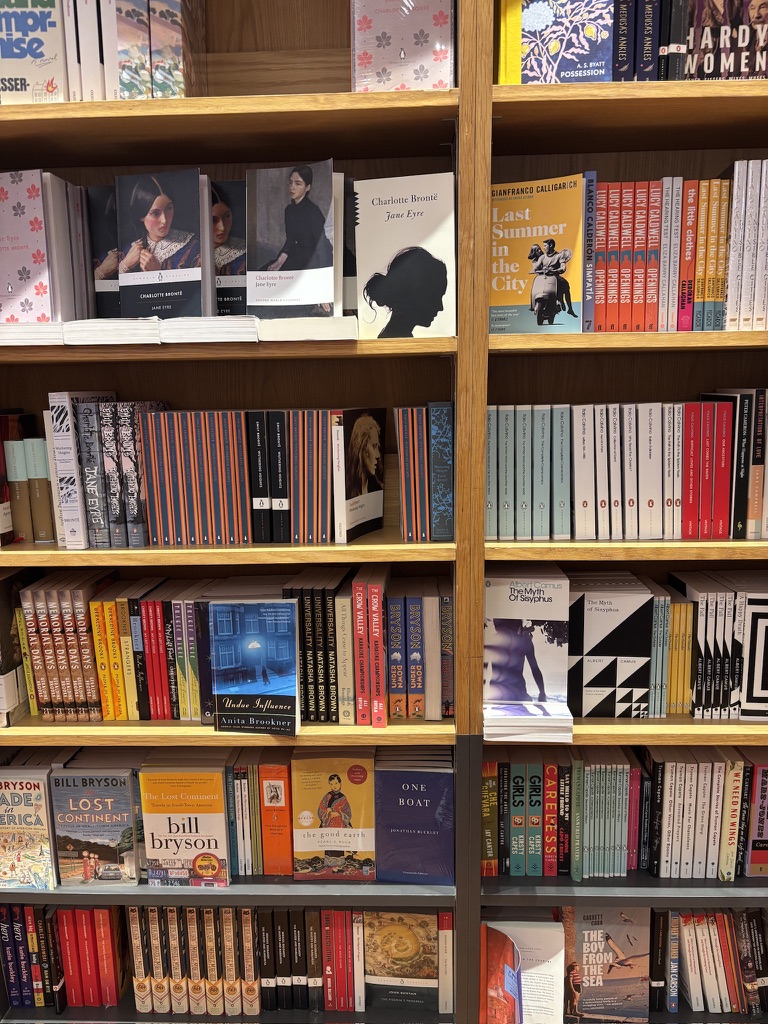


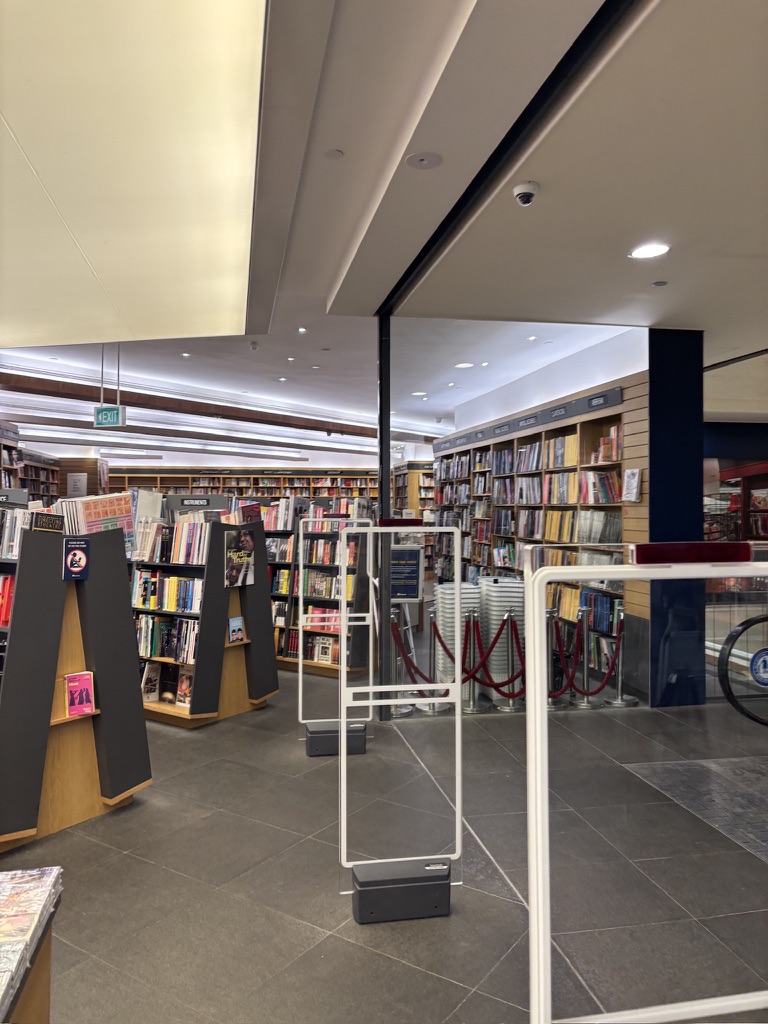

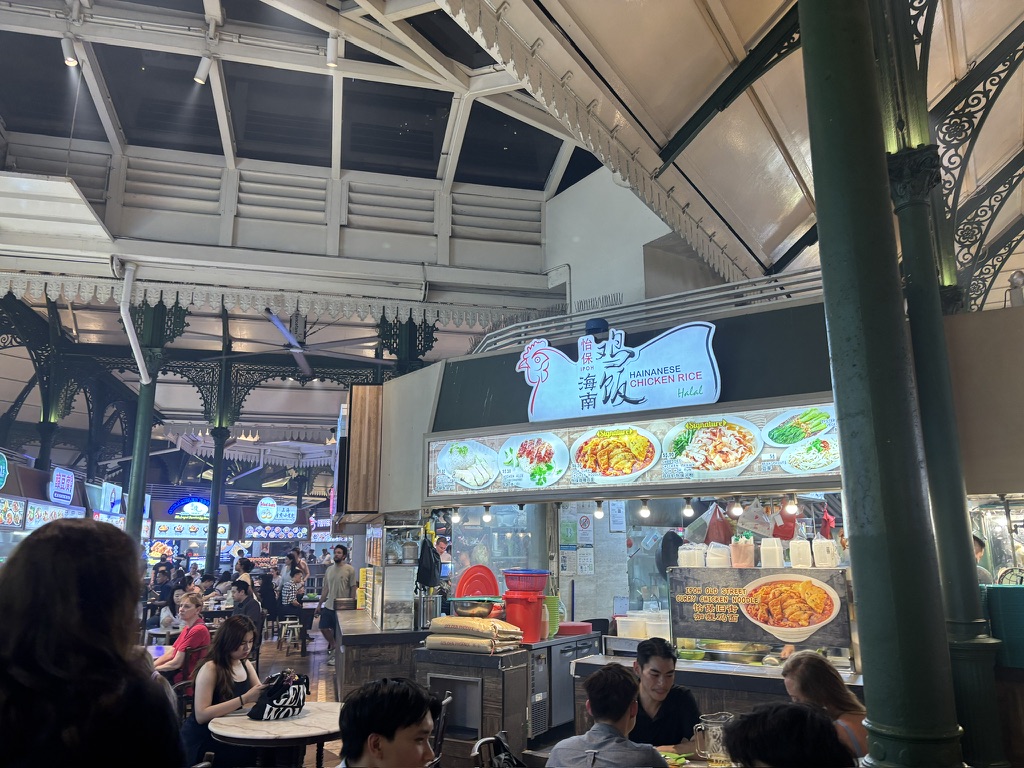

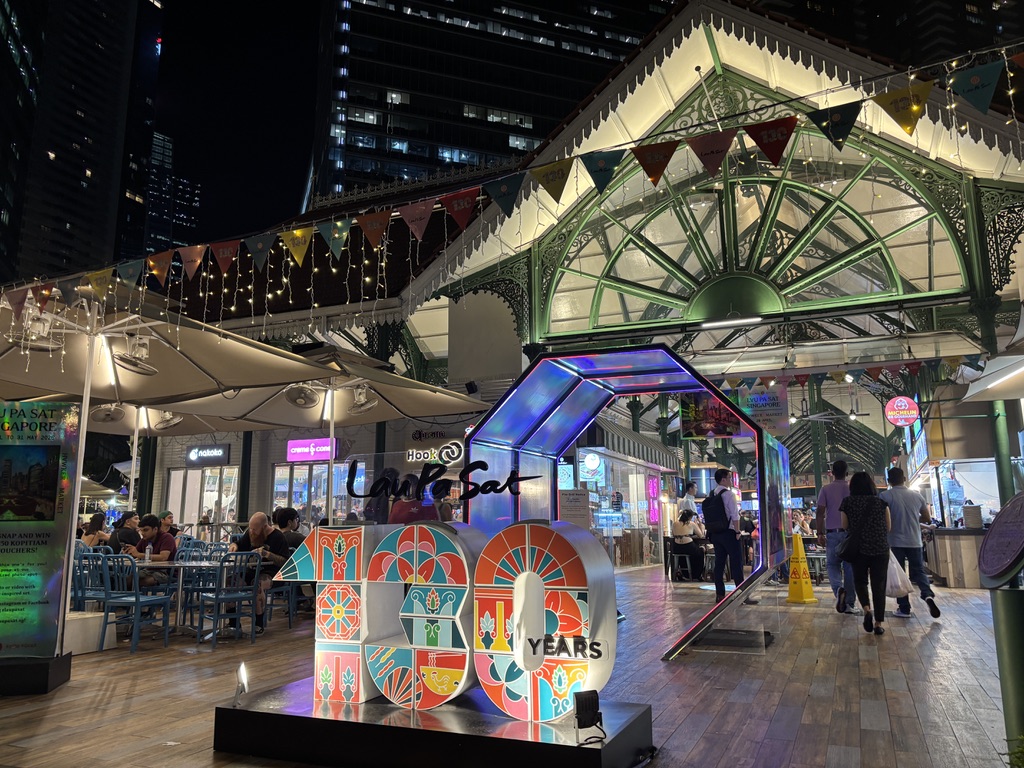




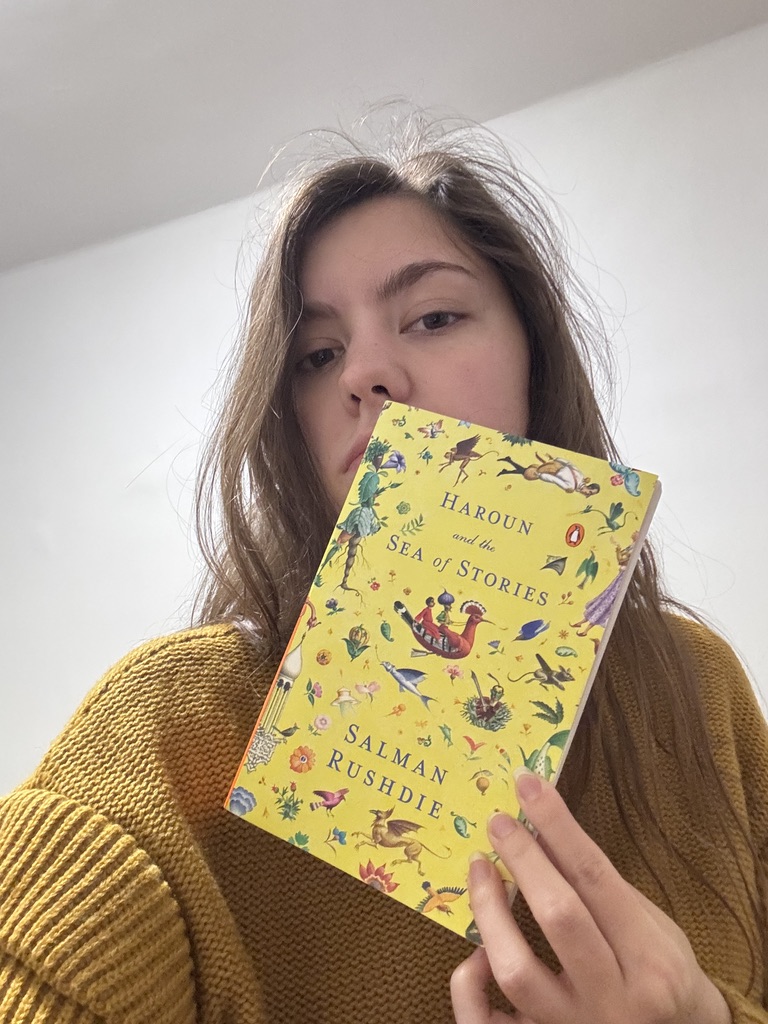

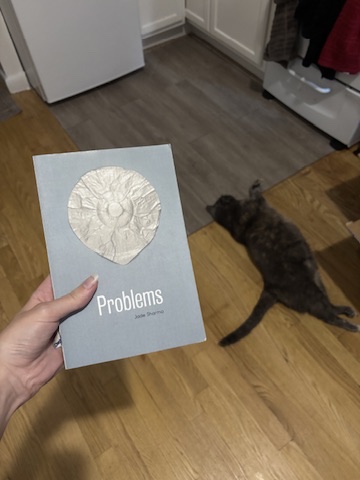


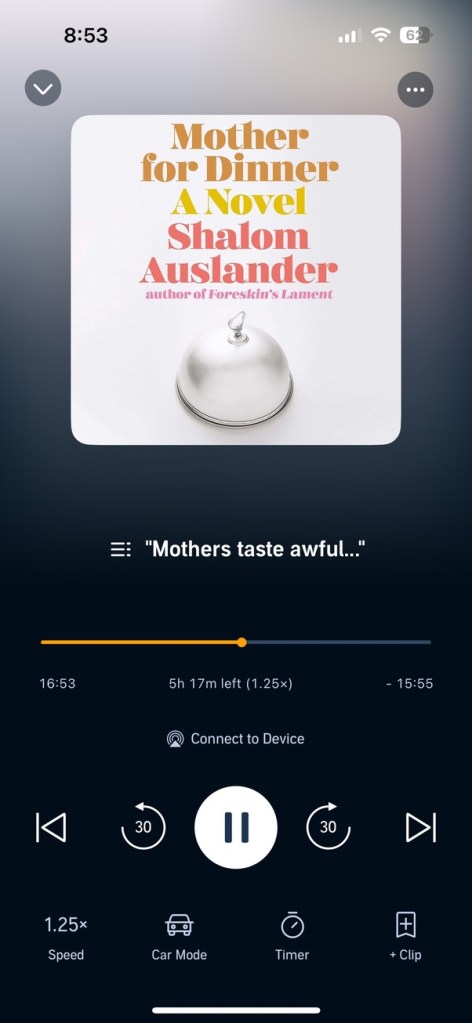
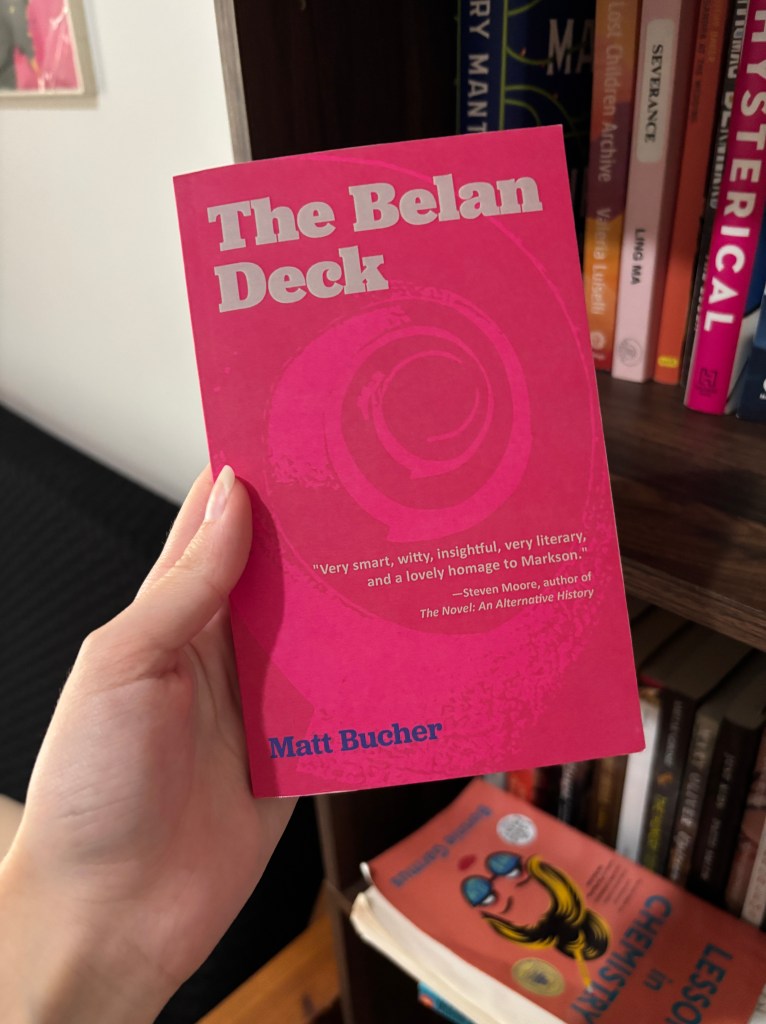


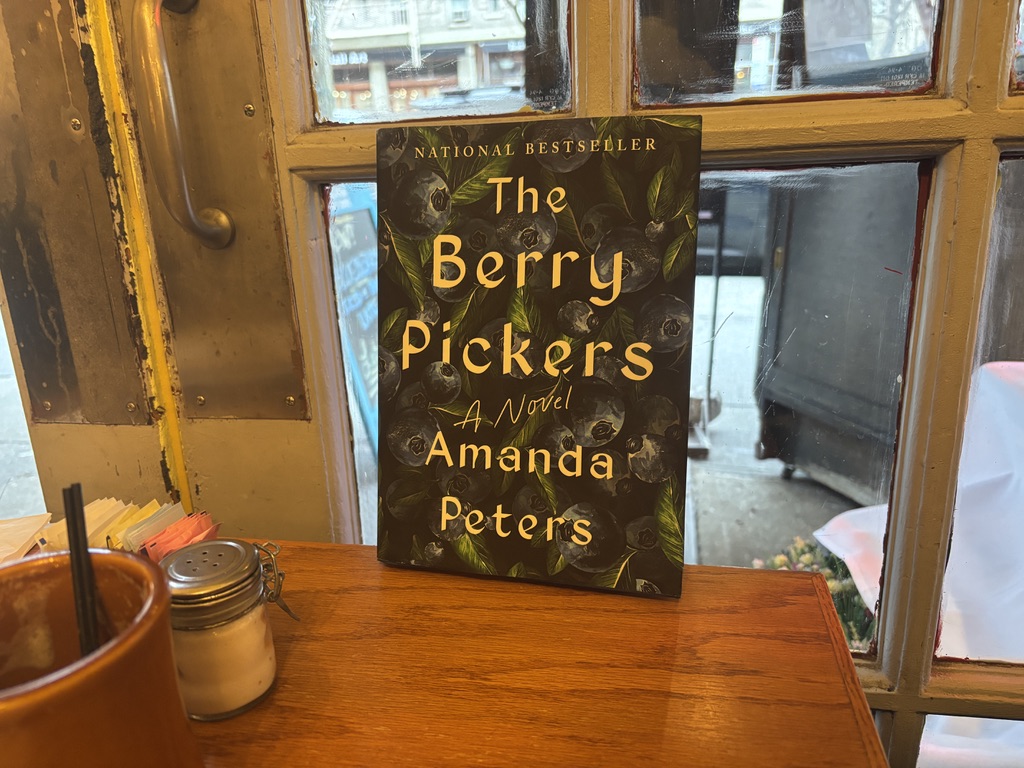
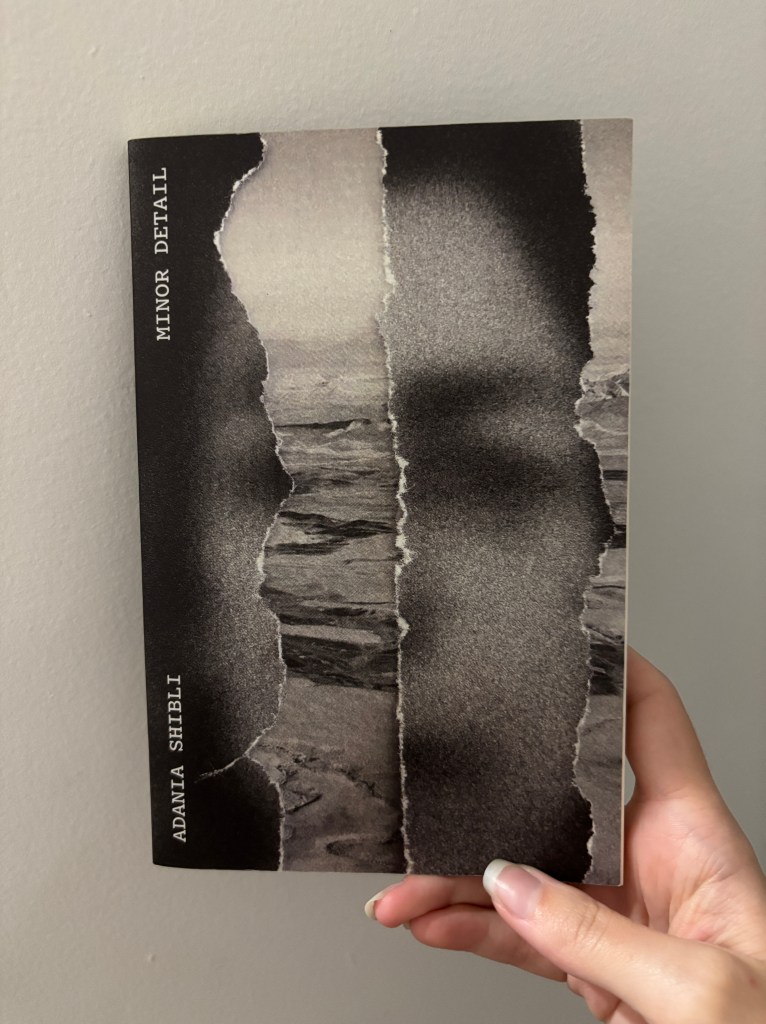
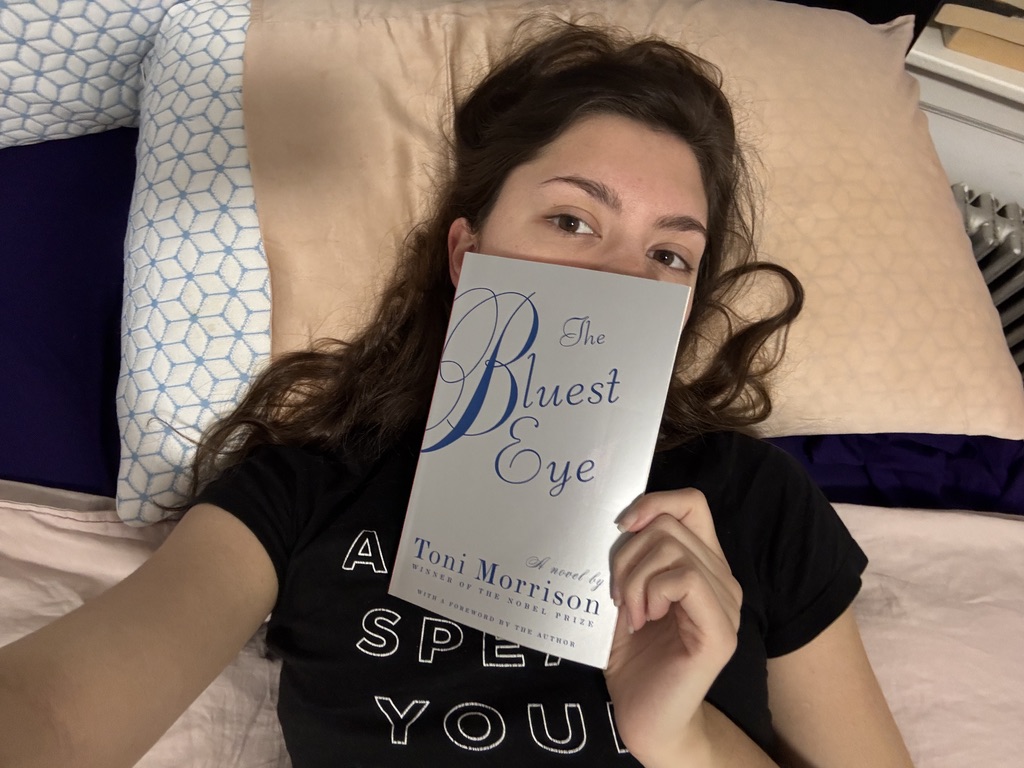
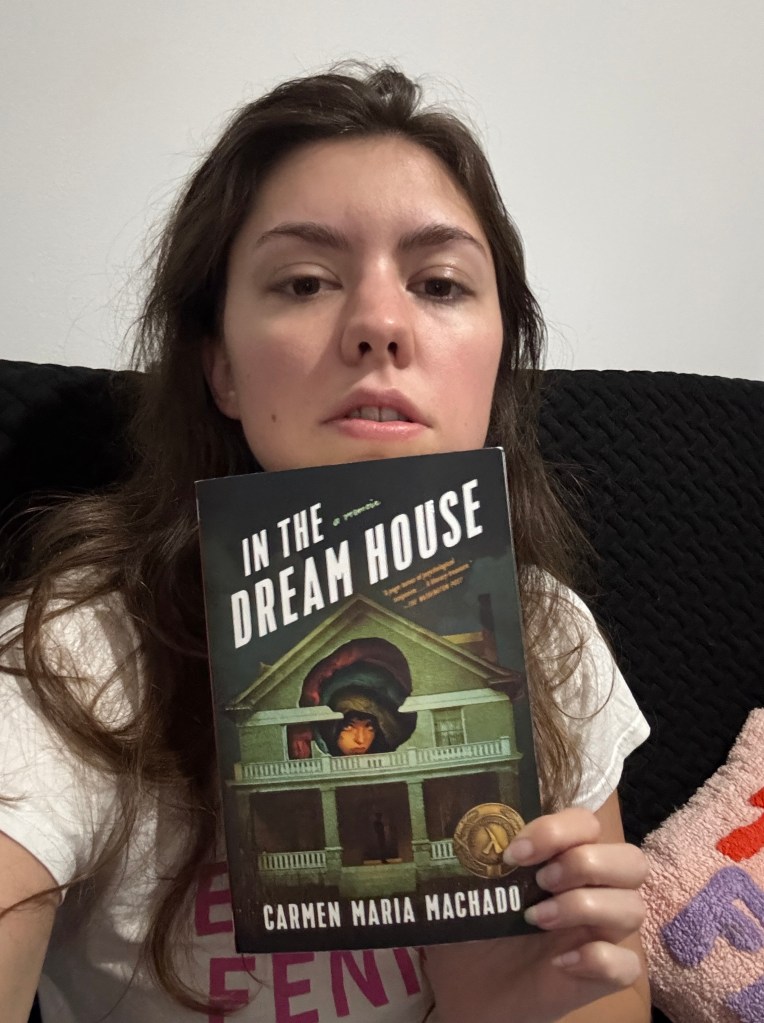
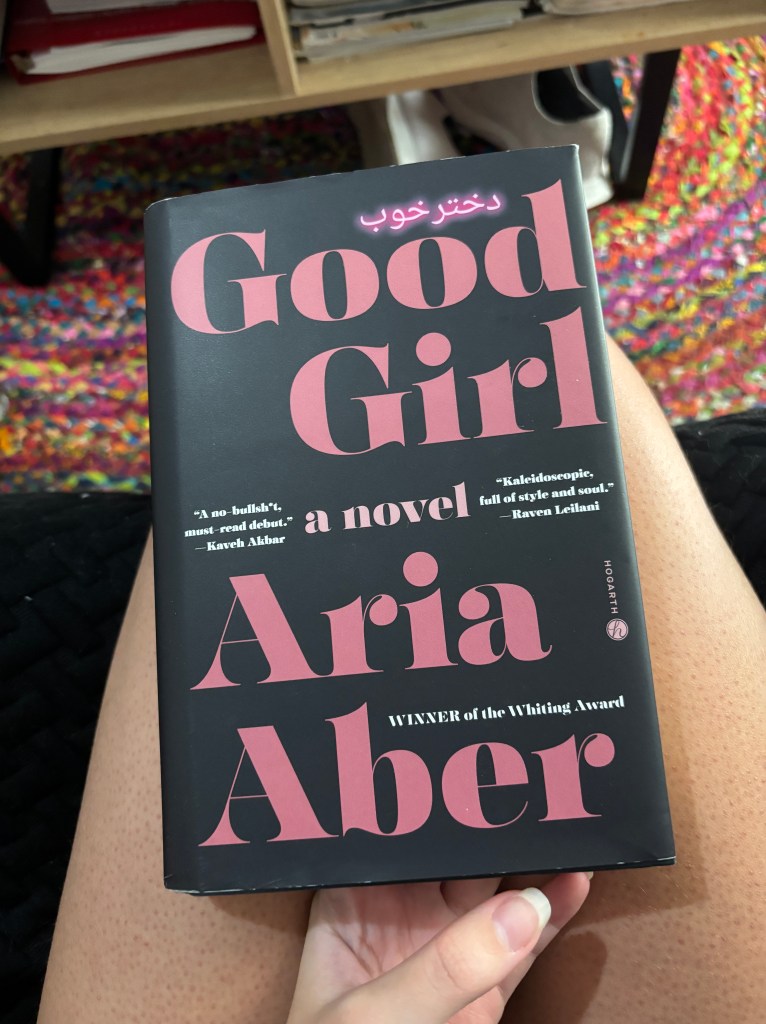
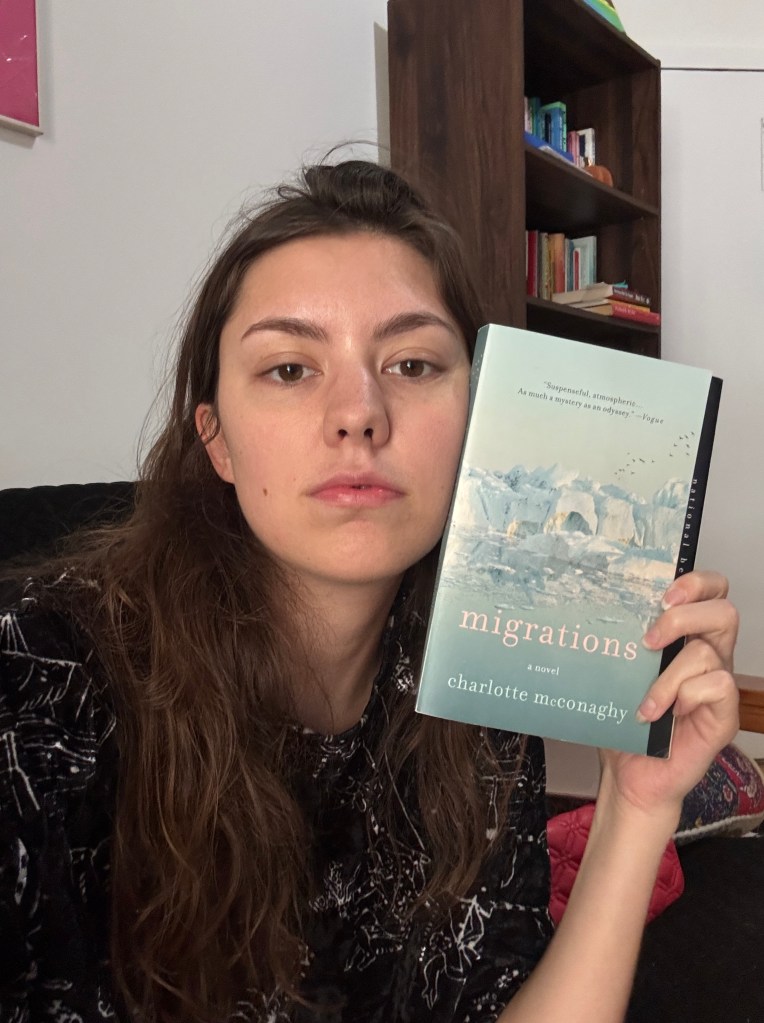
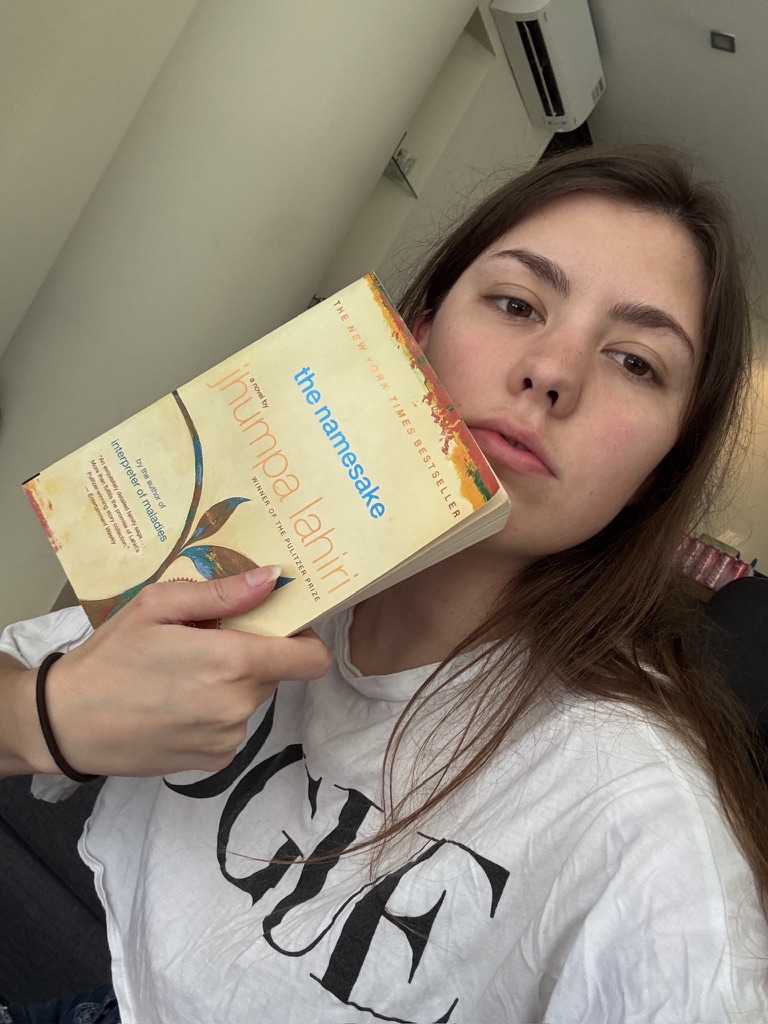


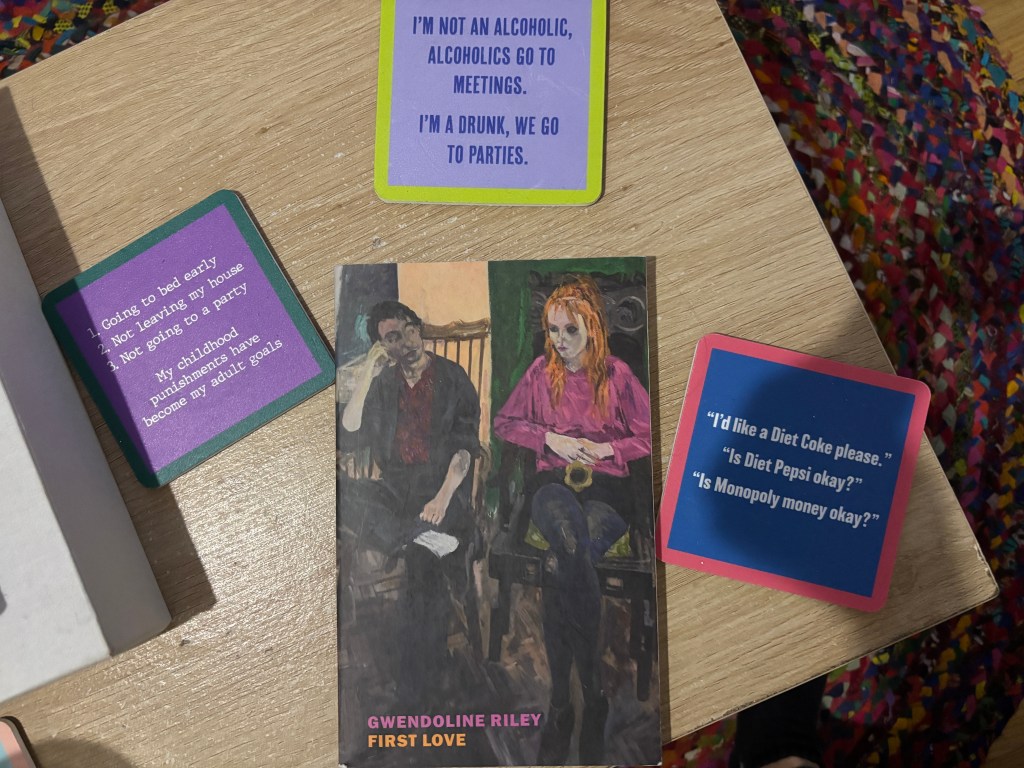


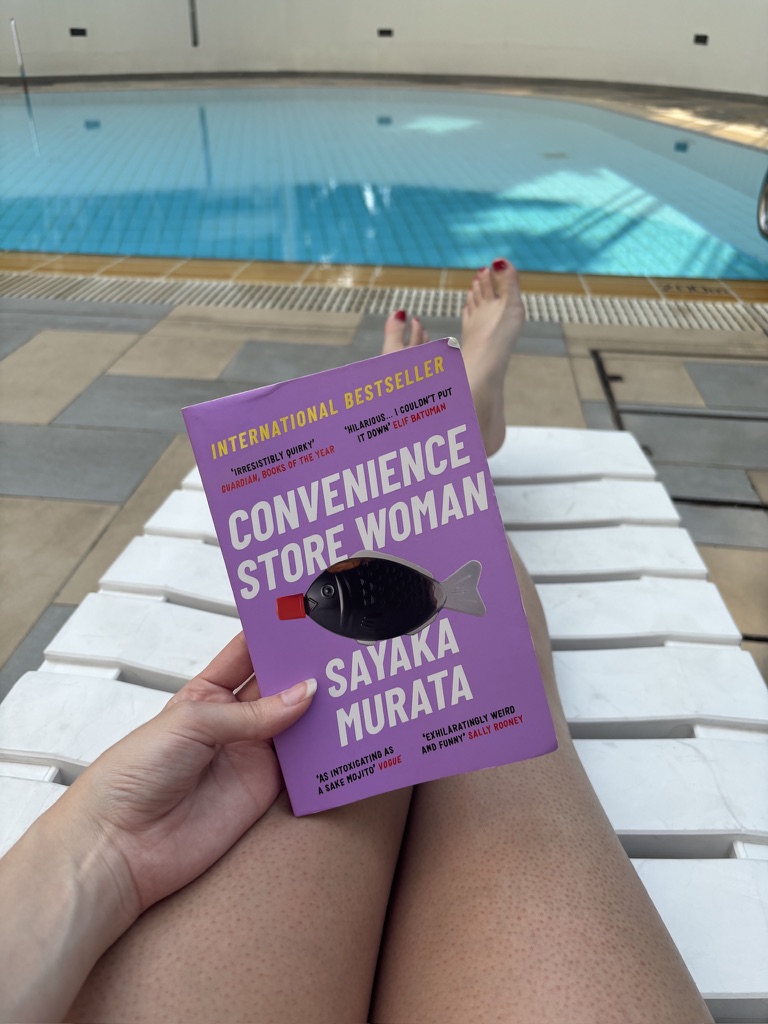


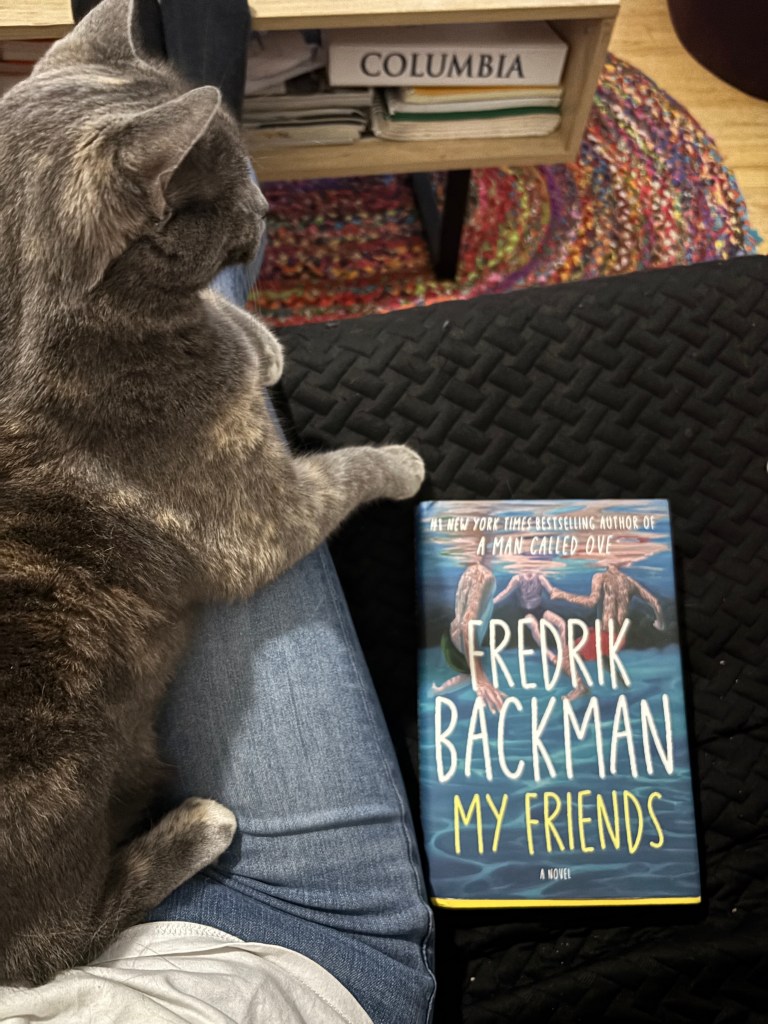
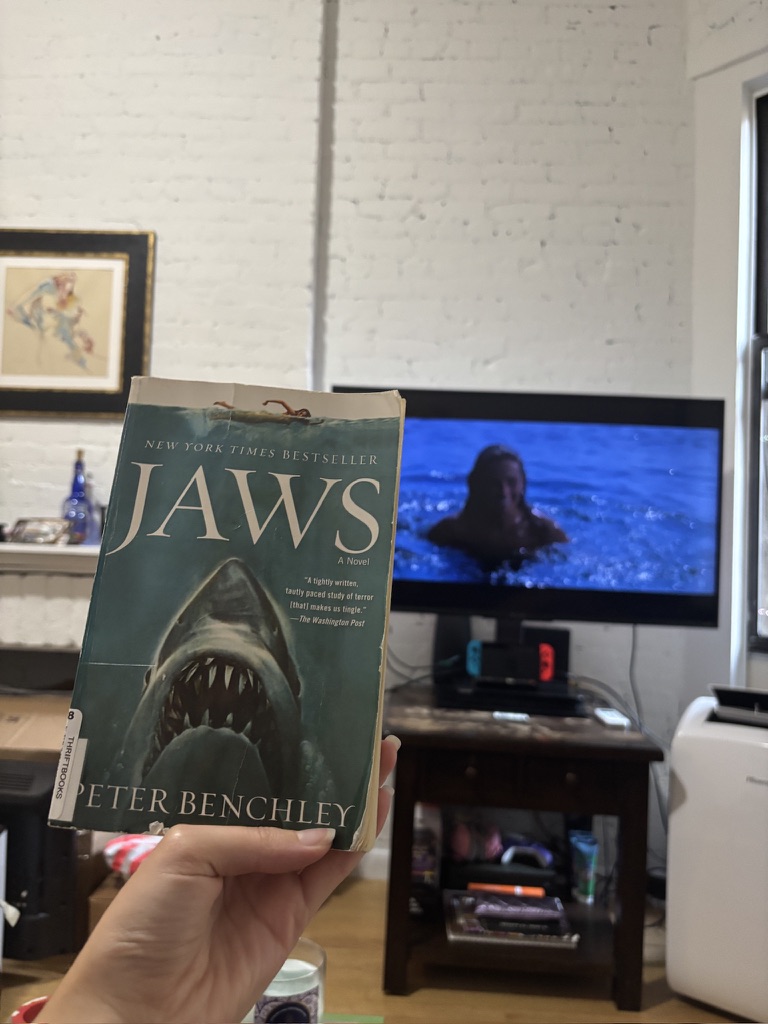
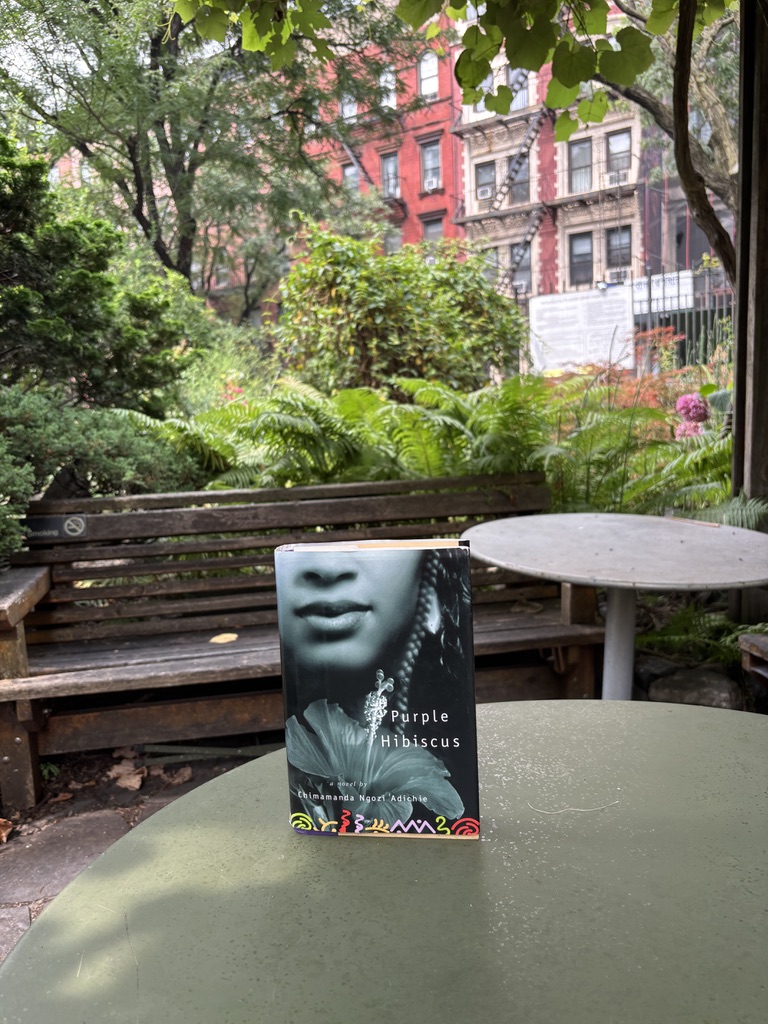


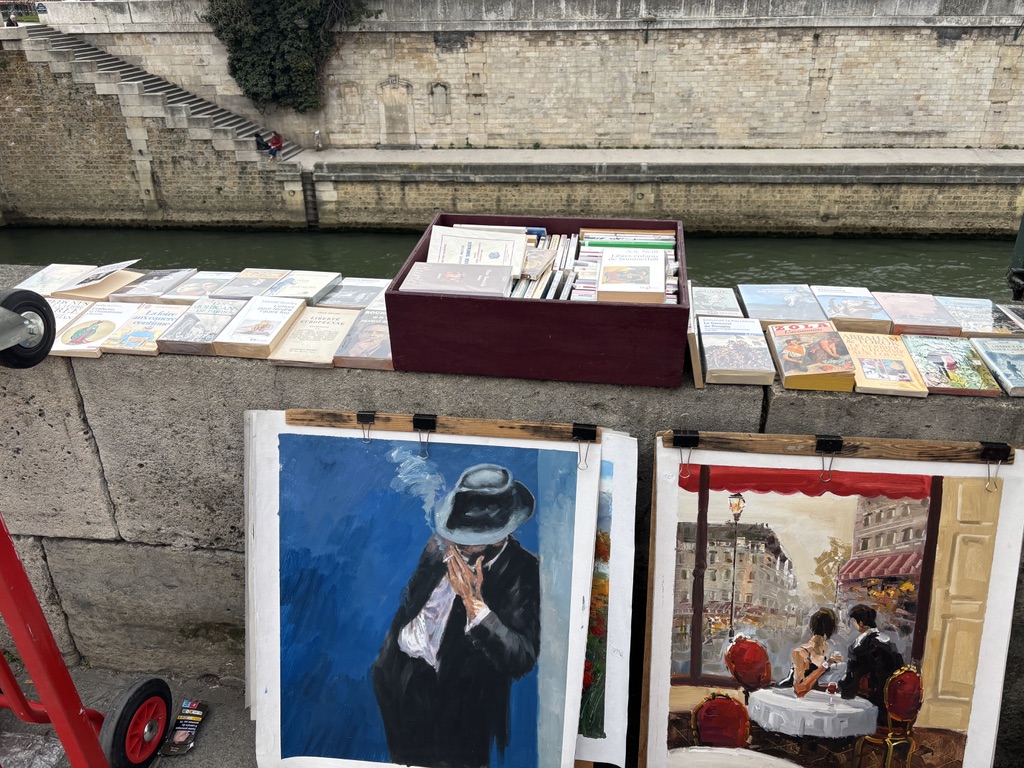
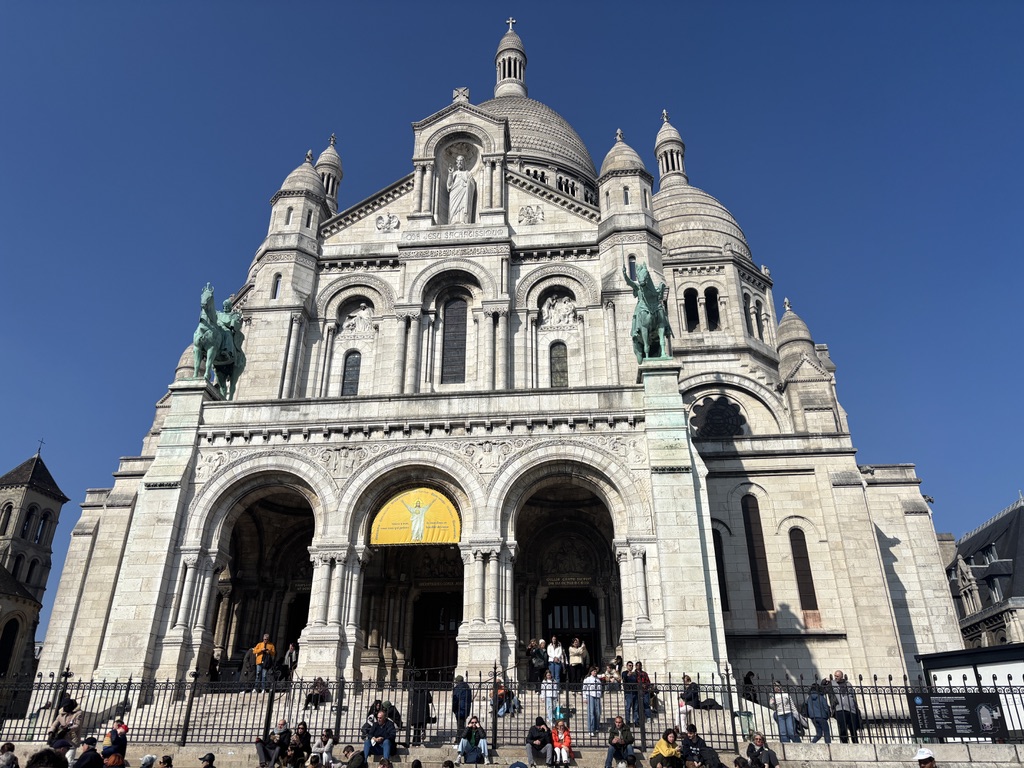
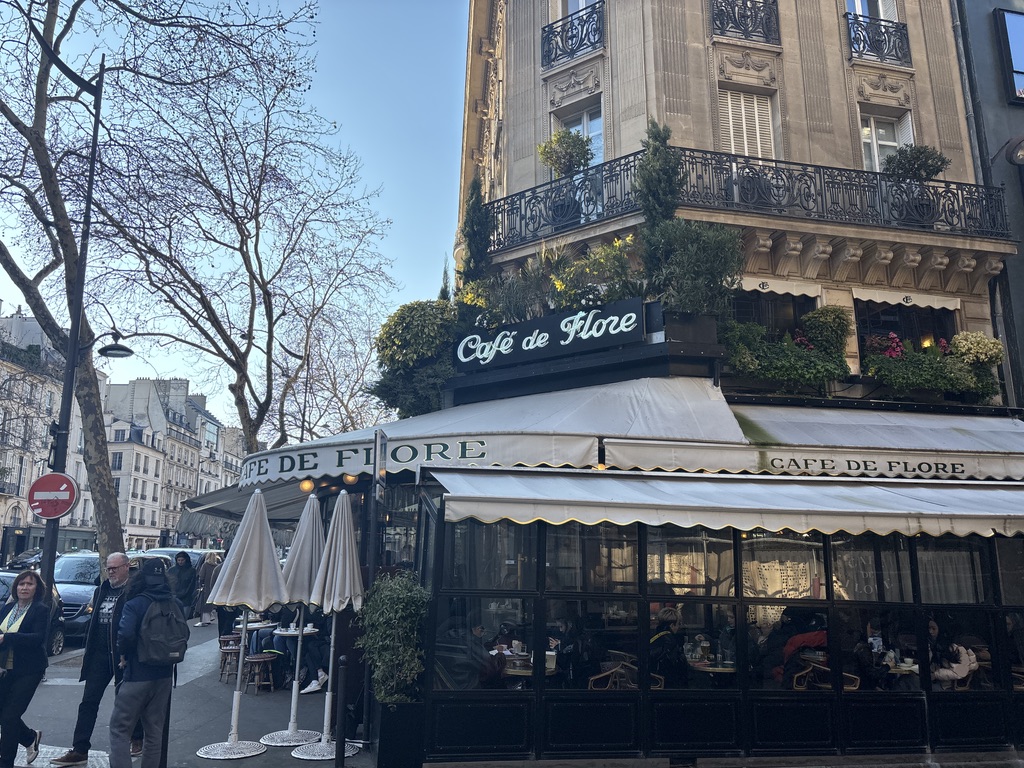


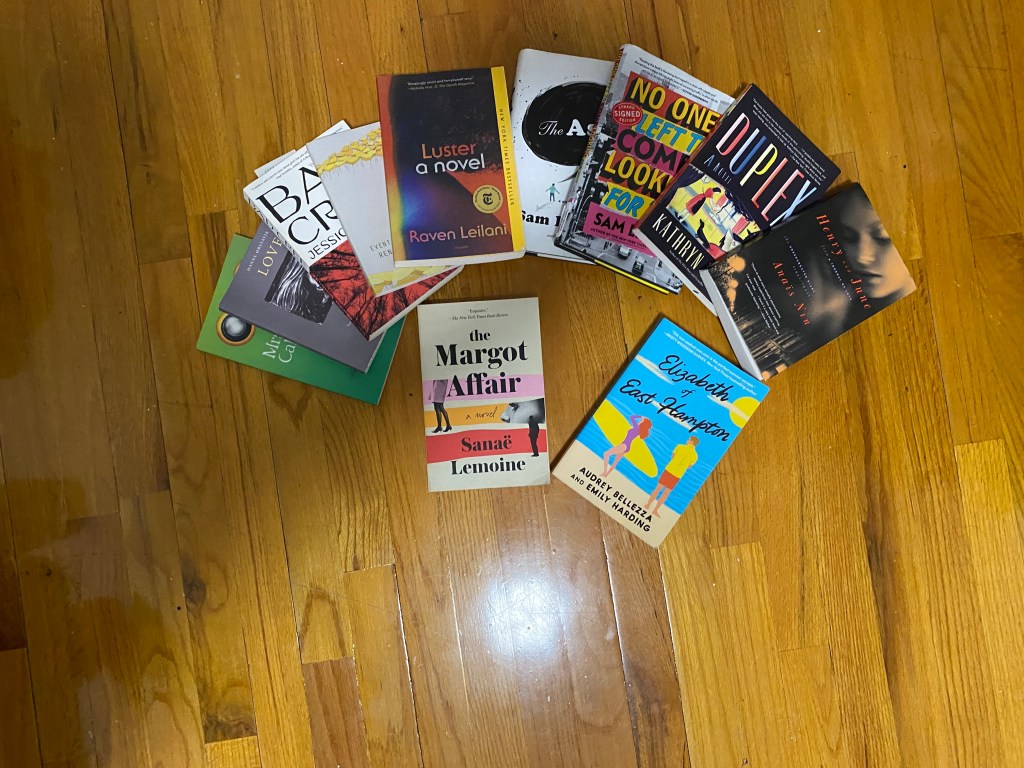
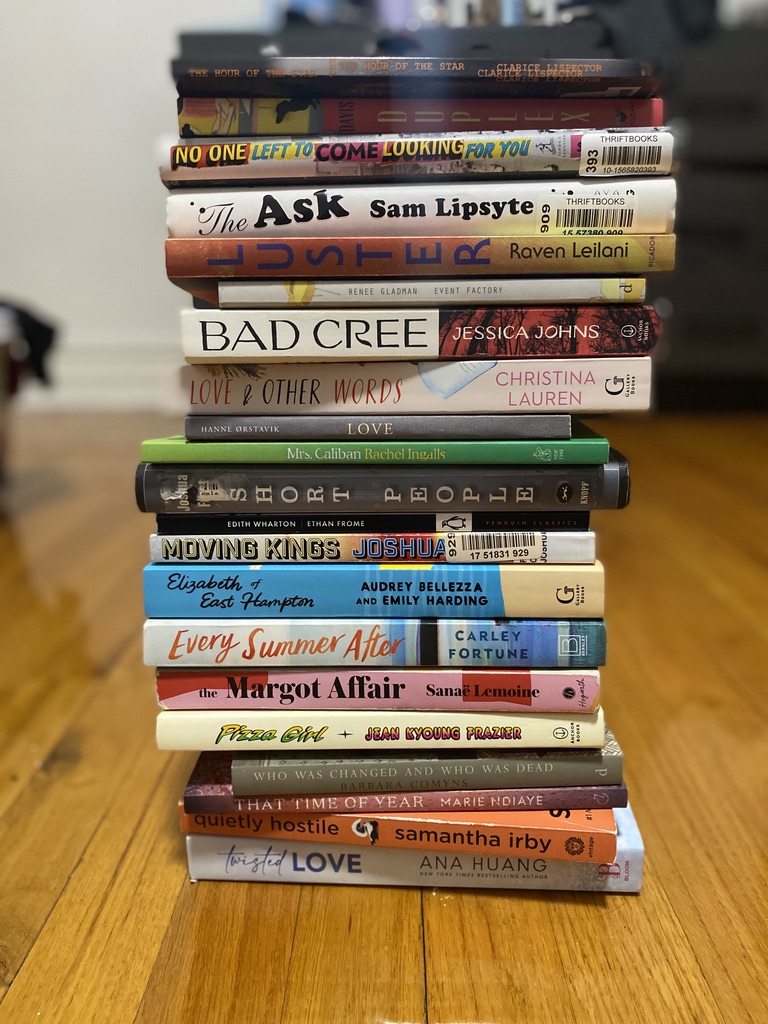
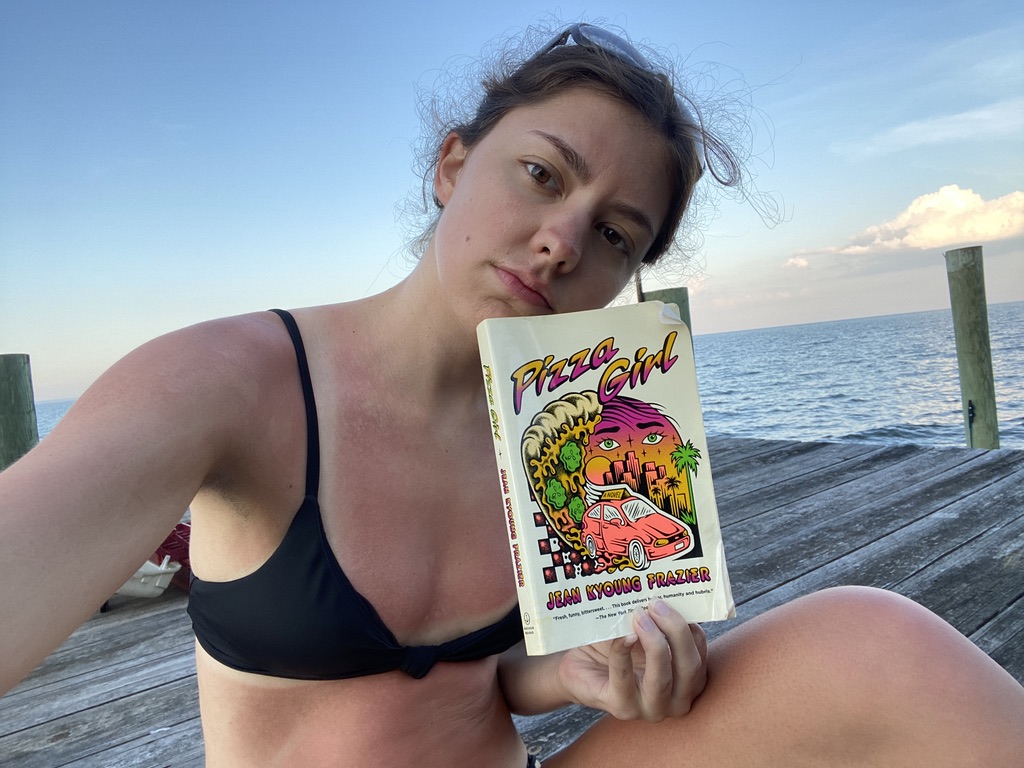


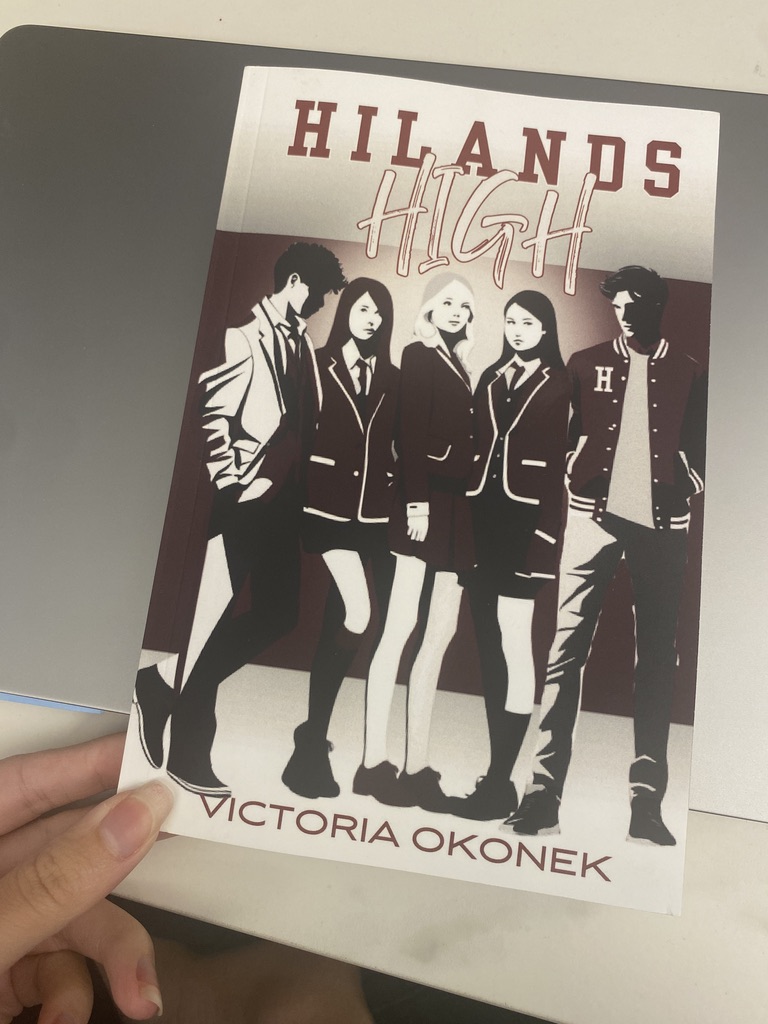


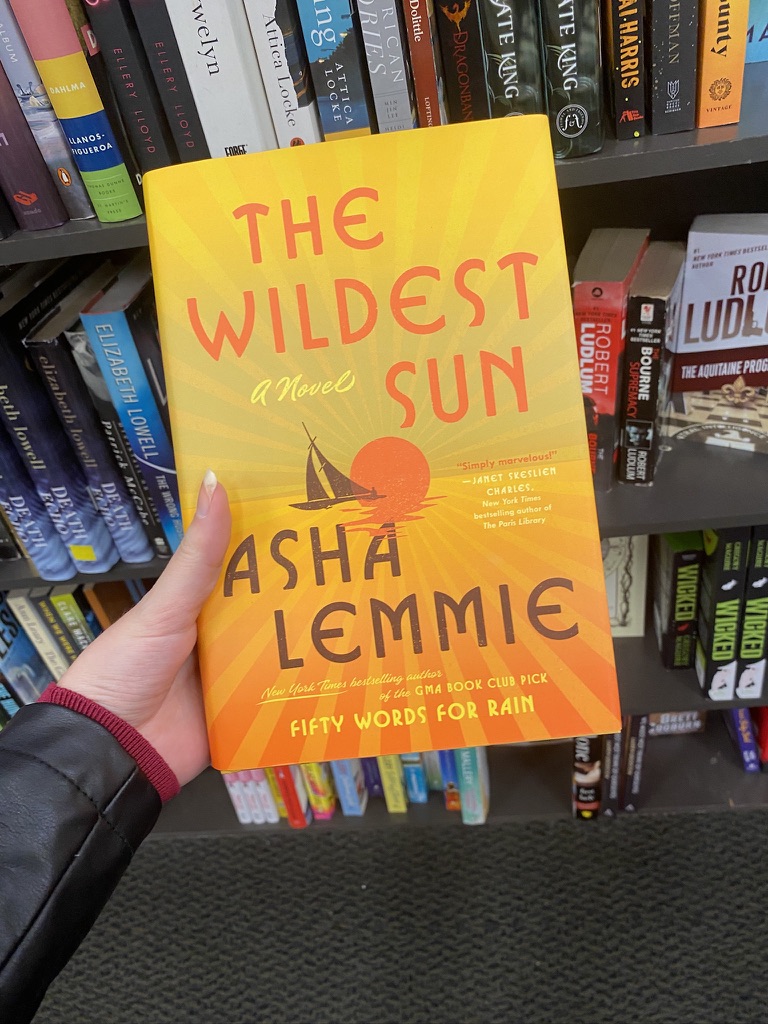
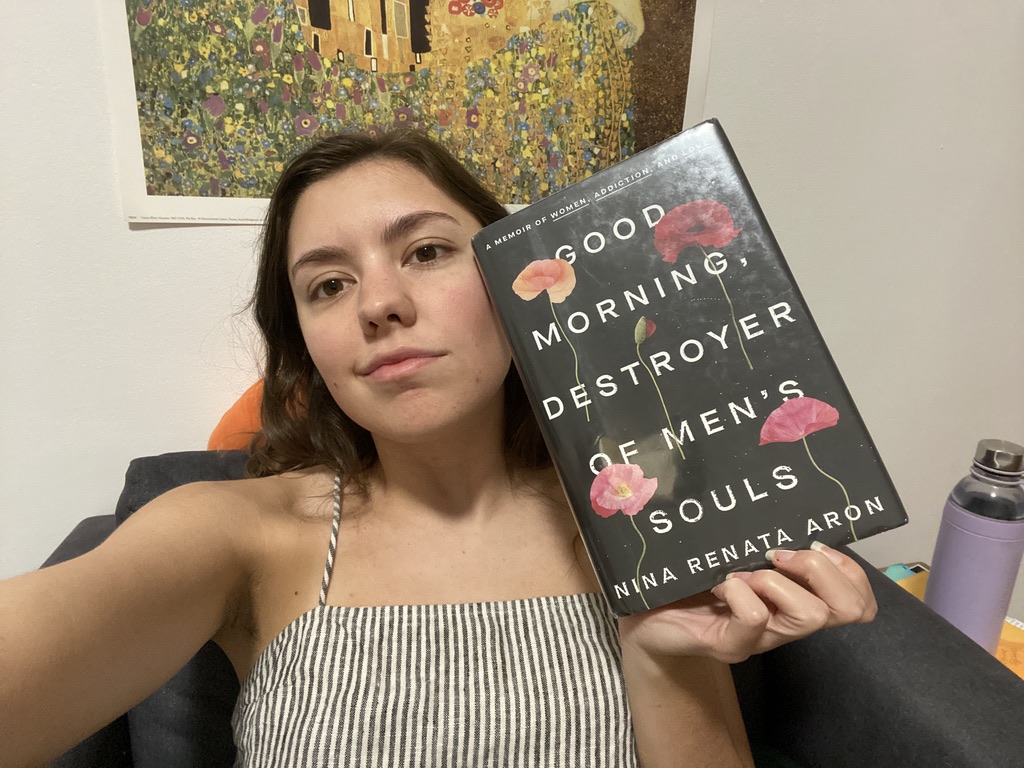
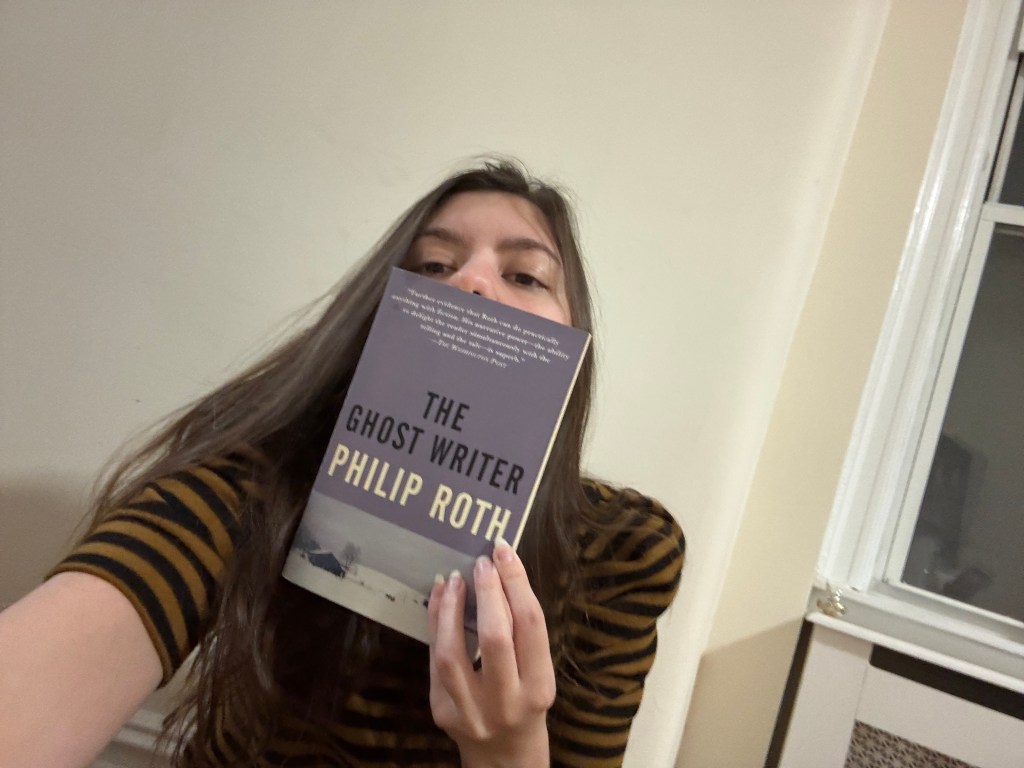
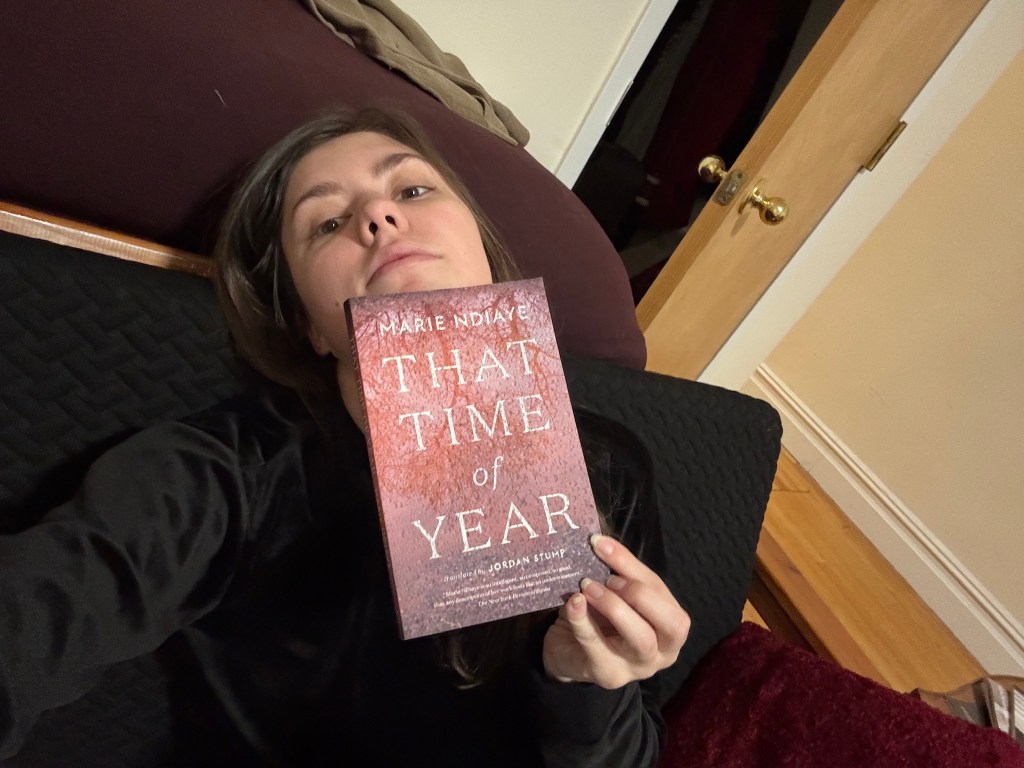


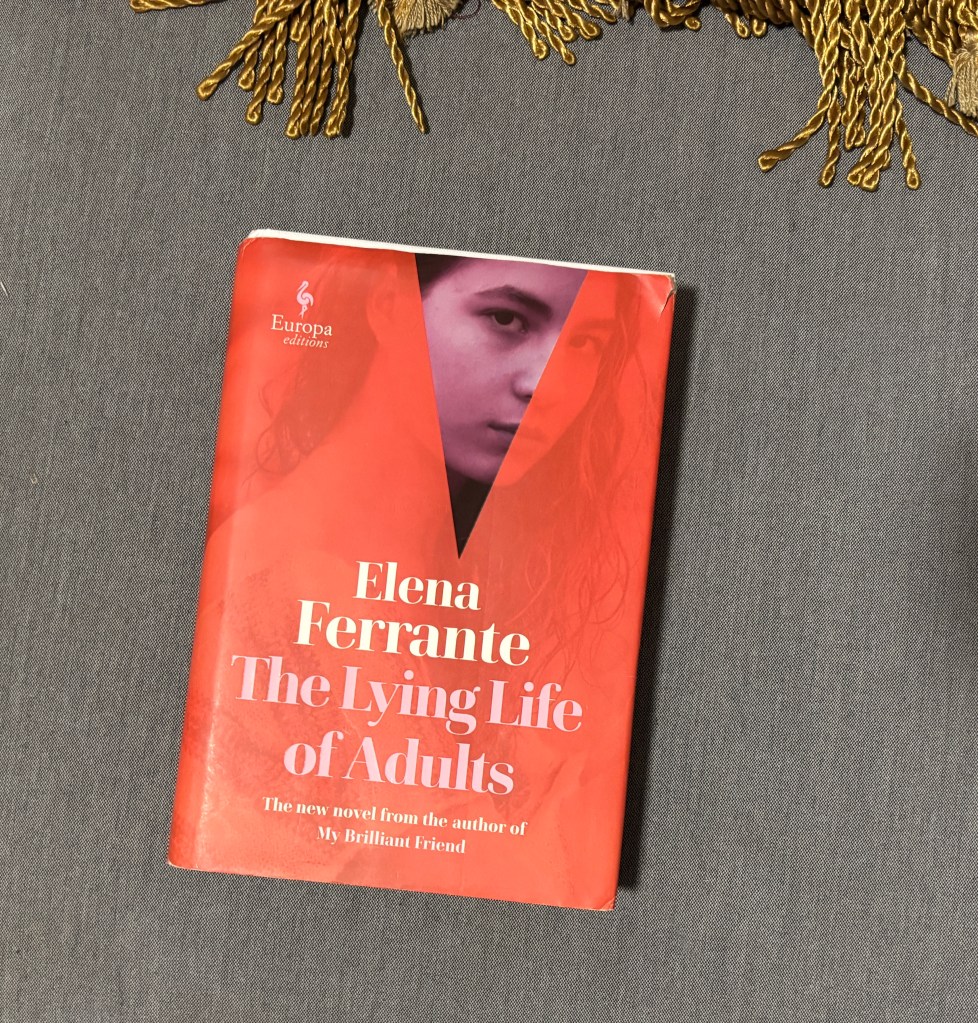

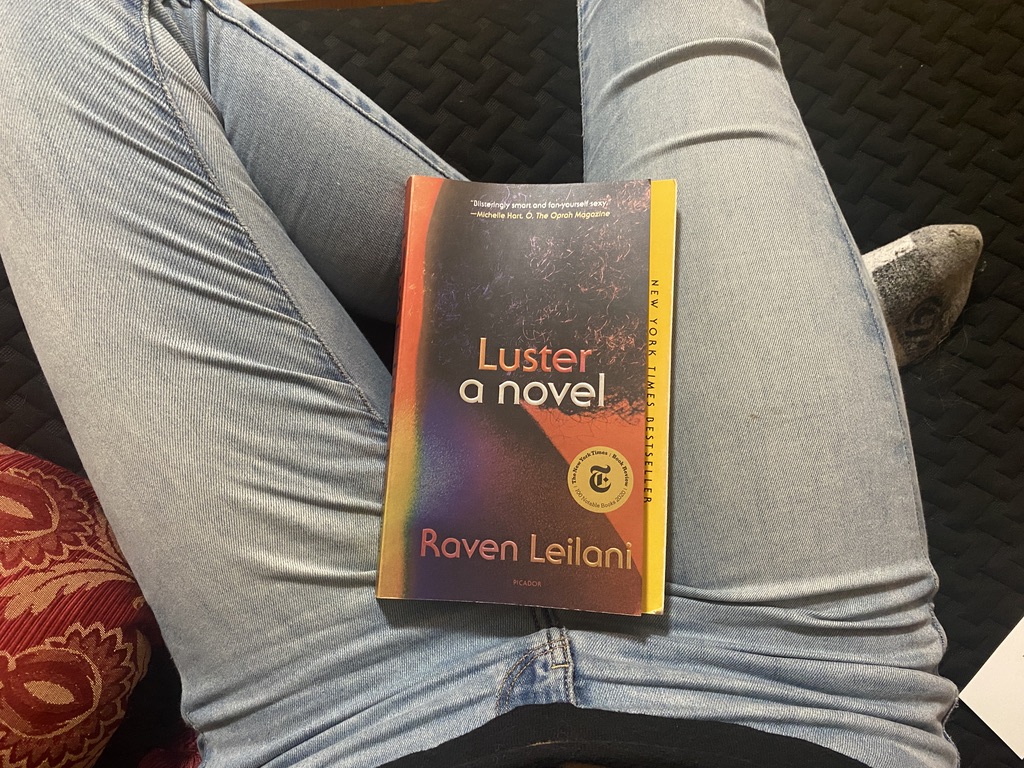

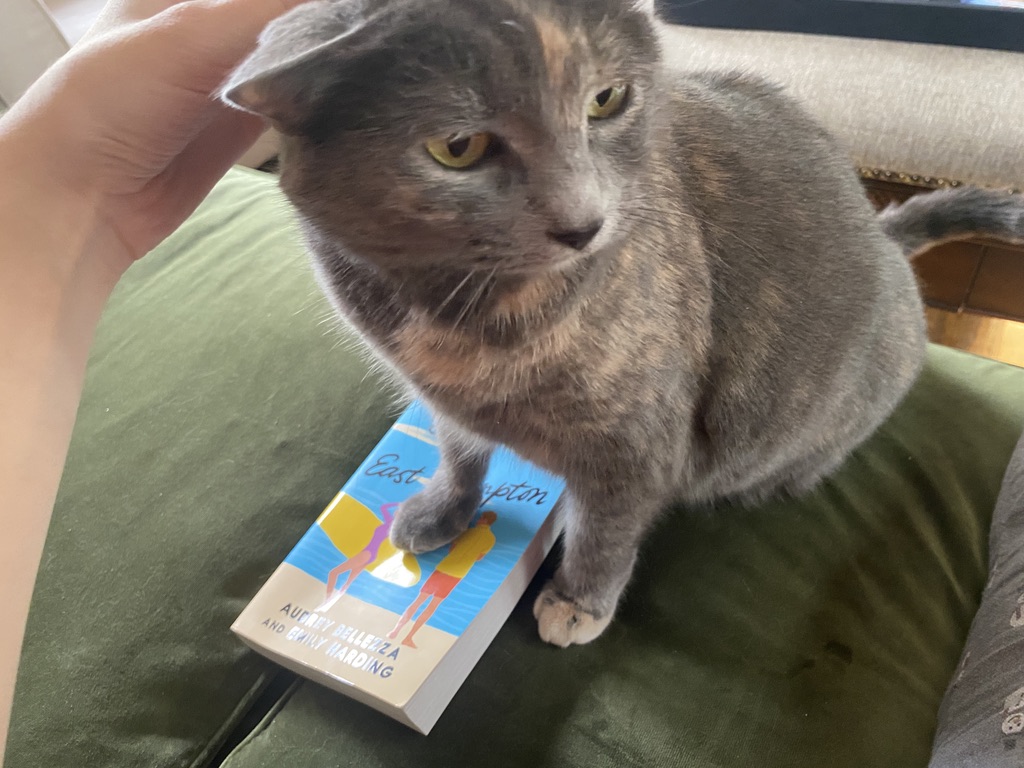

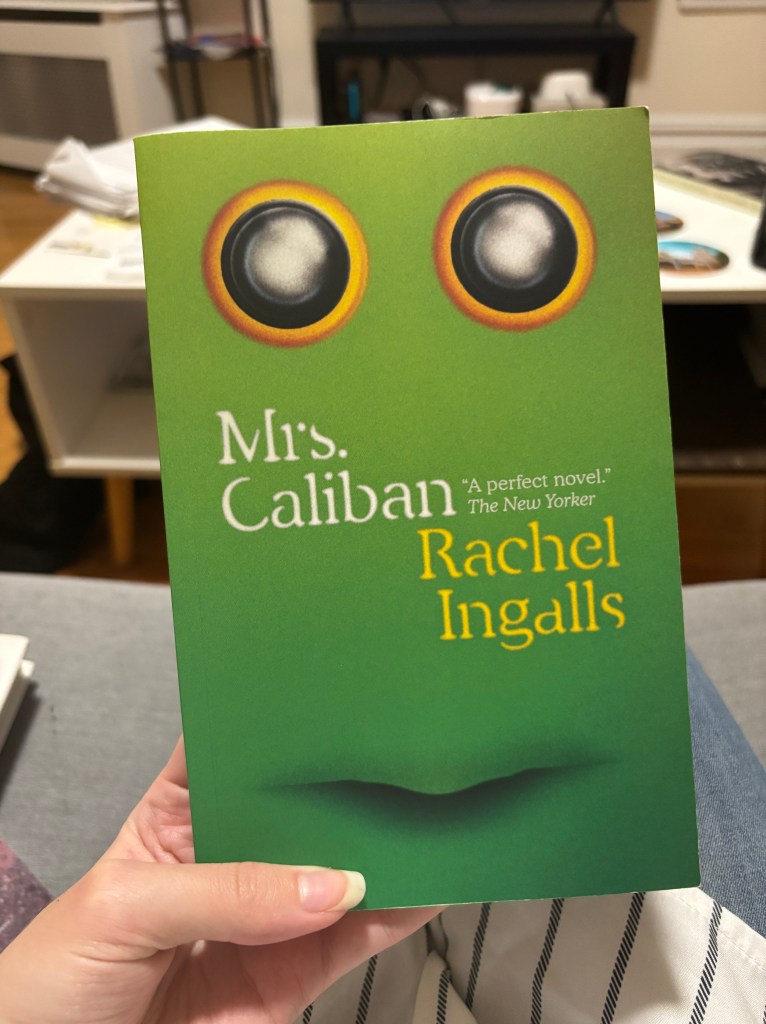
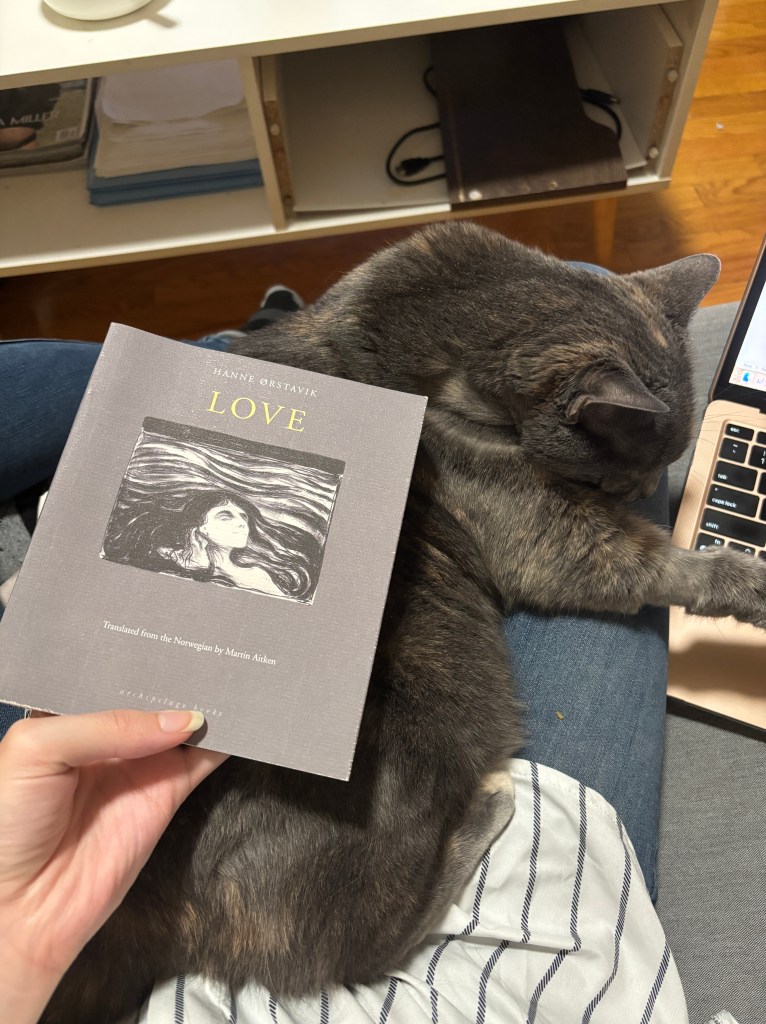
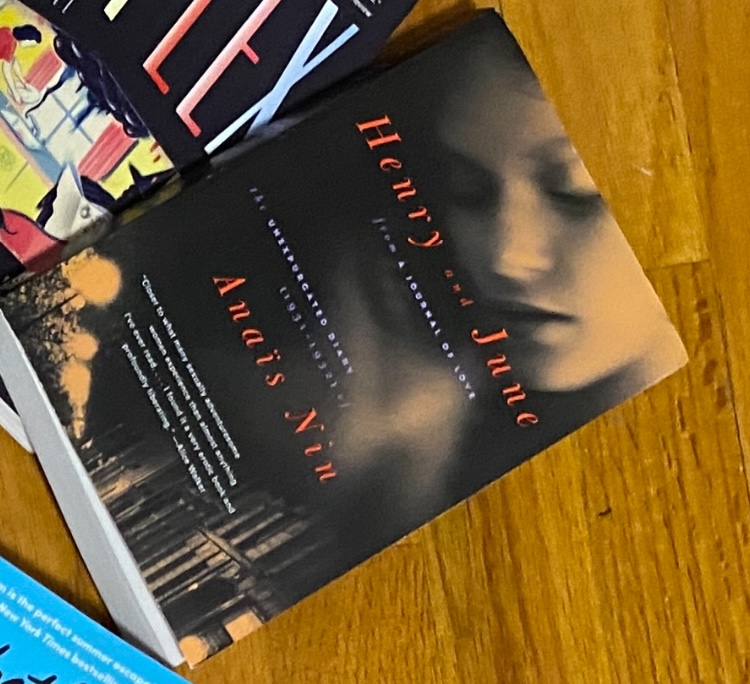
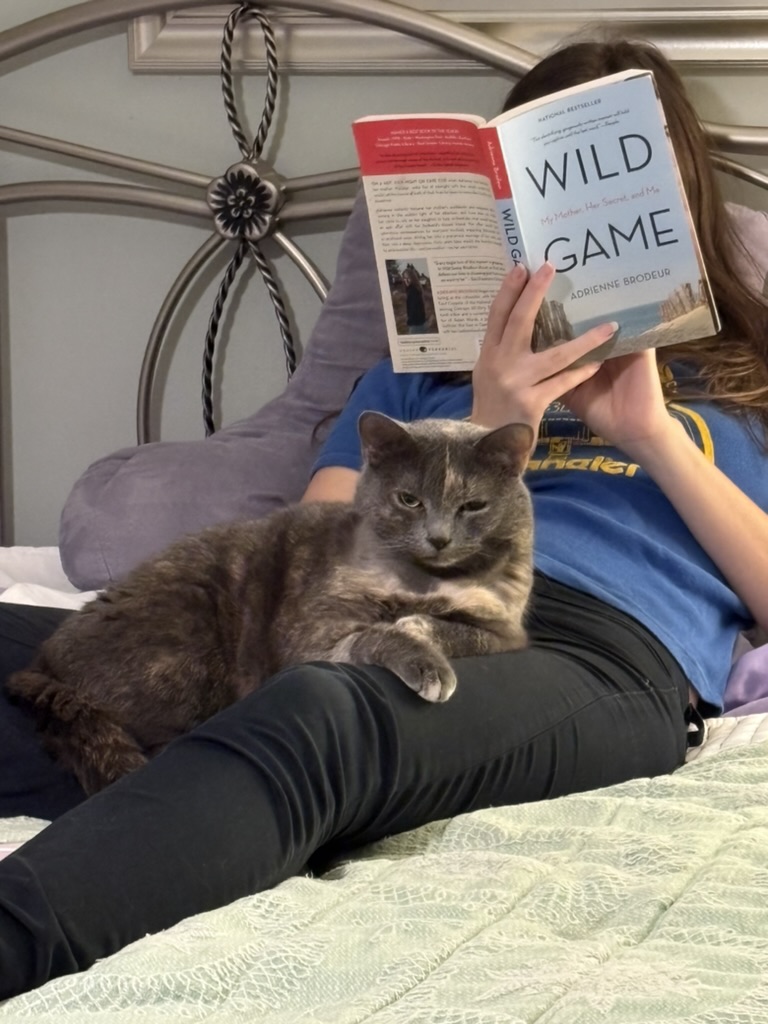


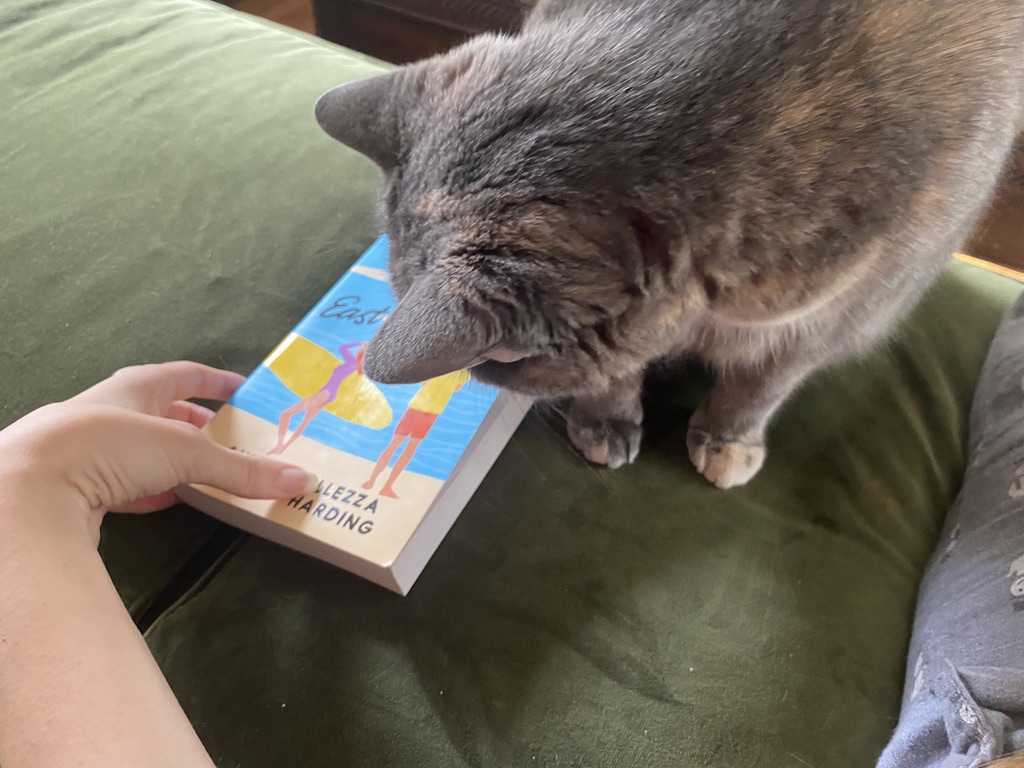


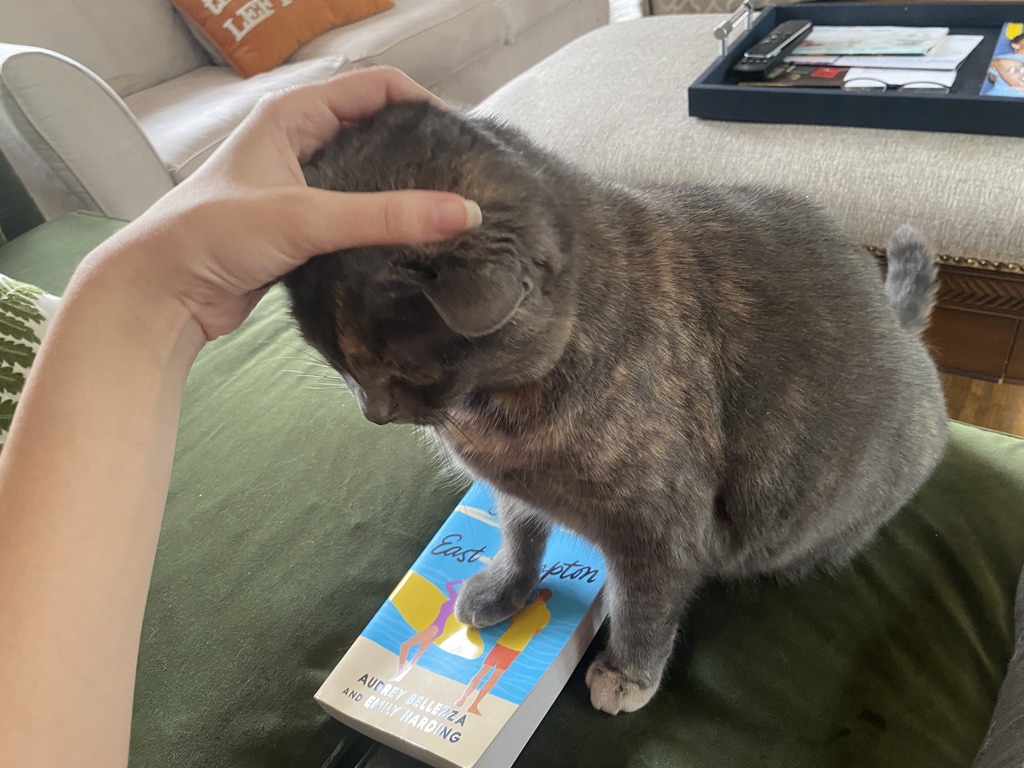


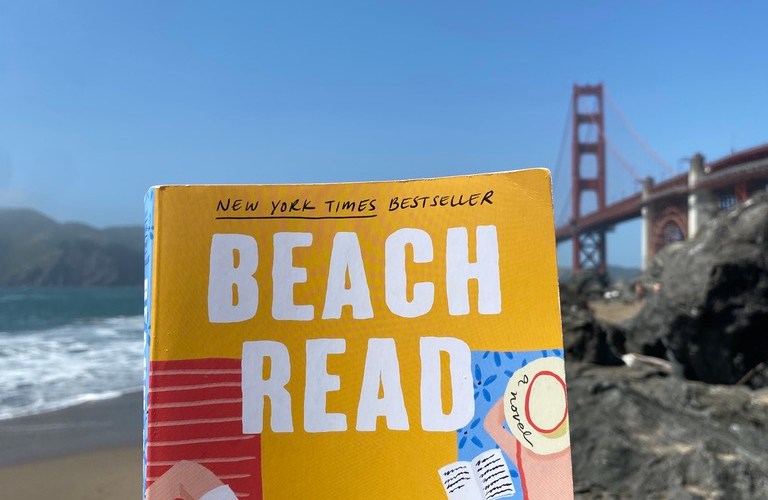


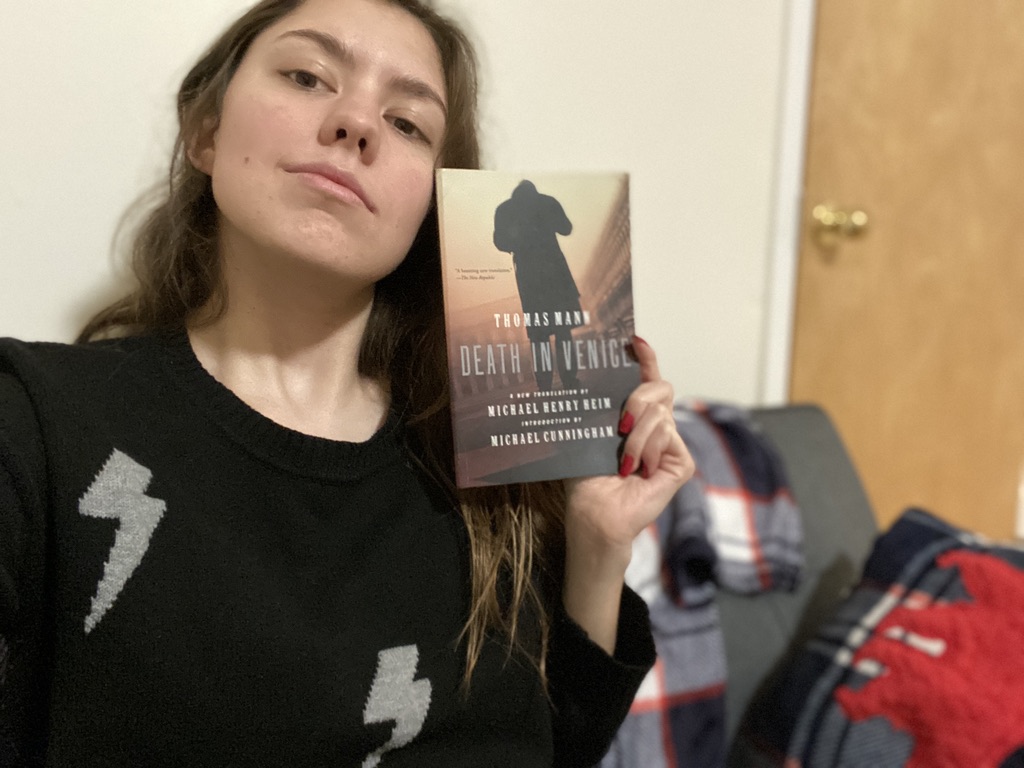
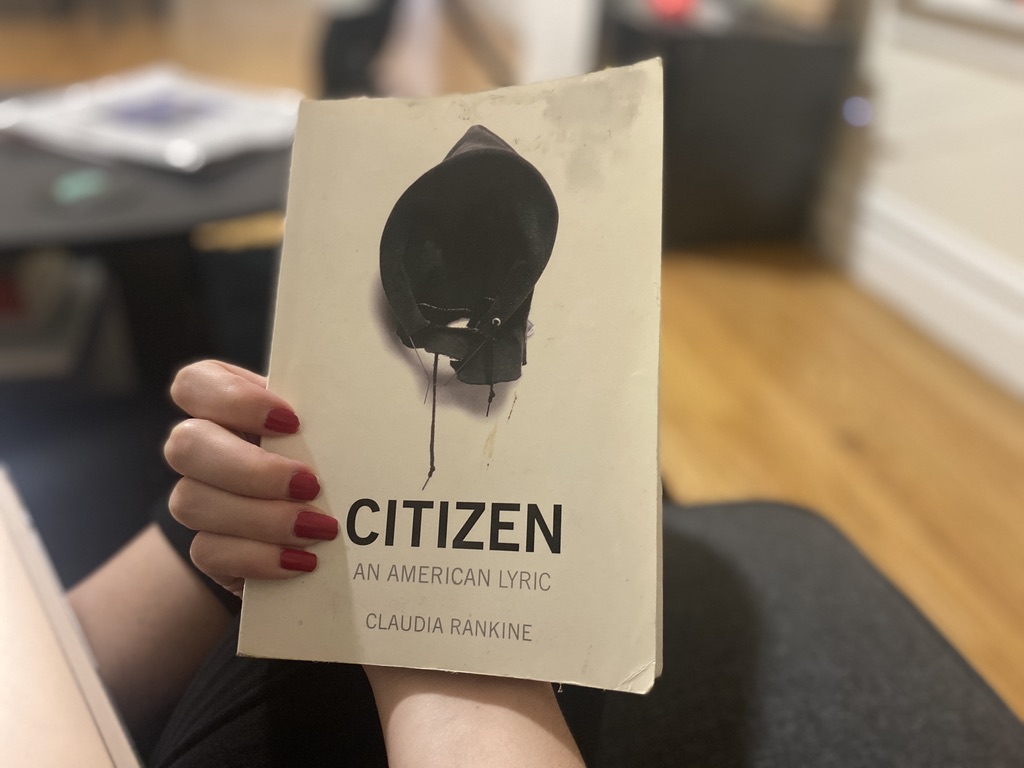
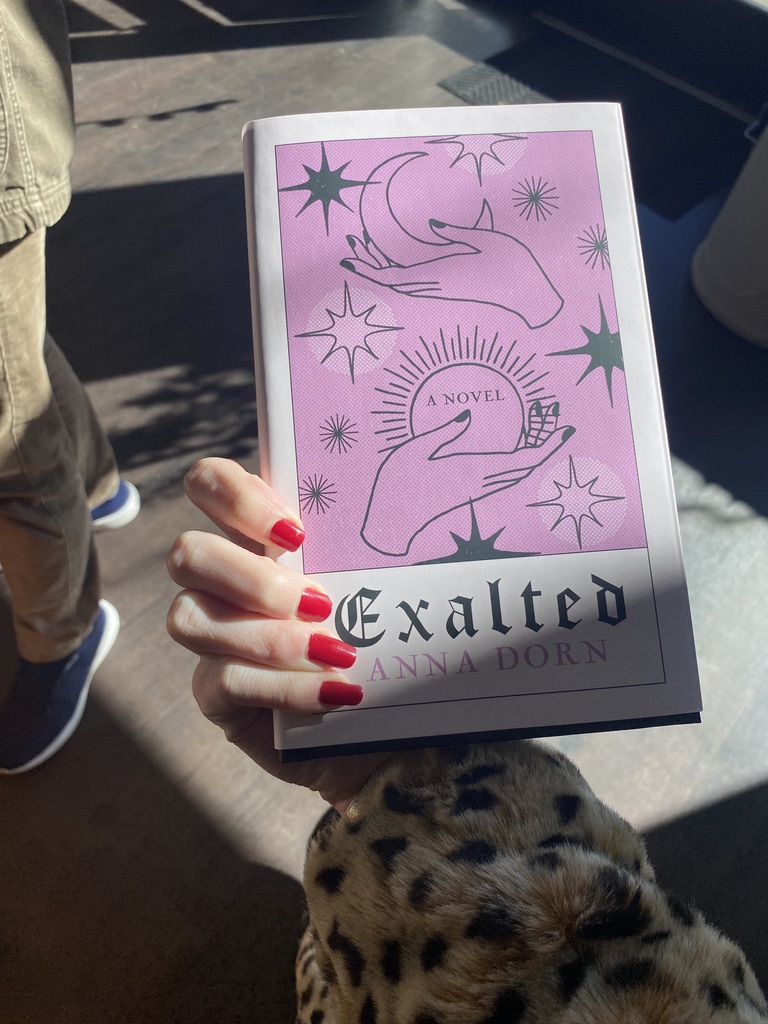


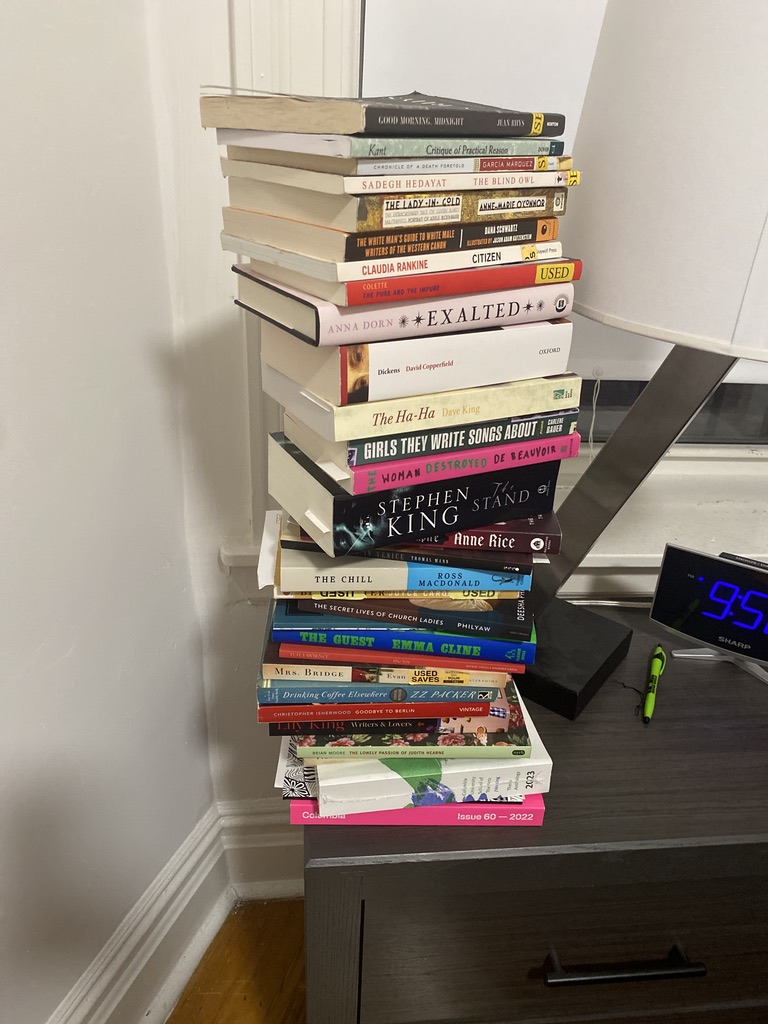
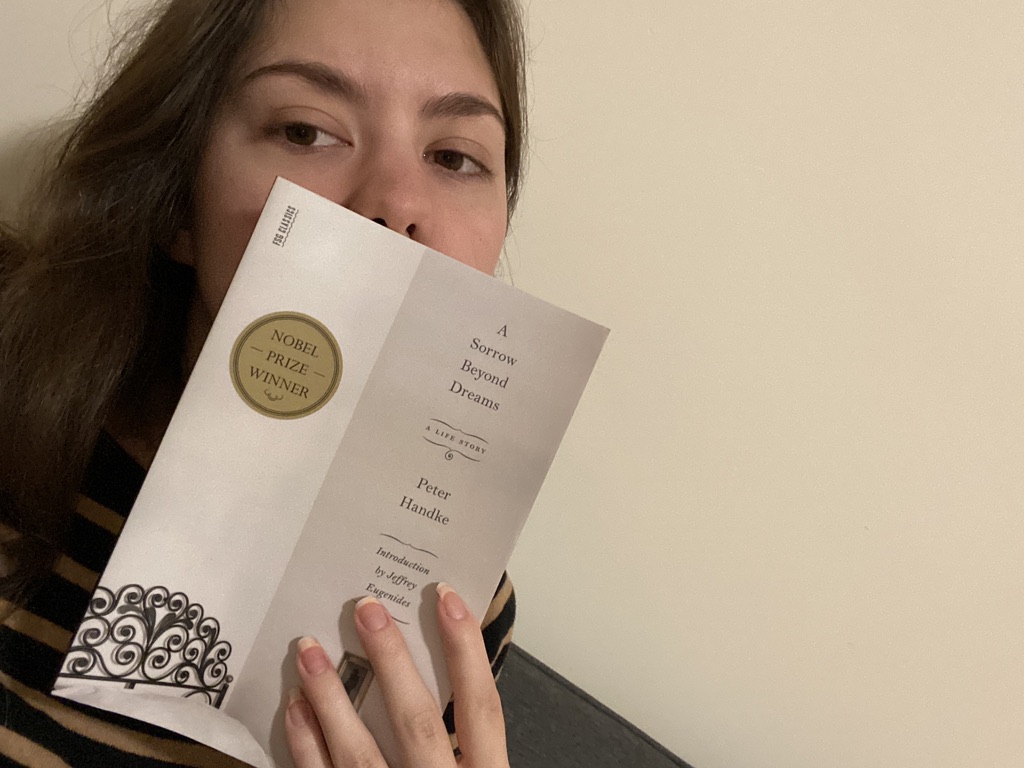


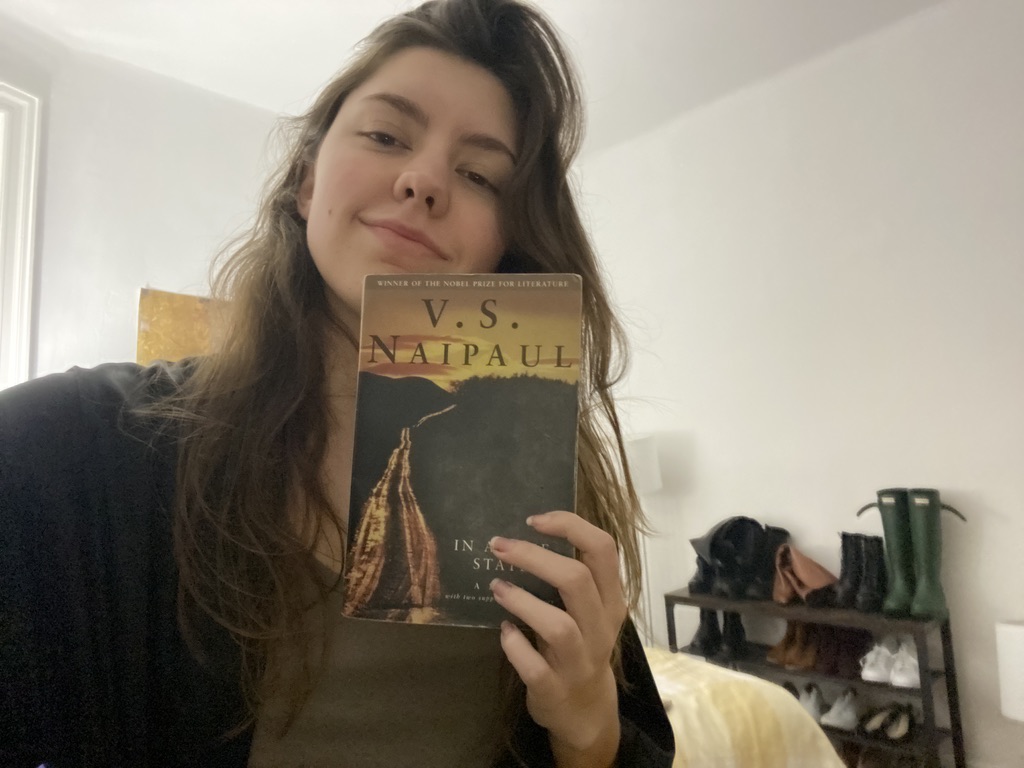
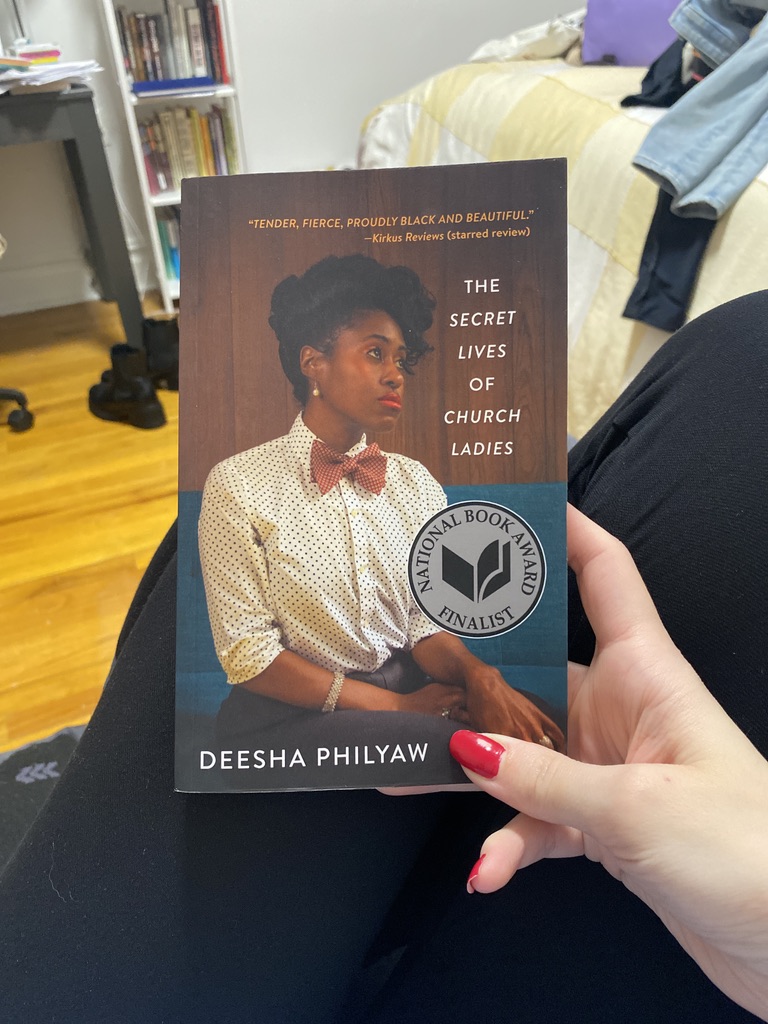


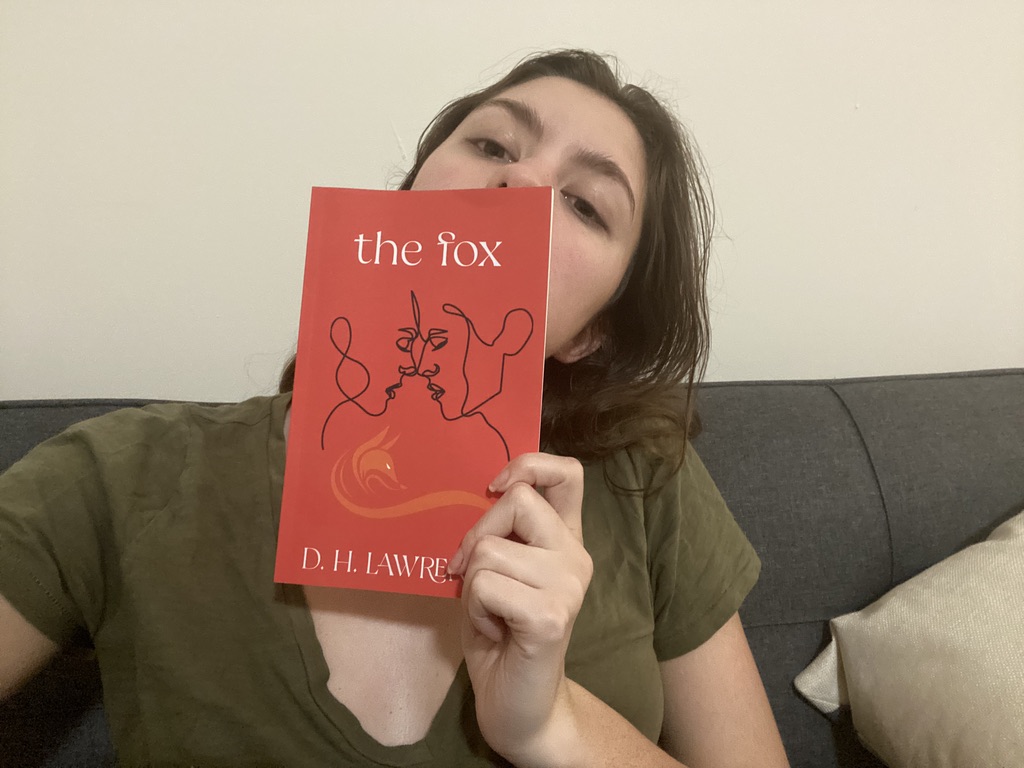



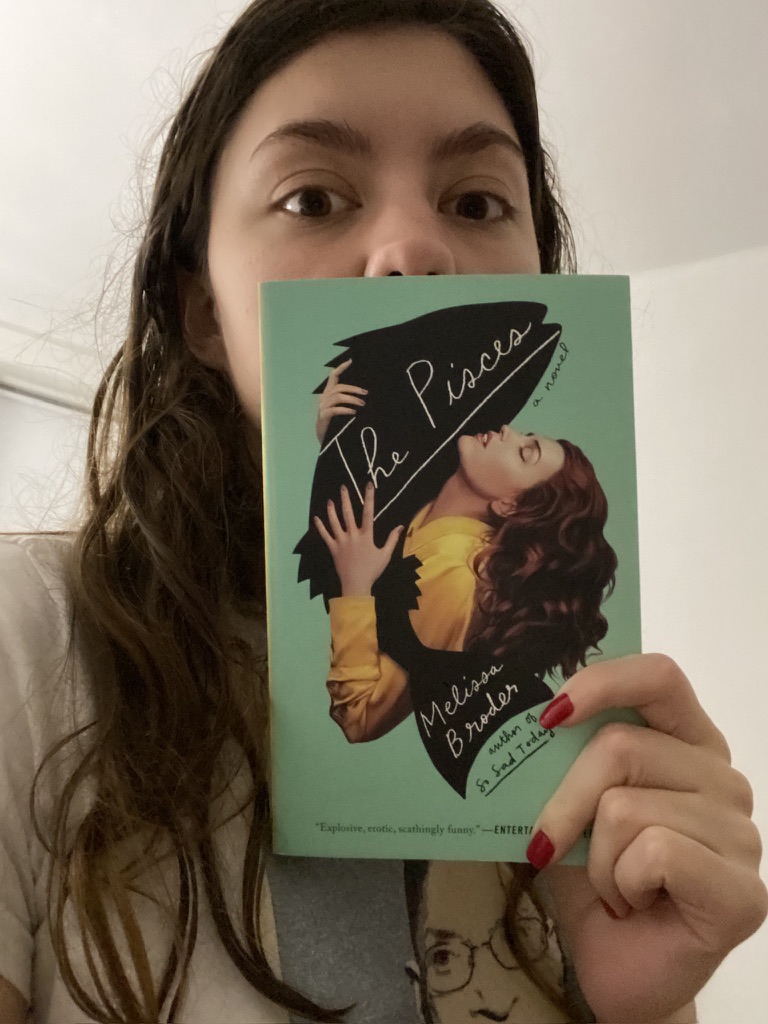
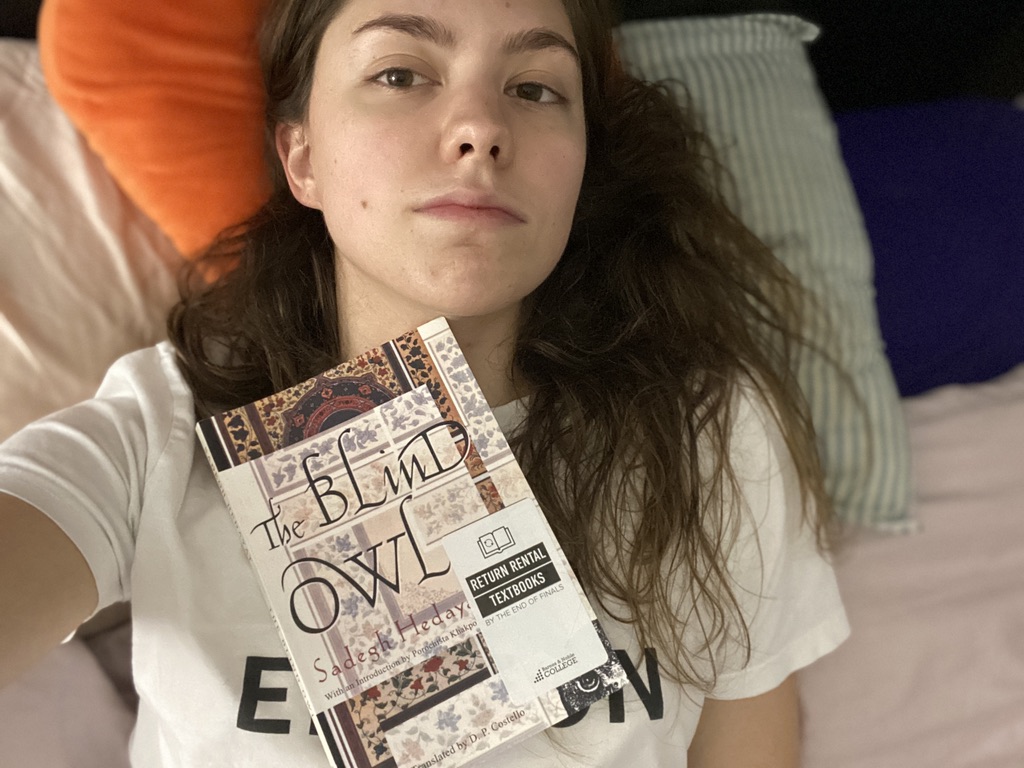
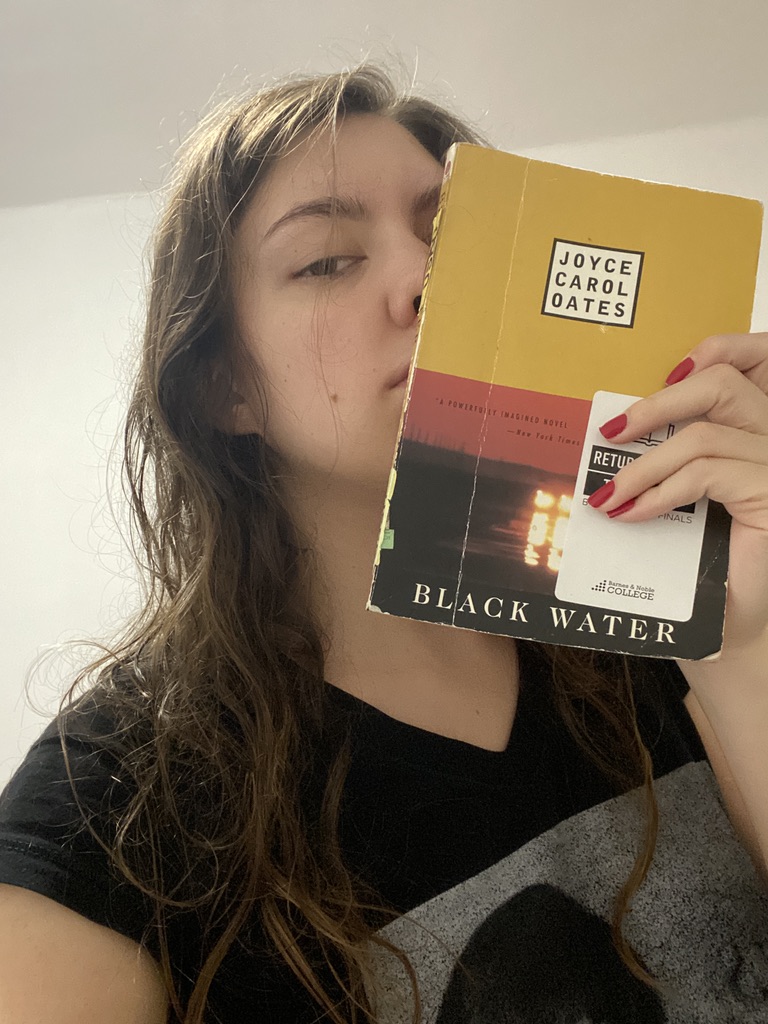
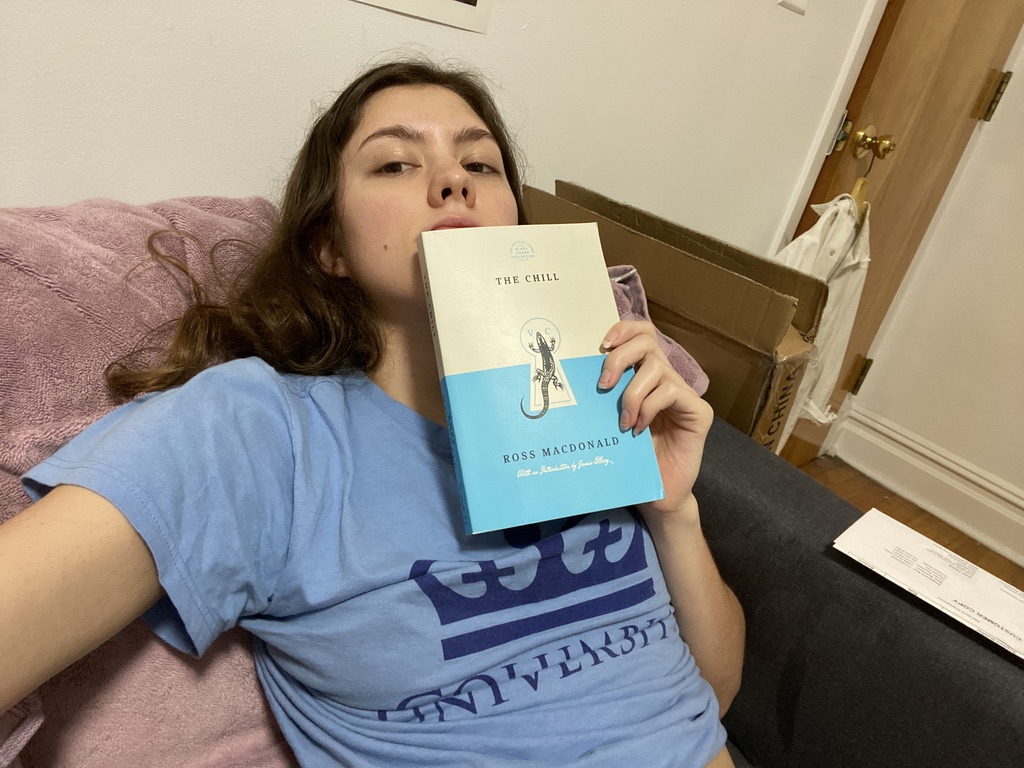
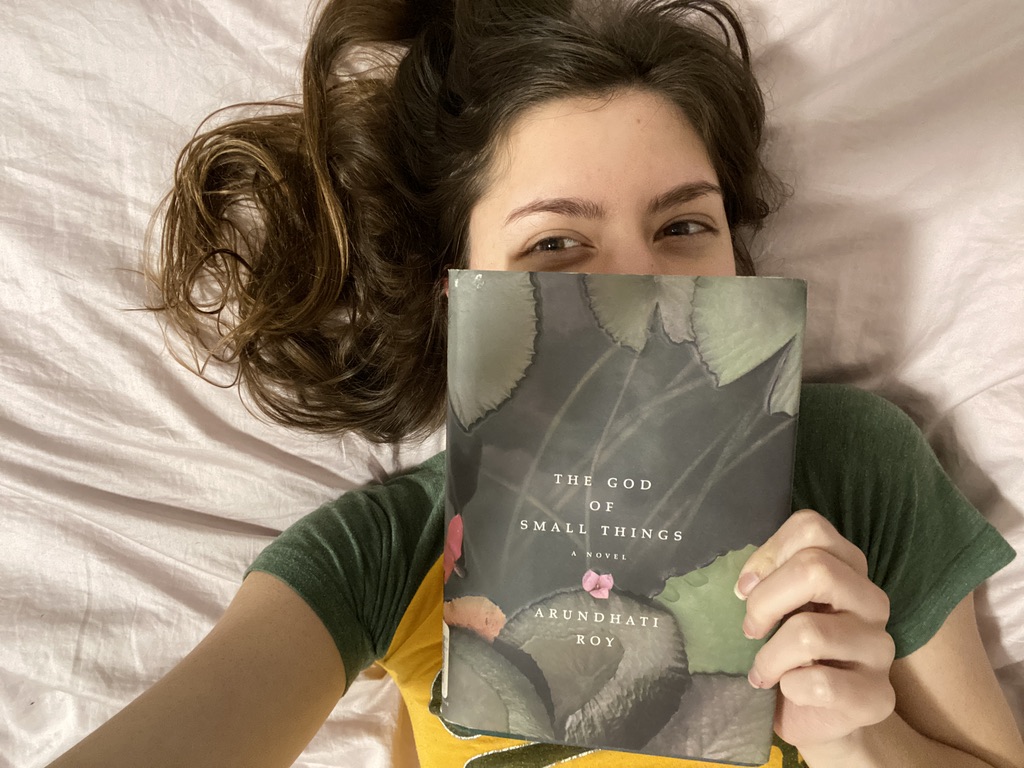
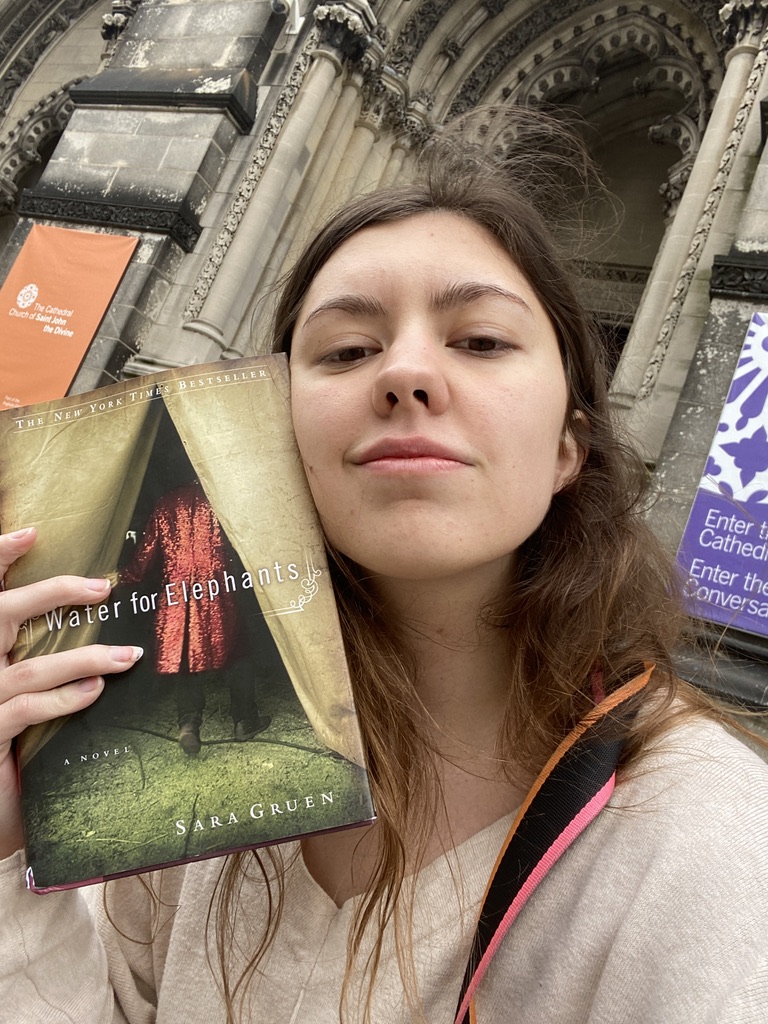


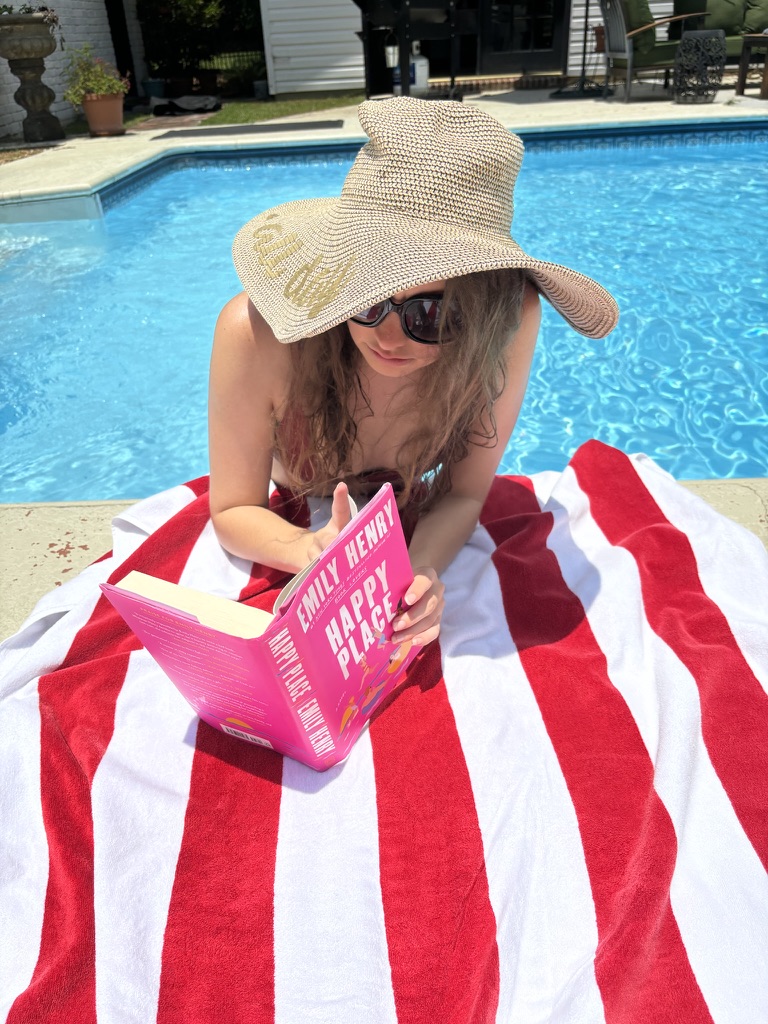

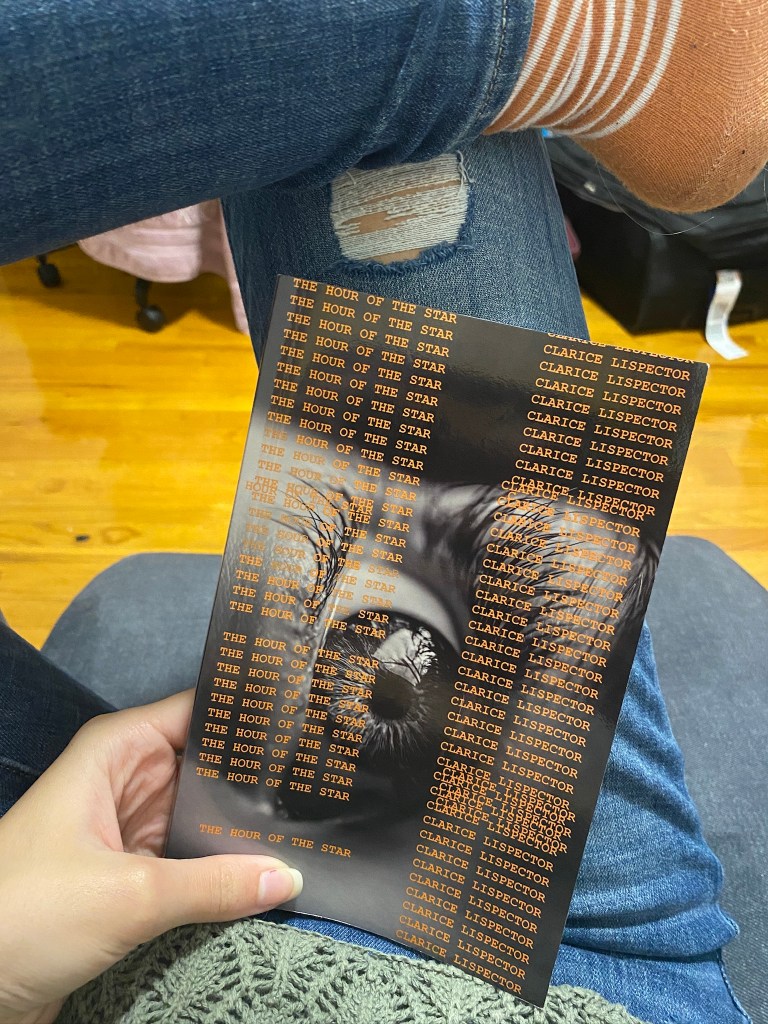
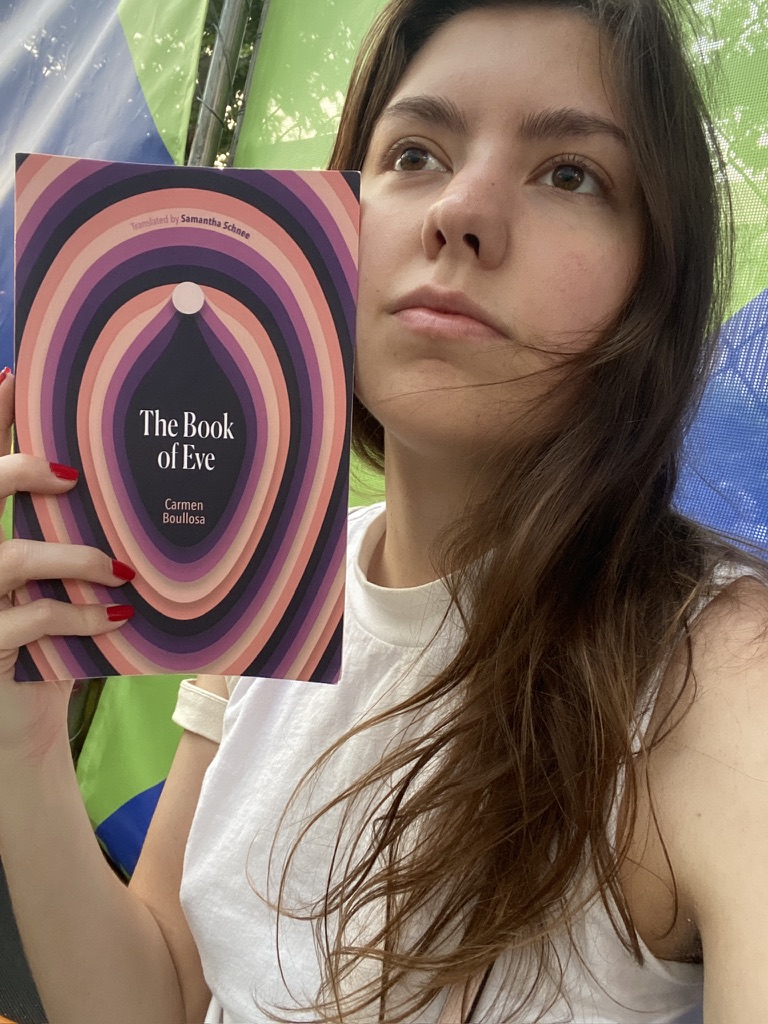


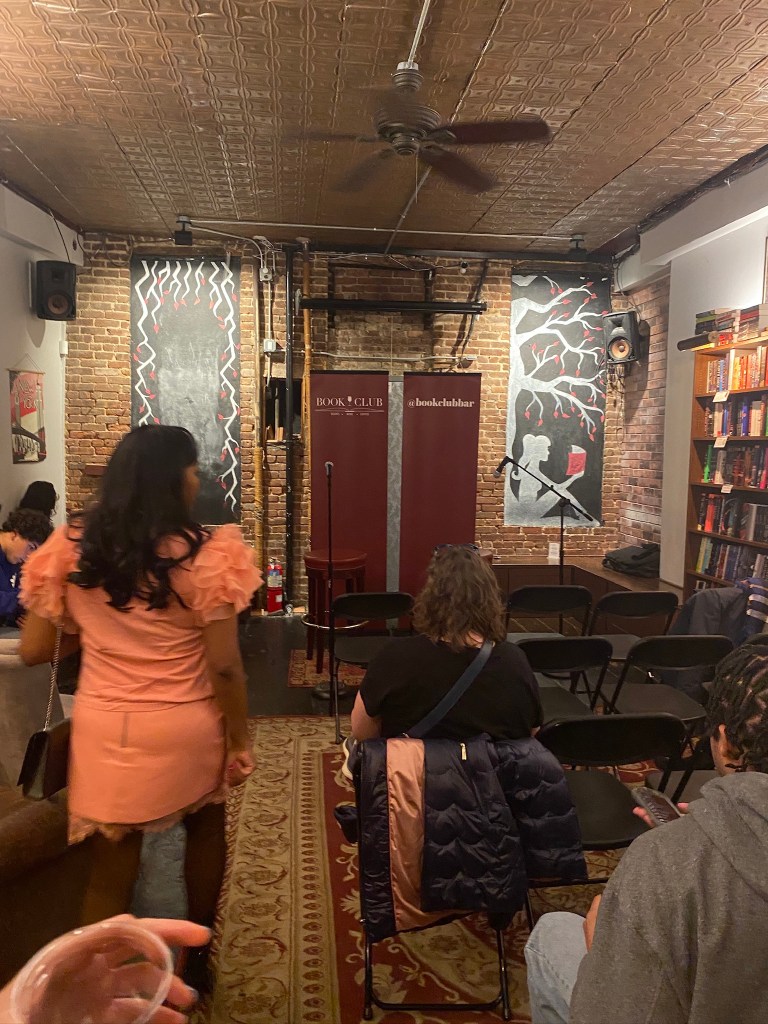
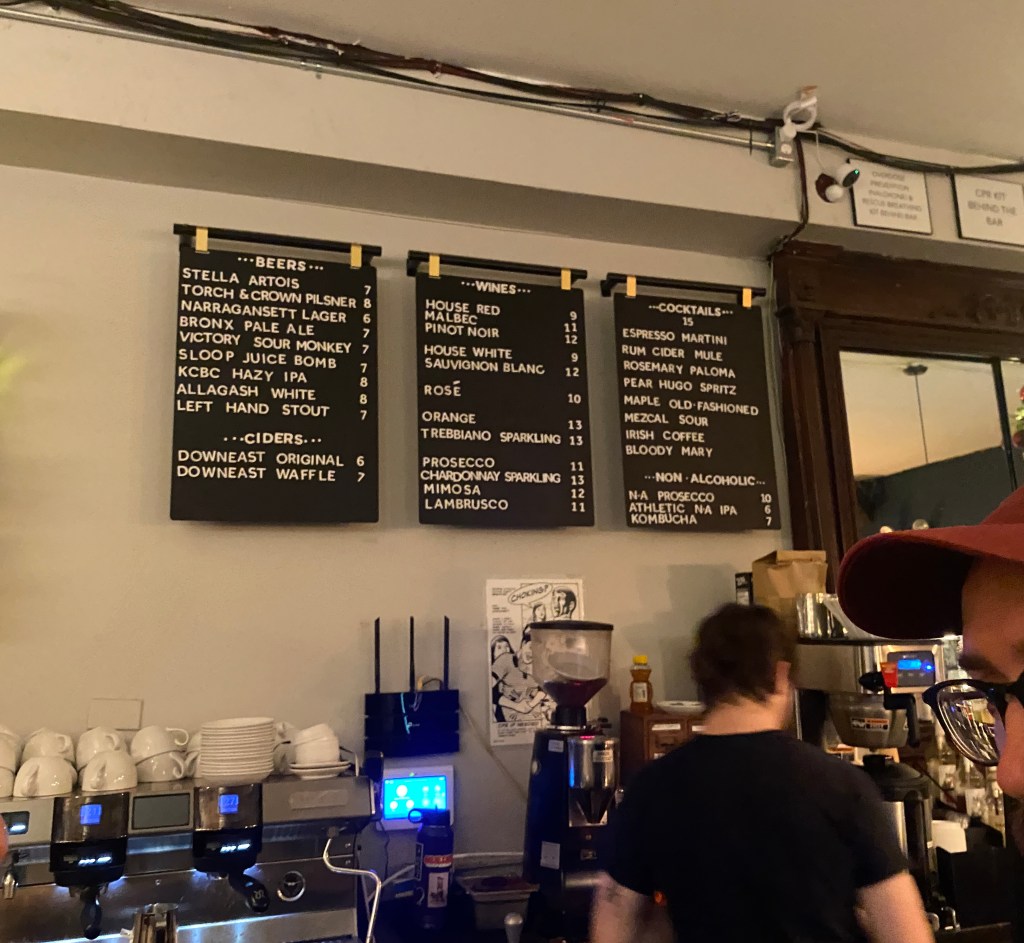


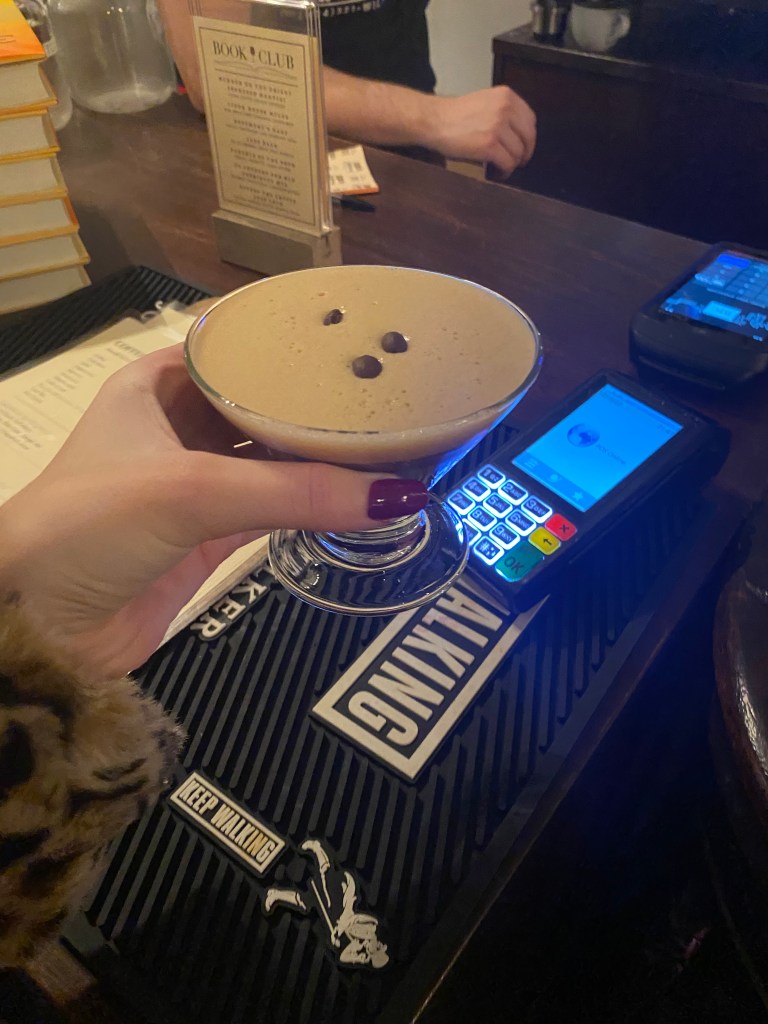


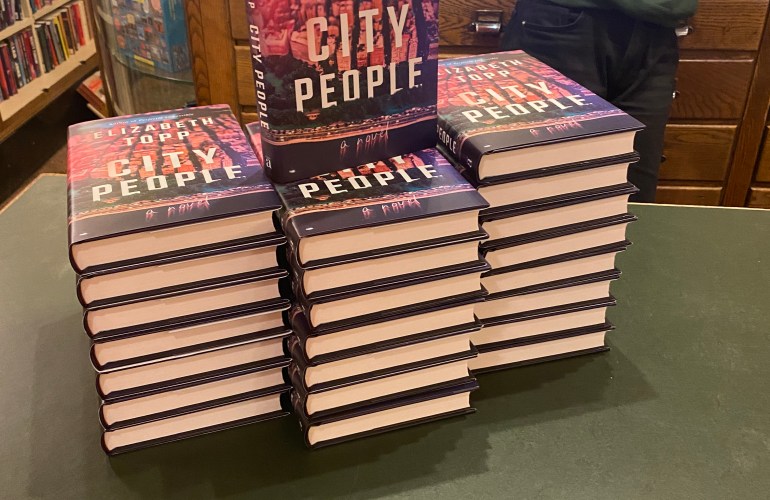

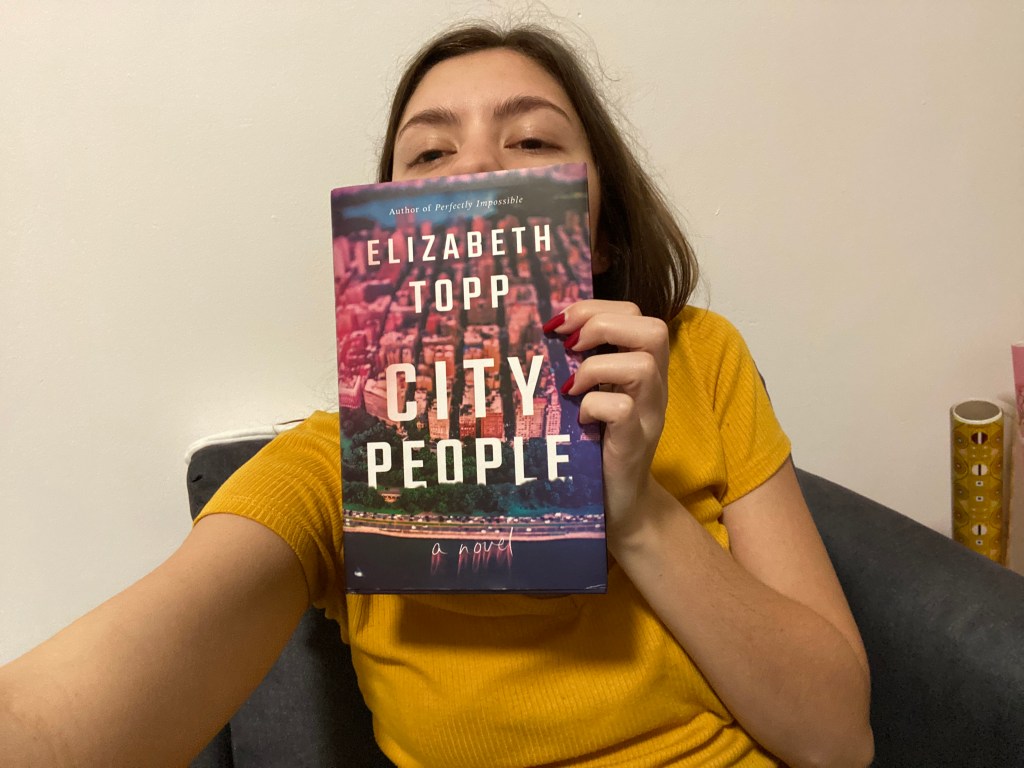


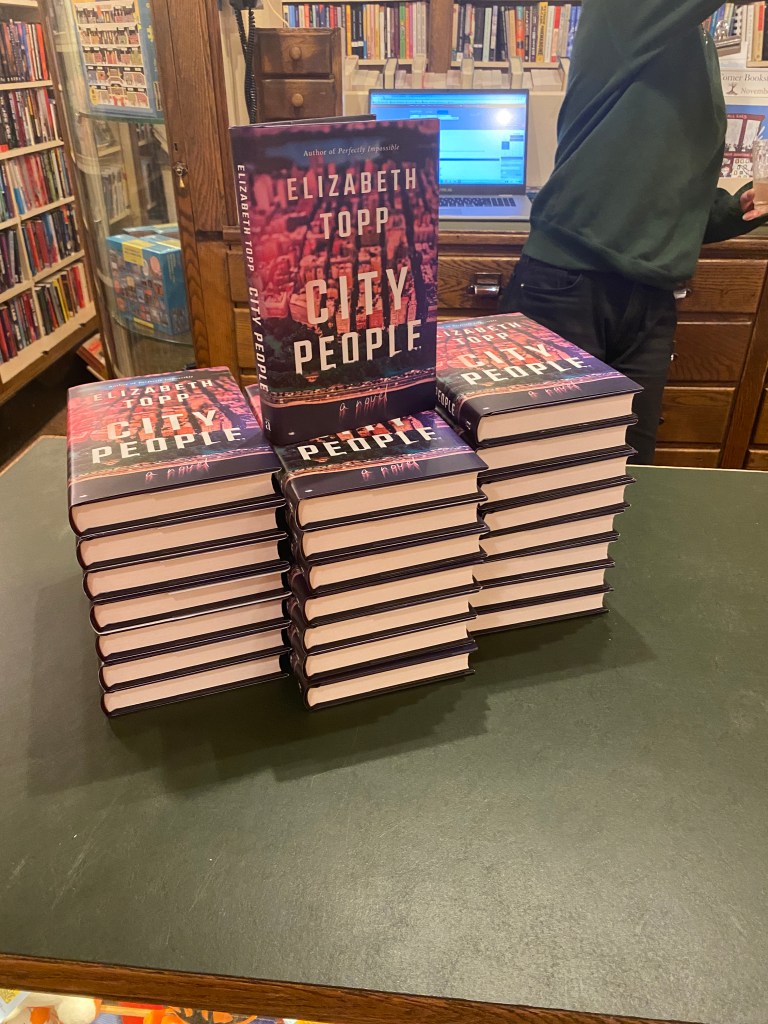
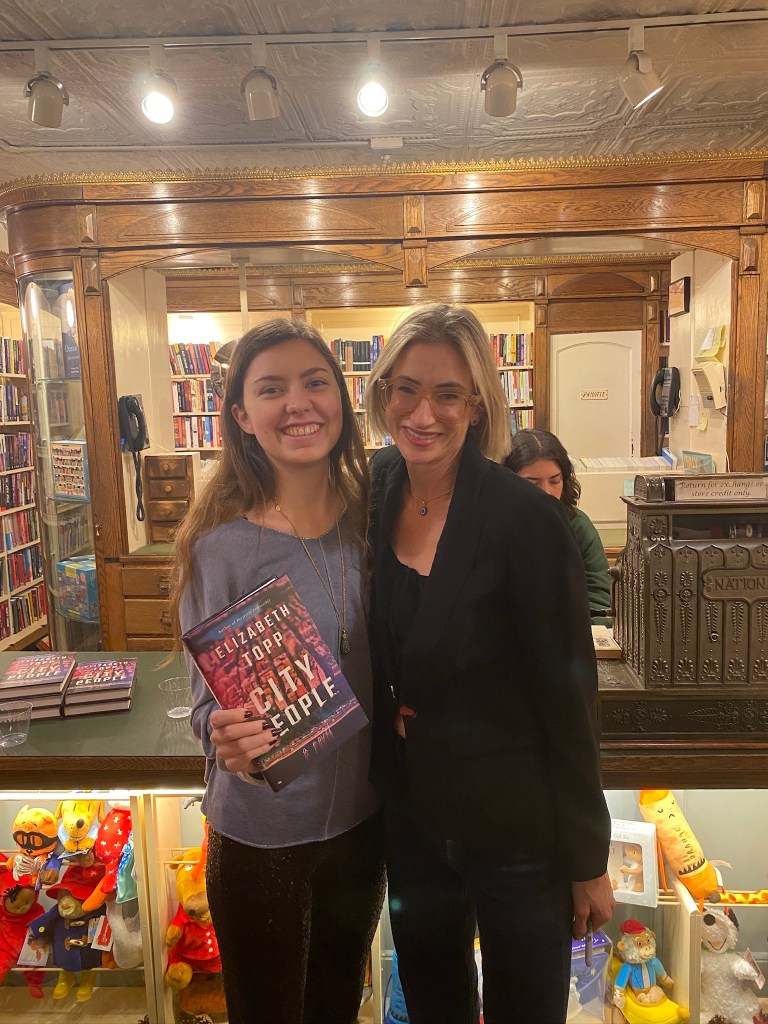

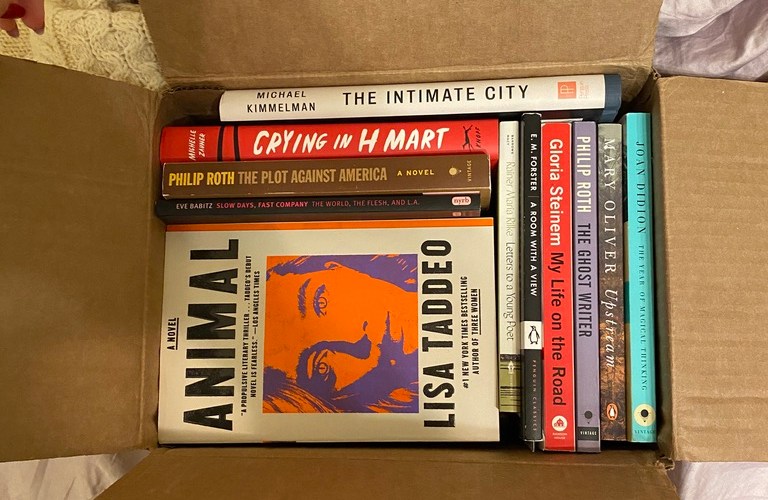

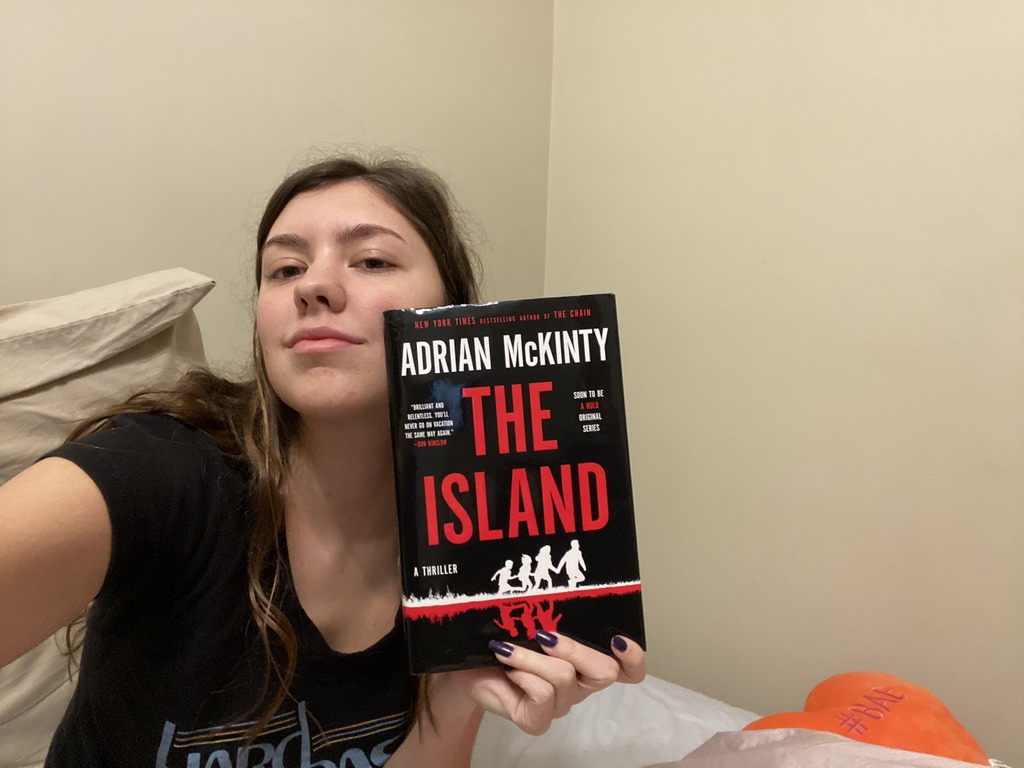
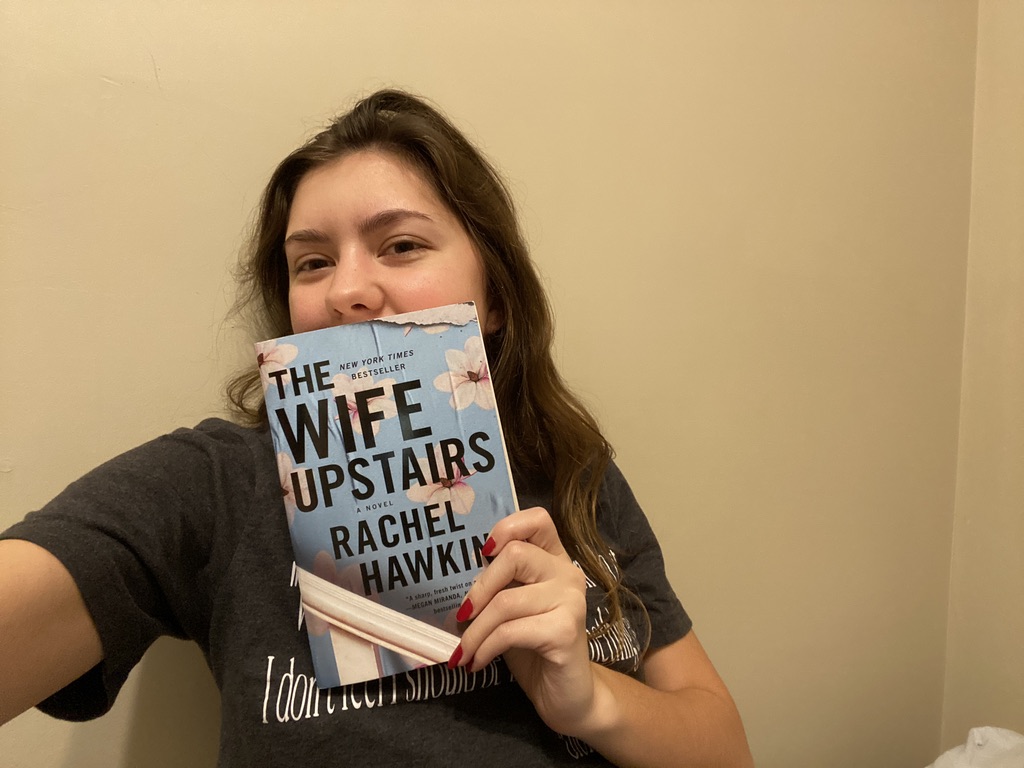


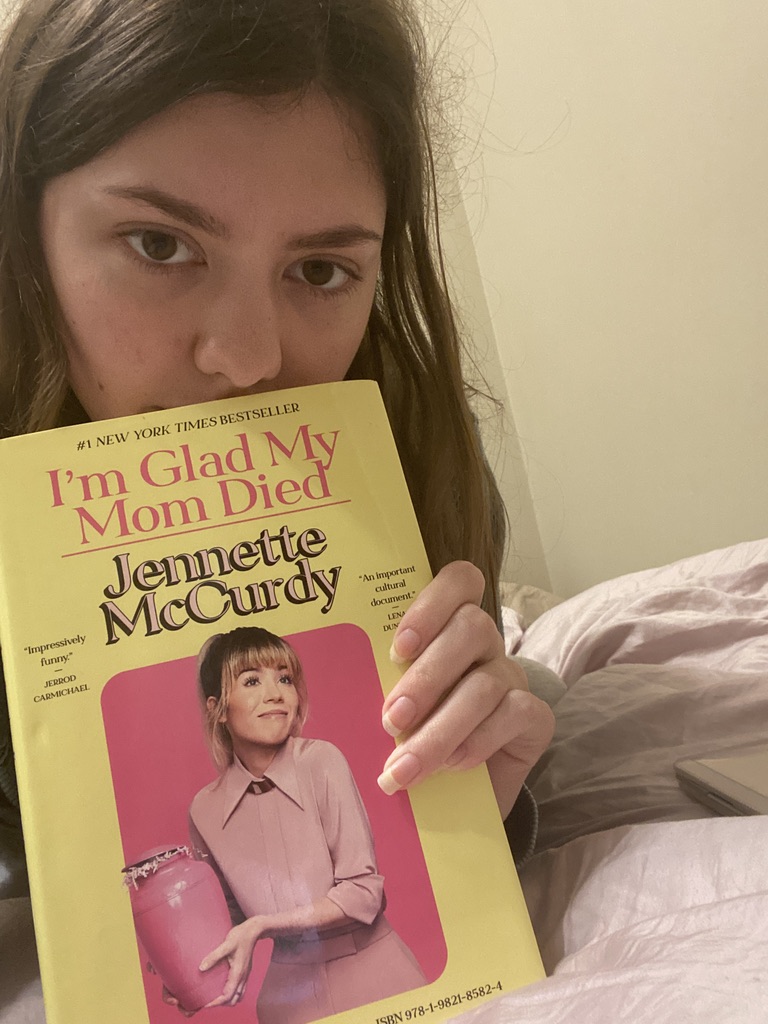






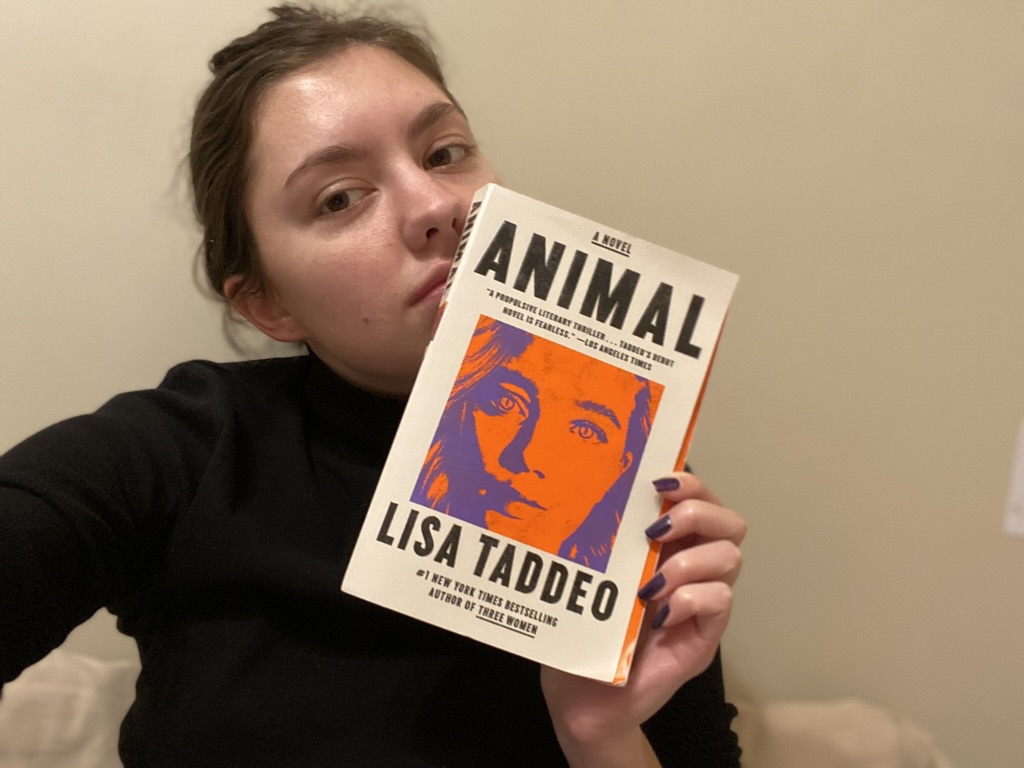


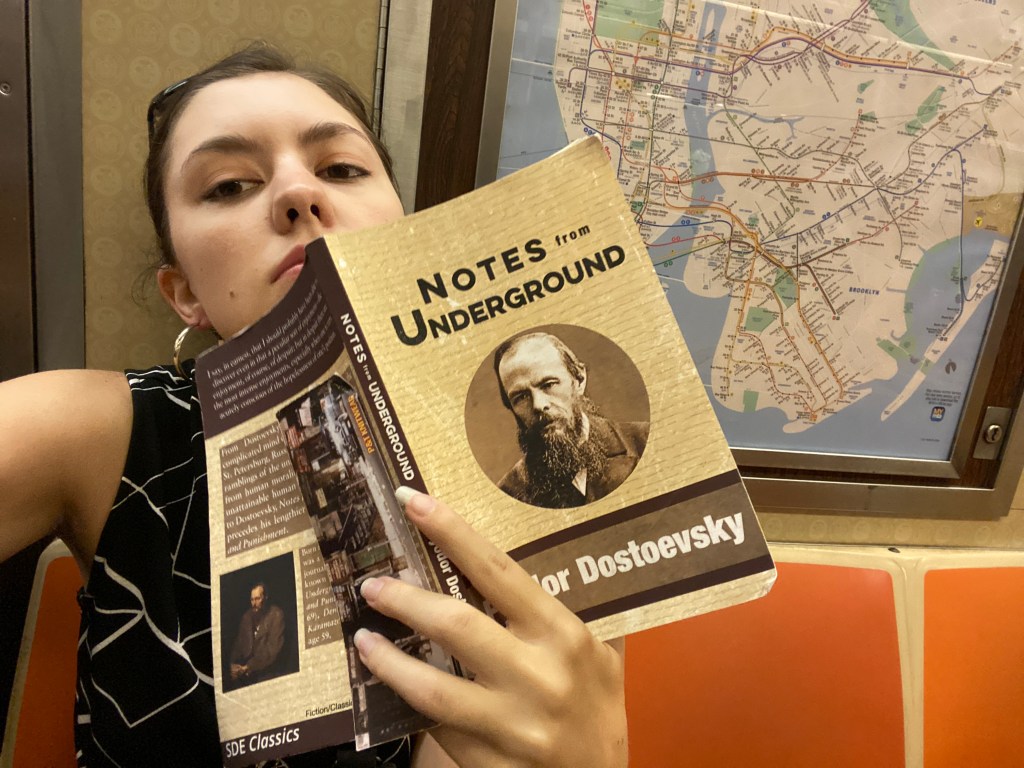


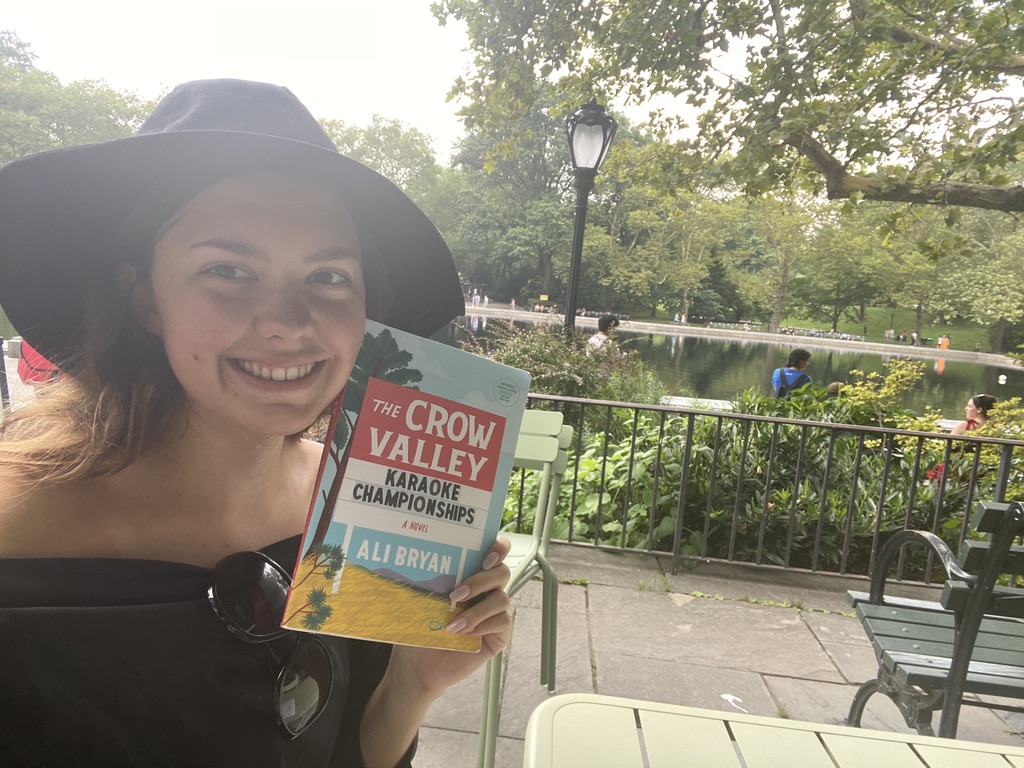


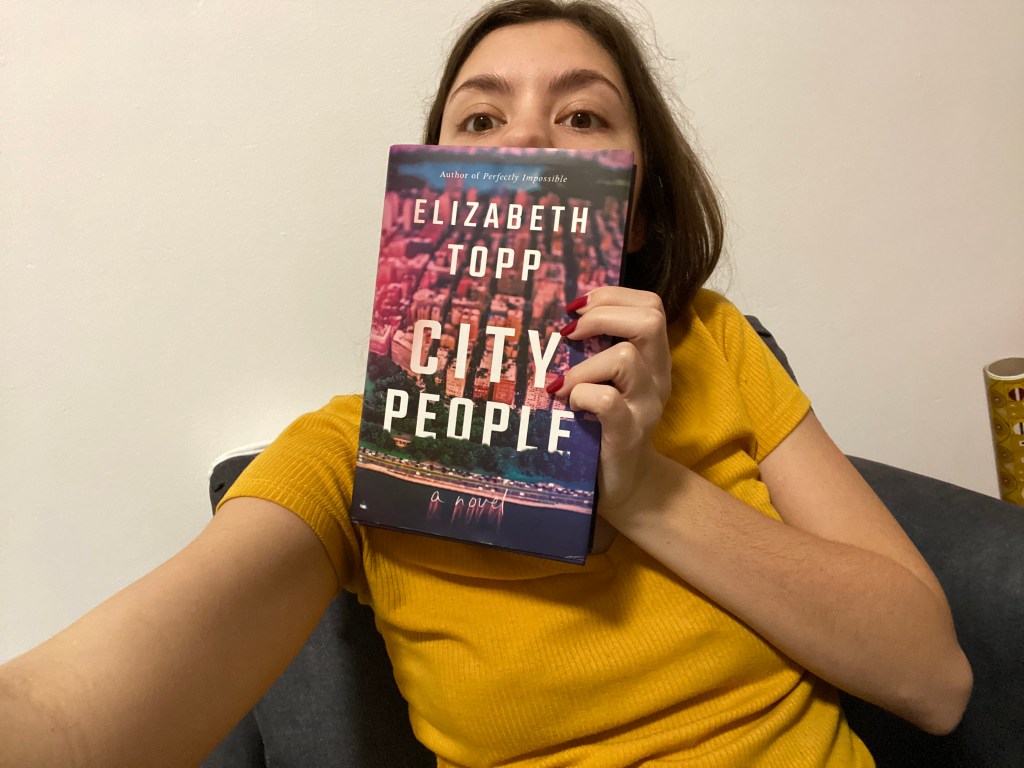


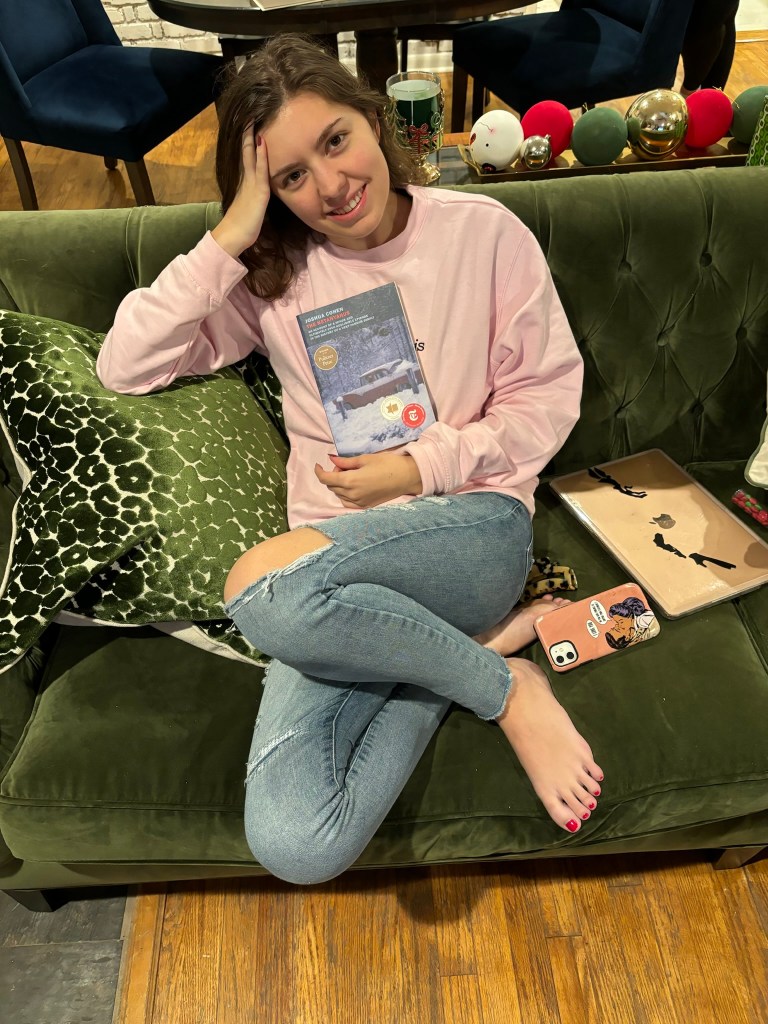








 The Tragic Queen