My East-Coast-to-Singapore-jet lag had me waking up at 4:00 in the morning as an energizer bunny, much to the chagrin of my aunt, but on my third day in Singapore, it actually paid off, as we got up bright and early for a treetop walk at Windsor Park.
(When I tell people that I’m “feeling outdoorsy” it really just means that I am leaving the house) and yet here I was at a nature walk that was in fact oozing nature all around me.
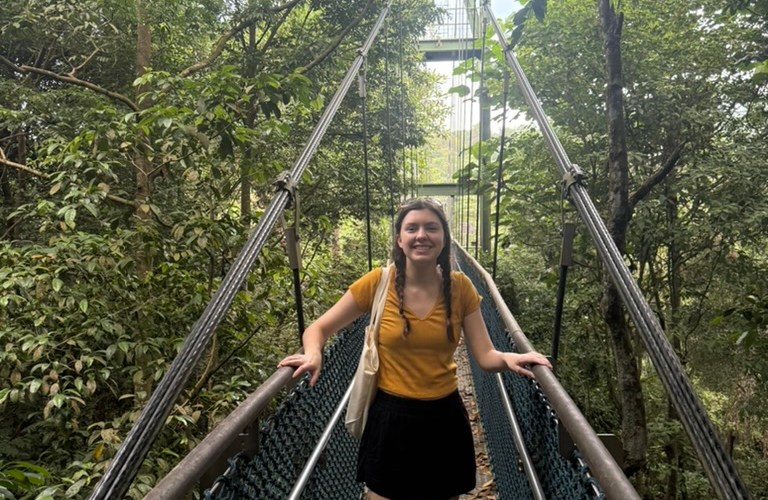
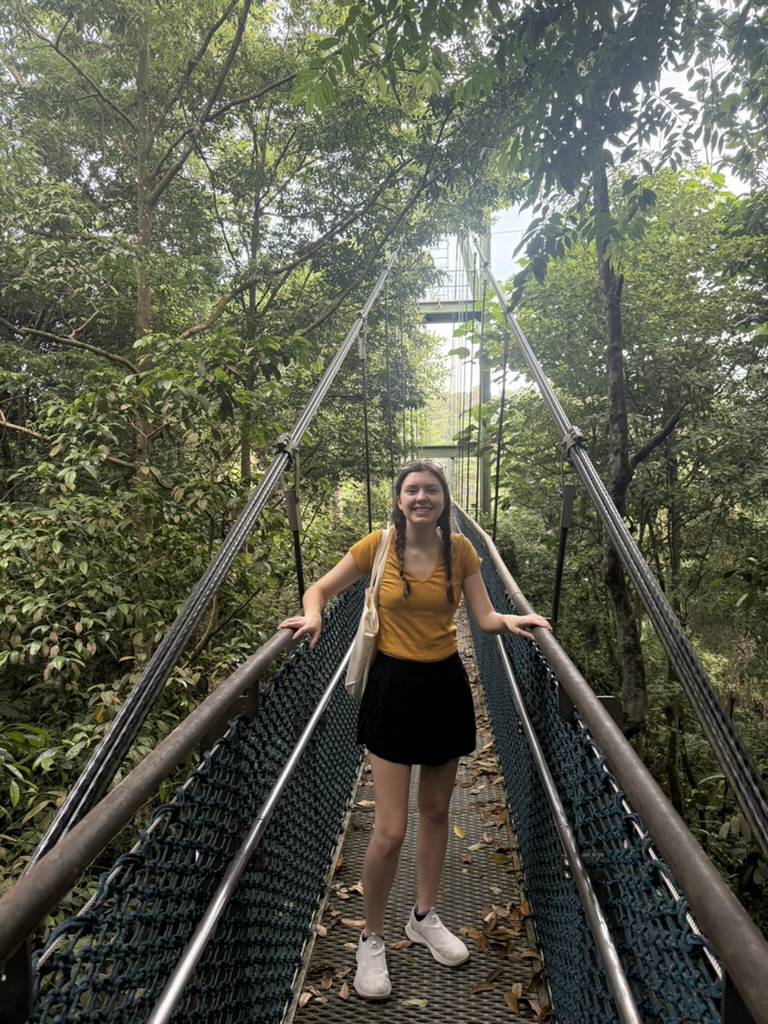
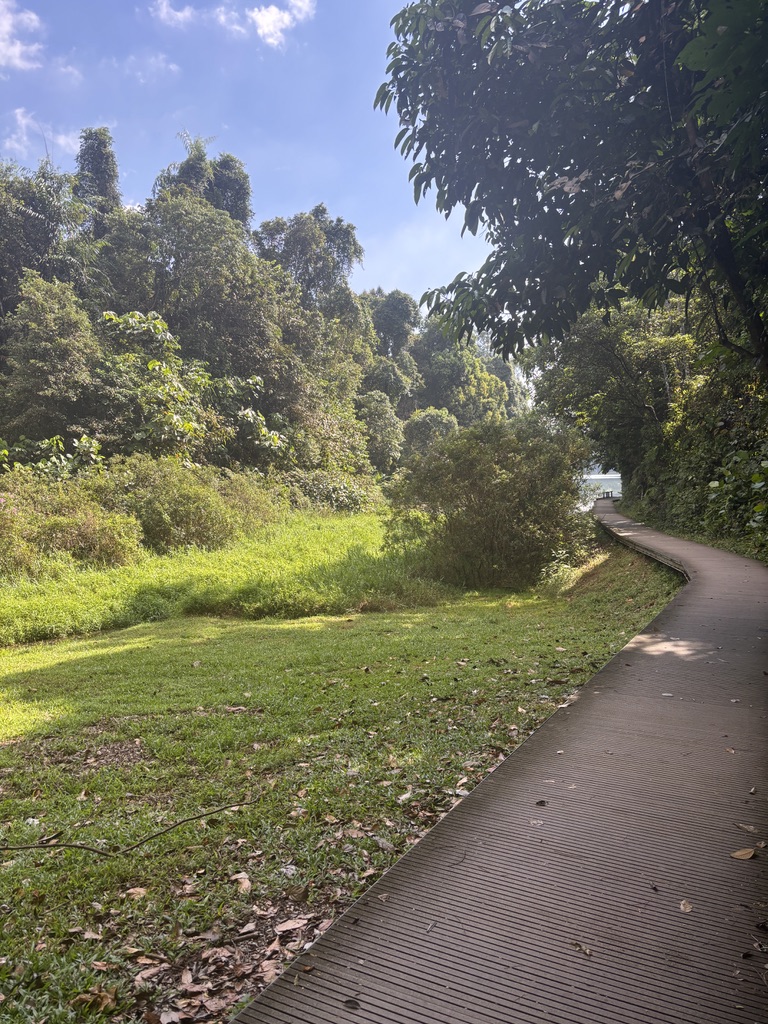
The Treetop Walk is a 5 mile long hike that takes you through a monkey-filled rain forest. Long wooden walkways sprawl up and down hillsides with thick swaths of trees on either side of you. A narrow suspension bridge carries you over the trees.
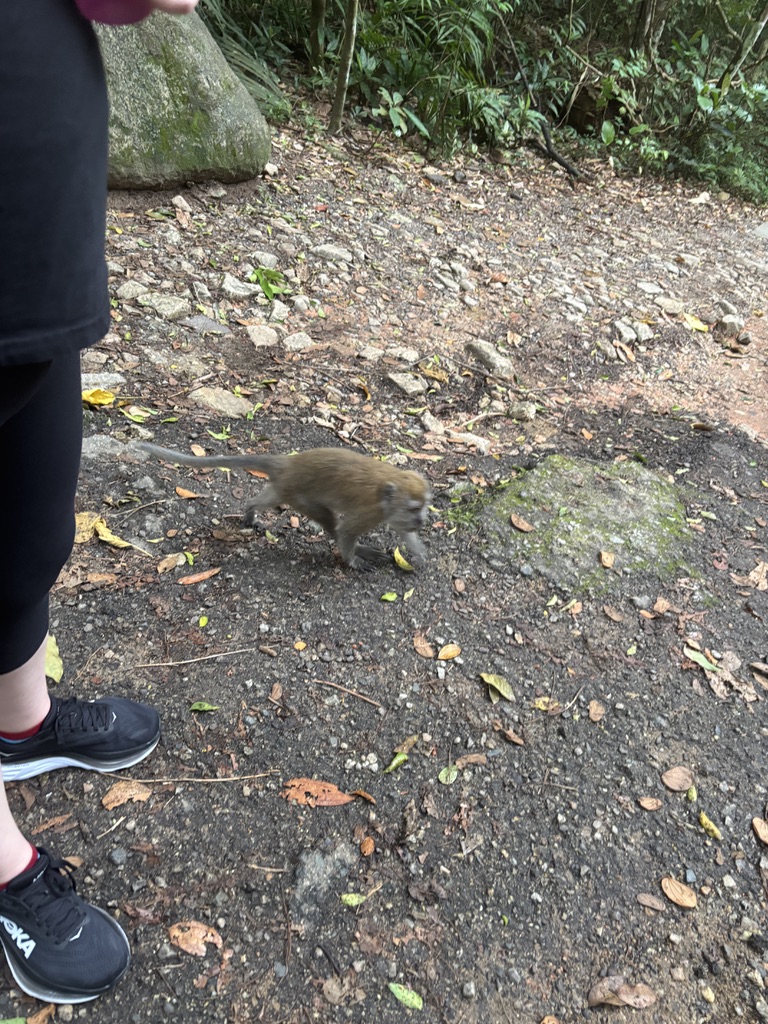
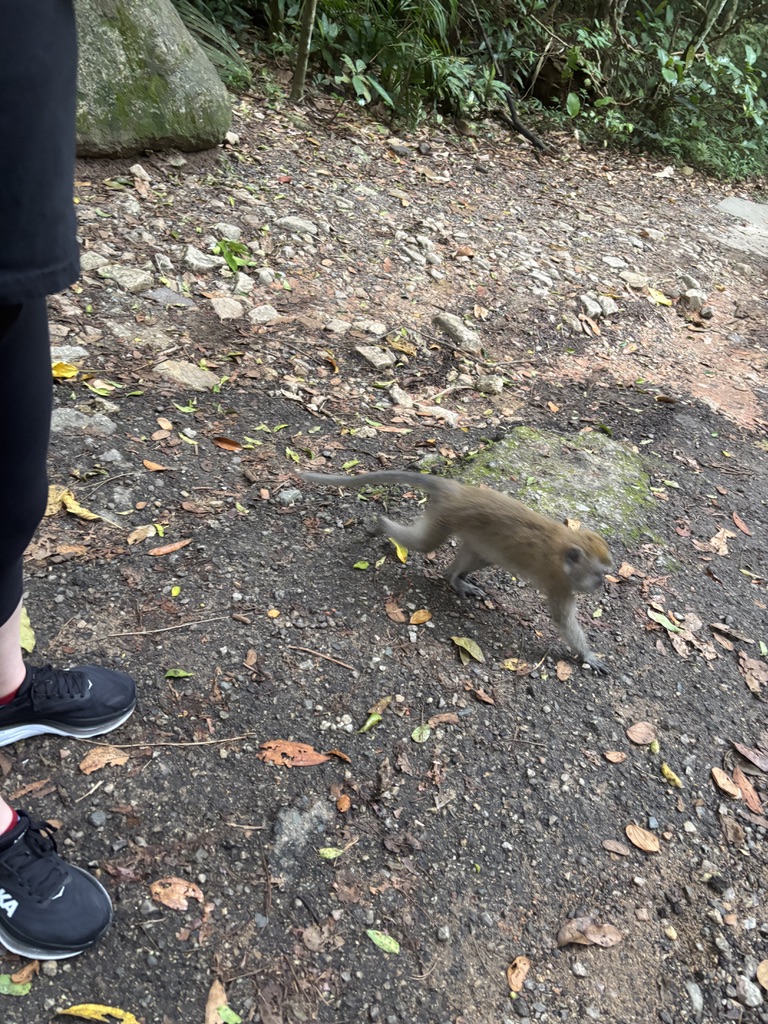
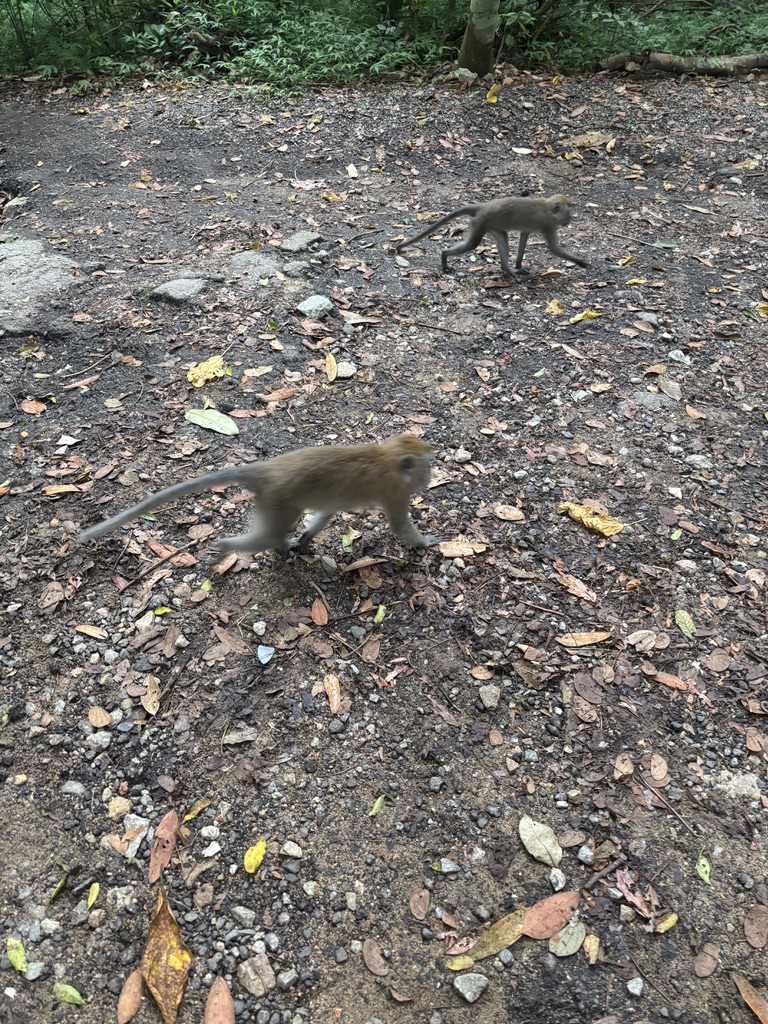
Monkeys stared at me from the trees, looking almost as fascinated by me as I was with them. The mothers walked around with their babies strapped to their chests.
They crawled on top of the metal structures for the construction site that was happening next door and then ran alongside joggers, like they were their running partners.
The monkeys are famous for trying to snatch items out of tourists’ hands in an attempt to bargain for food. At the beginning of our hike, a monkey started chasing my aunt around, trying to get her water bottle from her. That same monkey ran out in front of me and I ran screaming in the opposite direction. I was too terrified to get anywhere near it, much to the amusement of the other tourists around me. I eventually was able to walk by, unassaulted by the monkey, and continued on with the hike.
The Treetop Walk is not for the faint of heart. The humidity was so strong it was like I was swimming just walking around. I sweated more than I thought was humanly possible with sweat stains going from my arm pit to my hip. It felt like every hot yoga class I had ever taken. I was so hot and sweaty that at some point I stopped making sense.
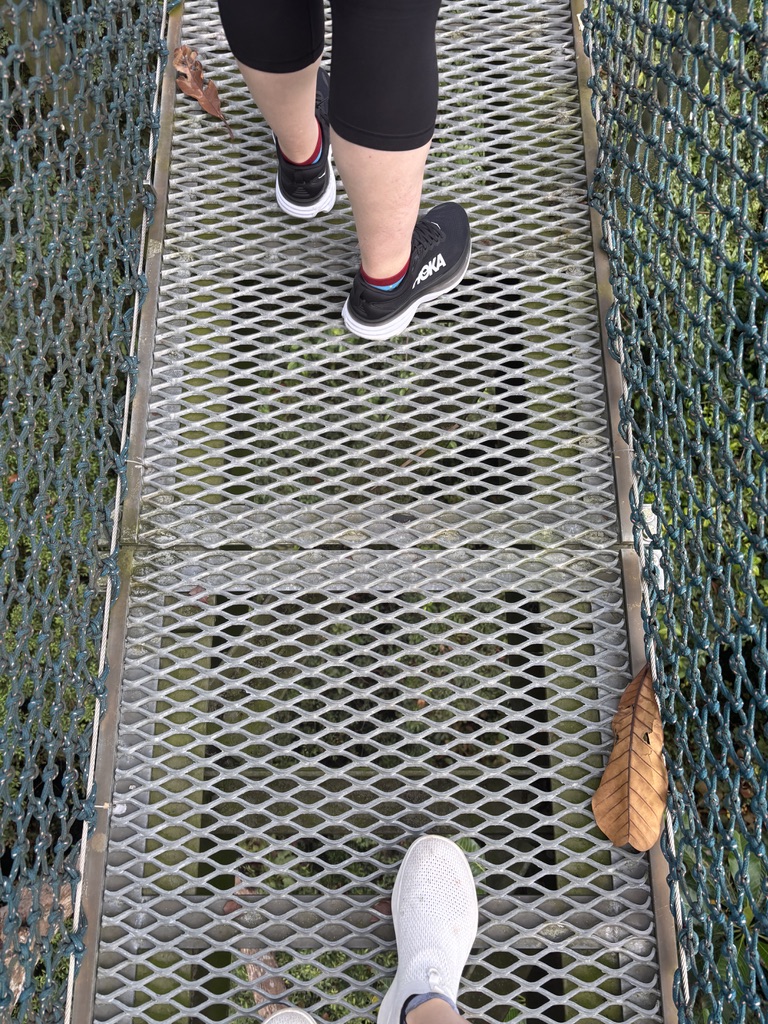
We walked across a swinging suspension bridge which had a strict weight limit and instructions for what to do if a snake fell onto the bridge in front of us (panic).
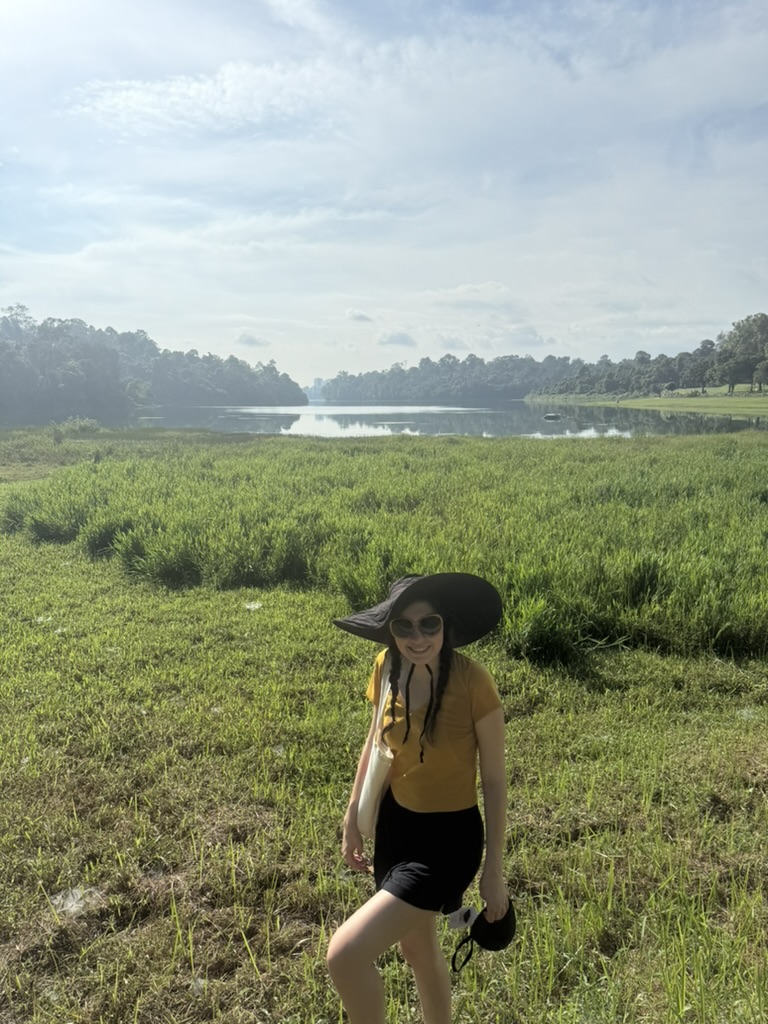
For much of the hike, I wore a beautiful sunhat that my brother gave me as a birthday gift. It looked like I had a satellite dish on my head. Once I put it on, it actually kind of made me look like the flying nun.
At some point, my aunt and I had seen countless monkeys and bravely walked across a swaying bridge. We wanted to go home, but, after much denial, we realized that we were lost. We had been wandering on the trails for a while and suddenly could no longer see the forest through the trees.
We walked over the tree roots that all looked like kimono dragons to a tired and dehydrated traveler. We asked people for directions that only made us more lost until the trail we were walking on spat us out on a random sidewalk along the highway, an anticlimactic, but much-needed end to a treeline hike through the forest.
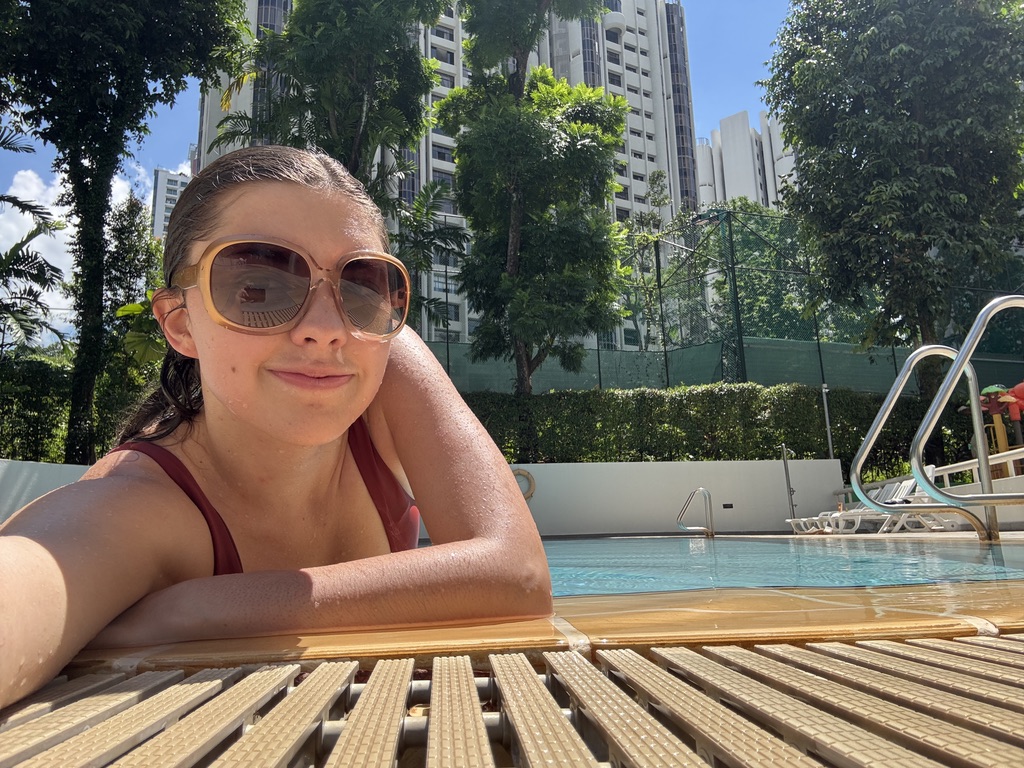
From there, we jumped on a bus going in a direction– we weren’t sure which–and then wound up at a McDonald’s. After returning to civilization, our legs destroyed from all of the walking and our bodies nearly wrecked from heat stroke, I went for a swim in the pool to cool off.
After a long, hot day of being chased around by monkeys, walking across a suspension bridge, and getting stranded on the side of a road, I can finally say that I have seen nature in the wild. I have looked a monkey in the eye.
The Tragic Queen,
Raquel
P.S.: Check out how I spent my previous day in Singapore, exploring Chinatown.
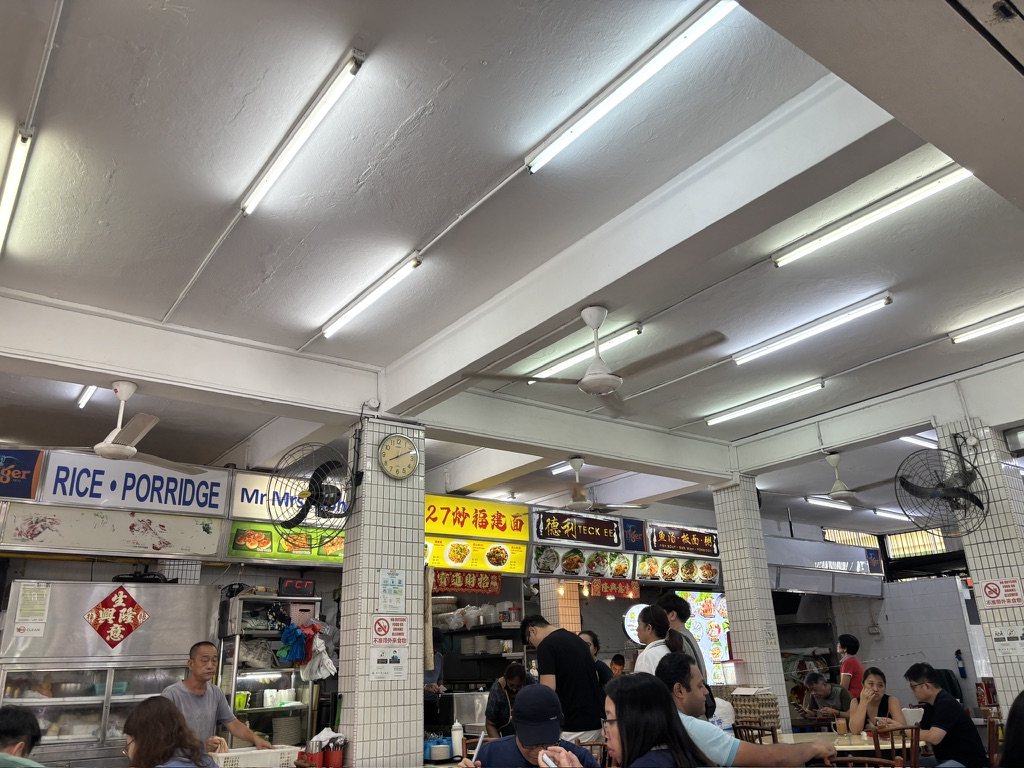
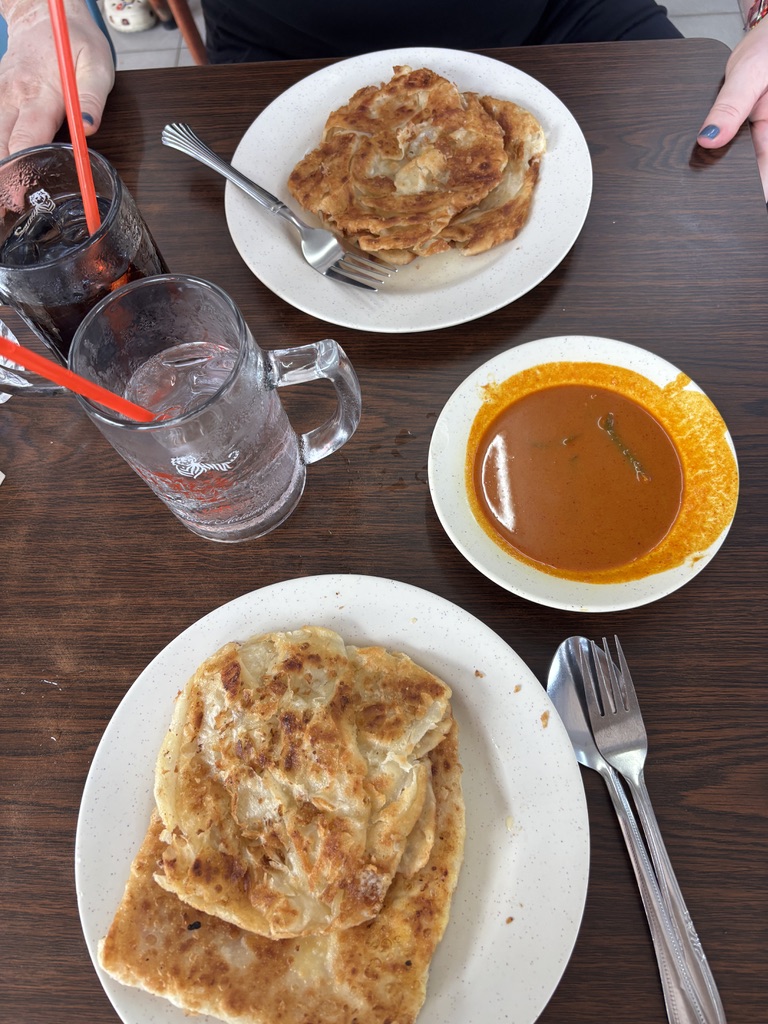
The next morning, we started our day with prata and mutton sauce at the Tin Yeang Hawker Center for breakfast. The Tin Yeang Hawker Center is an open air cafeteria, known for its prata, a crispy Indian dish dipped in a smokey curry sauce. It is a popular breakfast dish in Singapore and Malaysia.
And it tastes incredible.
We got ours filled with egg, onion, and cheese. I inhaled the first batch and then some of my aunt’s, wiping my bowl clean of the mutton sauce.
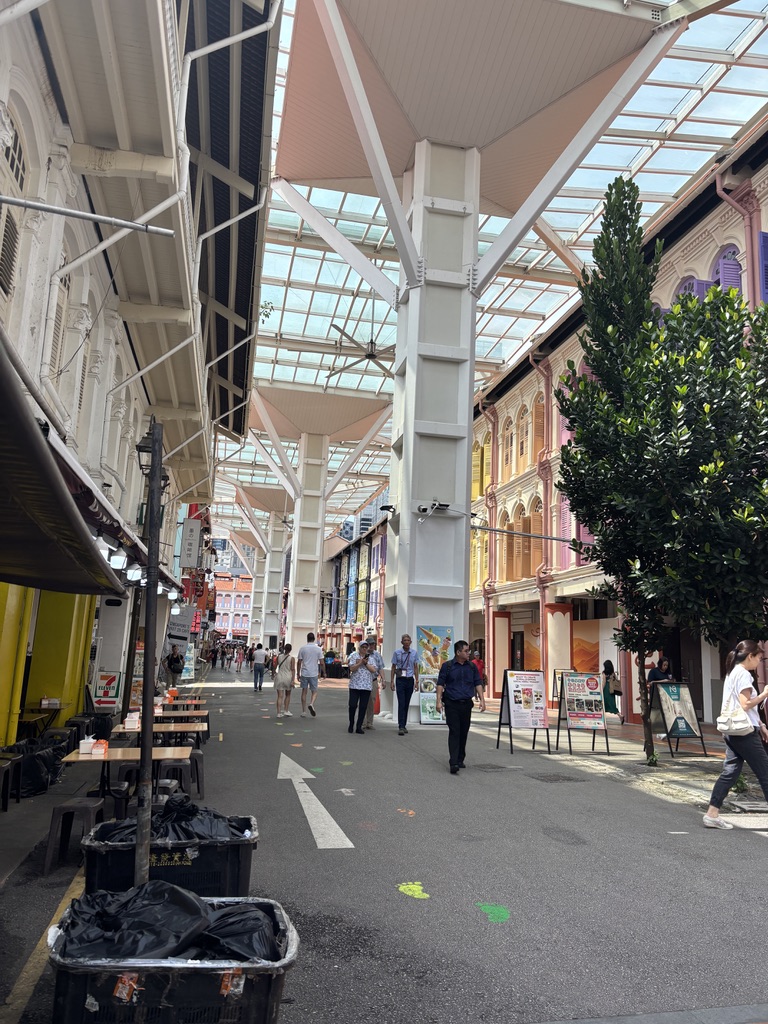
Once we finished breakfast, my aunt and I explored Chinatown. We started around the Buddha Tooth Relic Temple and then walked down the colorful, bustling streets, dipping into shops that sold talismans, jewelry, and small wooden elephants, and drinking dragon fruit tea that we bought at a tea stand. Everywhere we looked there were paper lanterns, statues of Buddha, and murals of Bruce Lee.
For lunch we went to the Maxwell Hawker Center so that I could try chicken and rice, the national dish of Singapore. I tried it at a Michelin-star food stall, called Tian Tian Hainanese Chicken Rice, made famous by Anthony Bourdain. Every other tourist had the same idea as us and we had to wait in a fairly long line, but it was worth it. Though it sounds simple, the juicy, buttery pieces of chicken over rice are a must-try. Food was quickly becoming my favorite part of the trip.
After that, I decided to check out another bookstore, appropriately named Littered with Books, and then called it a day. My jet-lag was still kicking my ass, hovering over me no matter what I did. I chugged every form of tea I could get my hands on, from matcha to thai tea to dragon fruit, but I still felt like I was walking through a fog.
It was a perfect second day in Singapore, filled with prata, mutton sauce, dragon fruit tea, and chicken and rice.
(And for those who are considering traveling to Singapore, I would recommend a day in Chinatown with a stop at the Tian Tian Hainanese Chicken Rice food stall for a chicken and rice lunch and a prata breakfast at The Tin Yeang Hawker Center).
The Tragic Queen,
Raquel
P.S.: Check out my blog post about how I spent my first day in Singapore
For the second time this year, I got my passport stamped. This time, I was traveling to Singapore, to visit my aunt, following my completion of my classes at Columbia.
It was my first time traveling to Asia and I have been wanting to see Singapore ever since my aunt moved there nearly a decade ago. After meticulously researching all of the best cites, I made my way across the world to visit this island nation atop the equator.
I touched down in Singapore and discovered a nation of hawker centers, towering skyscrapers, and sweltering heat. It also is a nation of facial recognition at the airport, indoor shopping centers a la Rodeo Drive, and a concrete jungle, surrounded by actual jungle.
It is a one-party system that takes pieces of democracy, socialism, and capitalism and combines them for their own style of government. It shouldn’t work, and yet, it works almost too well, being one of the cleanest and safest countries in the world.
After more than 19 hours of travel, I landed in Singapore Changi airport, an airport that puts all other airports to shame. It is a tourist attraction in and of itself with its butterfly garden and waterfall, making for a very warm welcome into the country.
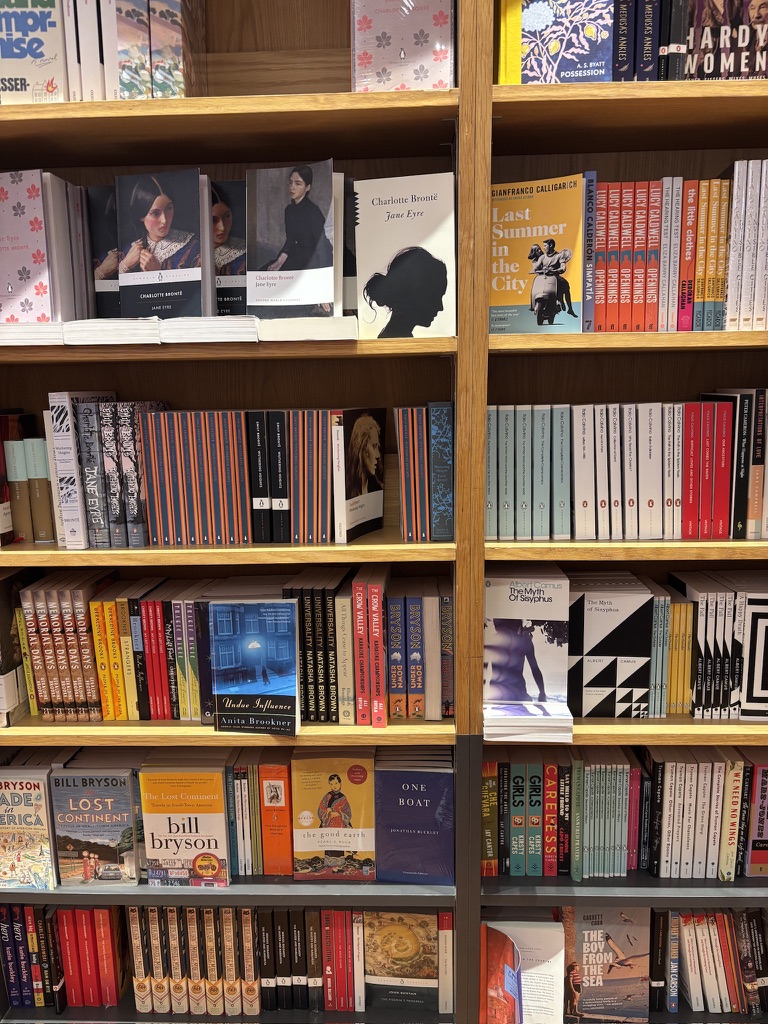
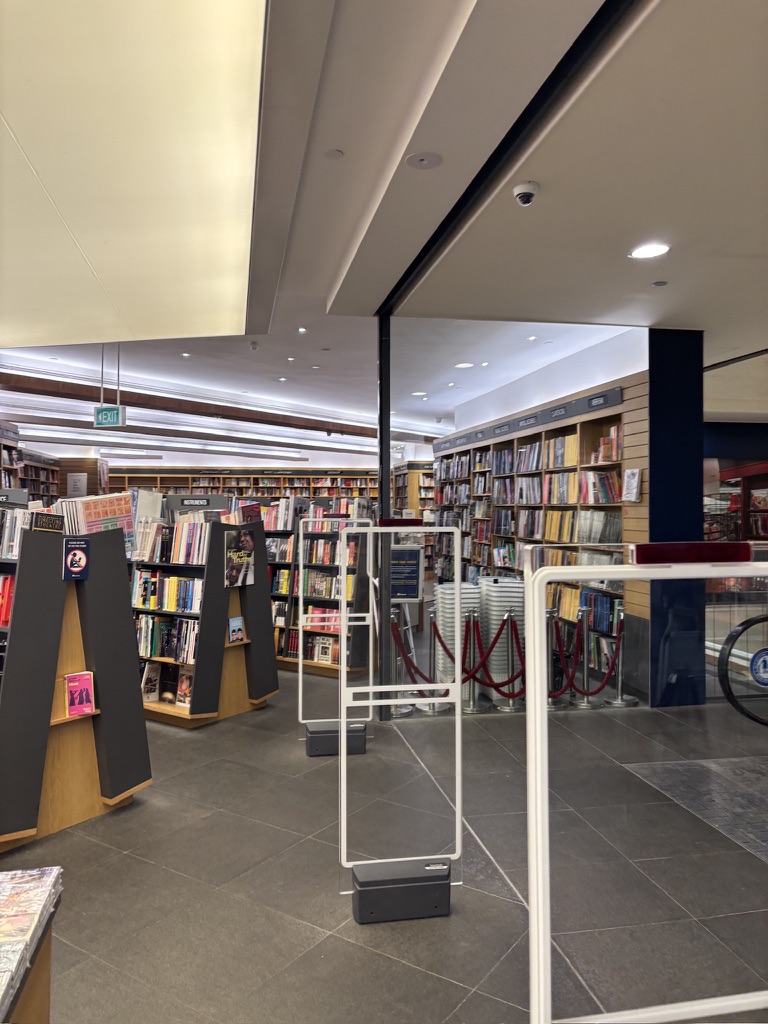
From there, I got my bearings, going to the Ngee Ann City Civic Plaza in the Orchard Road shopping center, where I spent hours at Kikokuniya Books. I got lost in the rows of books and found a pretty stack of books to bring home, as I can be counted on to do wherever I am in the world.
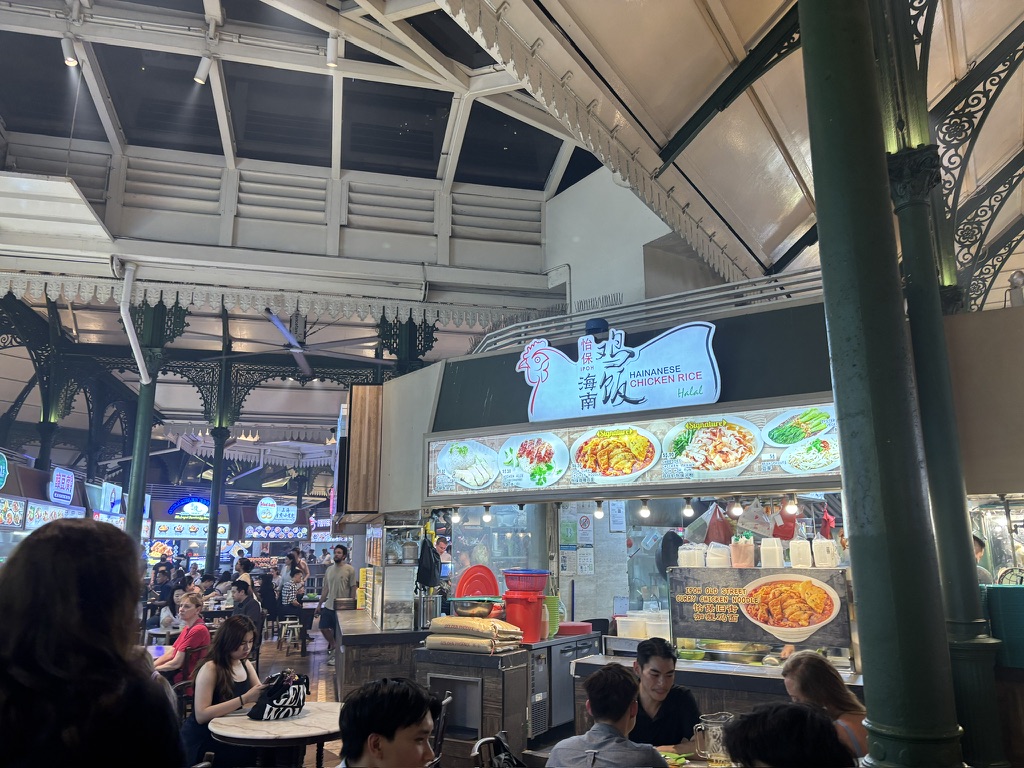
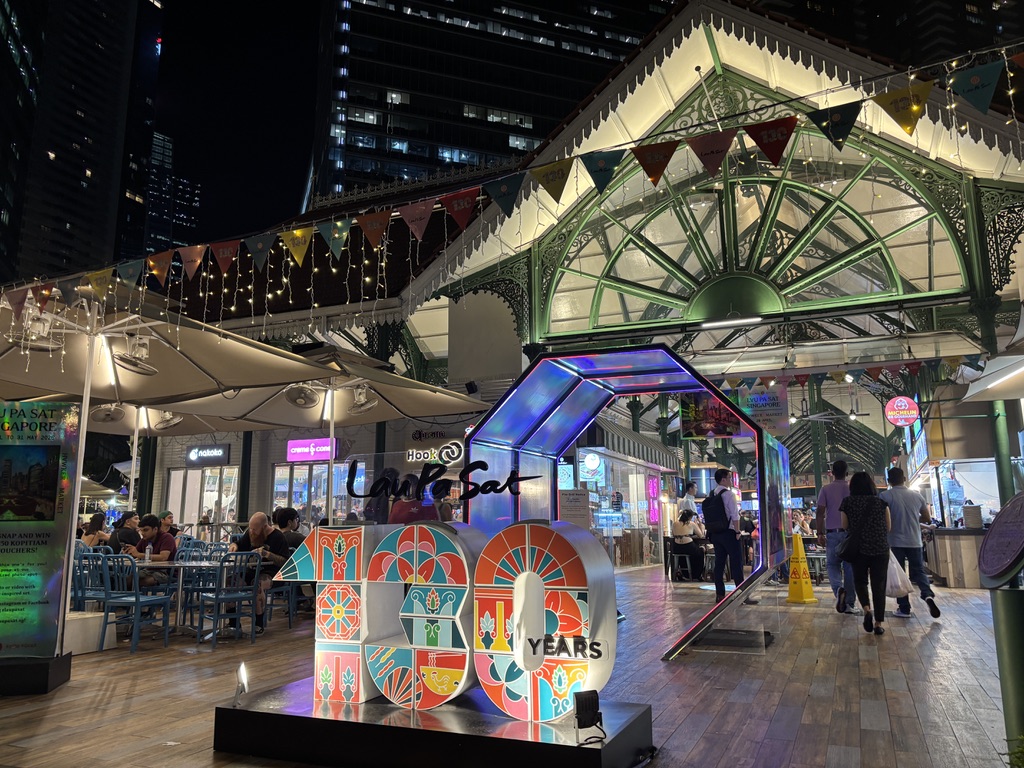
On my first night there, I went to a Hawker Center, one of the main things that I wanted to try when visiting Singapore. A hawker center is an open air market, filled with dozens of food stalls, as seen in the movie Crazy Rich Asians. I waded through the crowds, trying out all of the different kinds of incredible food while my mouth watered. Steam wafted up from nearly every food stall. I drank out of a coconut and ate, among other things, some of the best Indian food that I have ever had.
The Raffles Place Hawker Center was the perfect place to start my adventure in Singapore. There would be many hawker centers in my future, as well as more bookstores and shopping centers, all of them explored to the fullest extent.
I would be going everywhere from nature sites to urban centers. Keep reading for tales of monkey forests, super trees, and botanical gardens.
The Tragic Queen, Raquel
P.S.: Check out my blog post about my recent travels to France
We interrupt your regularly scheduled program to bring you the first half of my book review for the year.
This post has been a long time coming, since I have been busy with my thesis, but I finally have finished my review, clocking in at forty books.
I spent much of my free time reading this year. I assembled this reading list the same way that everyone else does these days– by checking out the New York Times Bestsellers List, Tik-Tok sensations, Reese’s Book Club picks, and Good Morning America Book Club picks, as well as from the guy who sells books on the sidewalk outside my apartment, books for class, classics, and a handful of books that looked good in window displays. A few of these books were nominated for the Booker Prize, the Women’s Prize for Fiction, and the Pulitzer Prize and the ones that weren’t were oftentimes just as good.
Even the books that I didn’t like still brought me joy in the way that books do. Spending time in bed with a good book while my cat makes biscuits on my lap or being tucked away in the corner of a cafe reading is always a luxury.
Whether I loved them or hated them, all of them made me think.
Here are my unvarnished opinions on everything that I have read so far this year.
Judge for yourself…
FCC Disclosure:
If you click on one of the links embedded in the book titles and purchase a book, I may receive a commission. Enjoy!
Dirty Diana by Jen Besser and Shana Feste–Once a wild and passionate artist in her youth, Diana Woods has since settled down as a suburban mom with a disappointing sex life and a predictable routine. I was clearly not the target audience for this book, since I cannot yet relate to the need for marriage counseling, a husband that you are no longer attracted to, and the death of all of your dreams, but it was an interesting glimpse into the ways in which one woman tries to fight against it. Based on the number one fiction podcast, this novel deals with what it takes to start re-exploring your passions through your sexuality and artistry. It is part of a trilogy, which I don’t think I am going to continue, but it was still enjoyable as a stand alone novel.
Mexican Gothic by Silvia Garcia Moreno–If you’re a fan of Bad Cree by Jessica Johns you’ll like this novel. After receiving a distressing letter from her newly-wed cousin, Noemi Taboado, a socialite from Mexico City, decides to visit her to see for herself what has gone wrong. Her cousin lives in an eerie castle in a desolate, far-off town. The novel is disturbing, focusing on eugenics, incest, and colonization, compelling the reader to ask if the problems that abound in the novel are supernatural or psychological. It is an engrossing read, set against the backdrop of a creepy place, during a bygone era.
When She Was Good by Philip Roth–This book will have you taking your birth control. This is one of the earliest books to get into the pro-choice debate in the 1960s and comes from a singularly unexpected source. This is Roth’s only book with a female protagonist and not only did he make the protagonist a woman but he dealt with women’s issues, depicting a promising young woman who was cajoled into sex, impregnated, and then forced to live a miserable, domestic life. The shocking ending is well worth the wait.
100 Boyfriends by Brontez Purnell–A memoir that grapples with profound loneliness. The narrator experiences a revolving door of 100 boyfriends that blur together, leaving him miserable. People keep suggesting to the narrator that he get a boyfriend, rather than rely on meaningless hookups, which is easier said than done. The novel explores the difficulties of getting someone to commit to you and what it feels like when no one does.
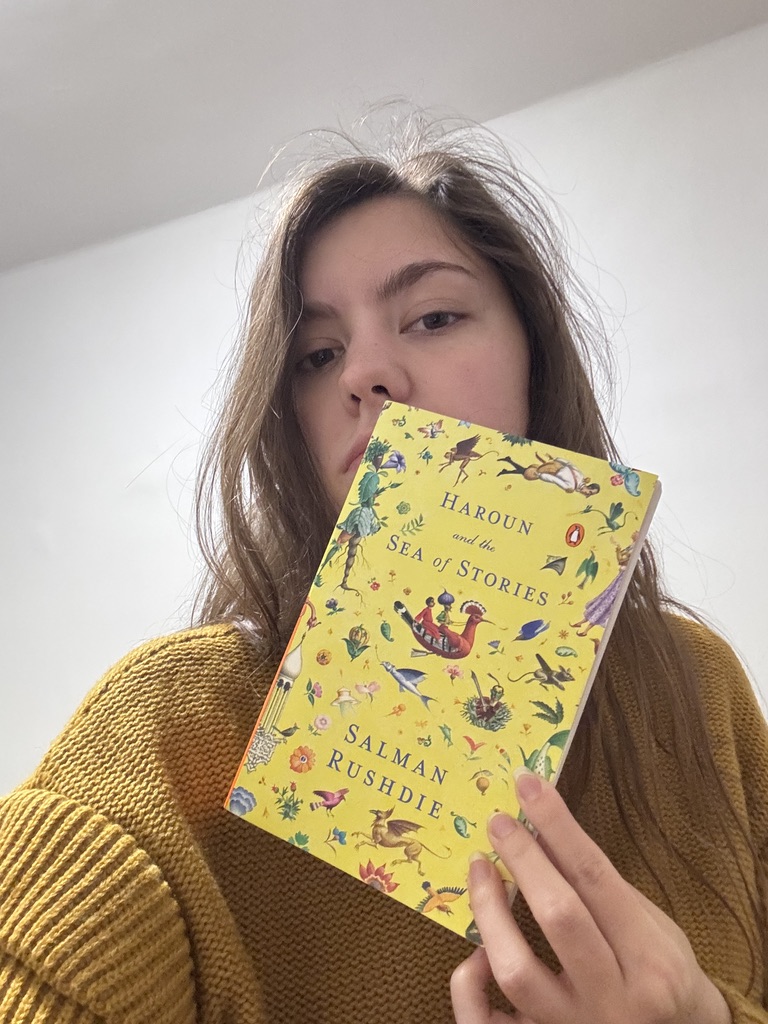
Haroun and The Sea of Stories by Salman Rushdie– I am not a very big fan of magical realism. Rushdie writes with an eccentric tone, straddling the line between parable and satire. This fantastical novel was not the type of thing I usually read, but even I can see that Rushdie is a master at his craft.
Is Mother Dead by Vigdis Hjorth– This Norwegian novel explores the judgment that sometimes comes from your family when you move away, divorce your spouse, and pursue your dreams… and also when you expose your family’s dysfunction in a world famous painting that you make. The novel’s pacing could be stronger, as the narrator watches her family from afar, imagining their lives and the place that she occupies within it, but never approaching them until the end. Overall, it raises many questions about your own personal happiness versus the personal happiness of your family and whether or not the people in your life are entitled to privacy when it comes to making art.
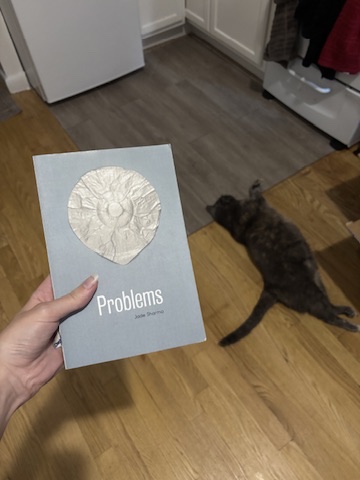
Problems by Jade Sharma– This novel about a disgruntled, pessimistic woman with sad sexual preferences and an insatiable drug appetite felt like such a messy woman’s story. The protagonist is a self-destructive woman whose life spirals further into disrepute without reprieve. A happy ending is too much to hope for.
A Farewell to Arms by Ernest Hemingway– I picked up this old paperback in advance of my trip to Paris. Parts of it don’t hold up as much to a modern reader, but it is still a good novel to pass the time reading. In case you’ve ever wondered what it would be like to fall in love with a nurse during World War 1, this novel answers that question.
Jillian by Halle Butler–is a pared down novel that reads like a screenplay at times, and tells the perspective of every character, at times simultaneously. Anyone who has ever had to work an office job will relate to the characters in this story.
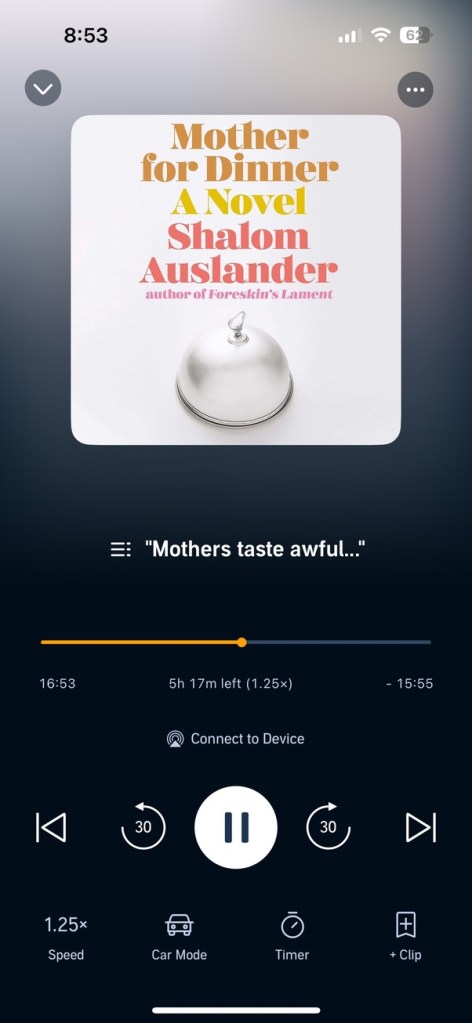
Here is a book that I listened to on Audible. I prefer not to listen to audiotapes, because I feel like I absorb them less, but, in a pinch, I listened to this one for class.
Mother for Dinner by Shalom Auslander– Adult children come together after the death of the matriarch of their family, only it’s not to bury her. It’s to eat her. They are a family of cannibals due to their strange religious beliefs. The mother is a garden-variety bigot. The novel depicts what it means to have a sense of familial obligation, while poking fun at identity politics. It is intentionally politically incorrect and will likely offend many, many people. Overall, it comes across as an intellectual exercise from Auslander that does not fulfill every promise that it makes, but it goes to interesting places.
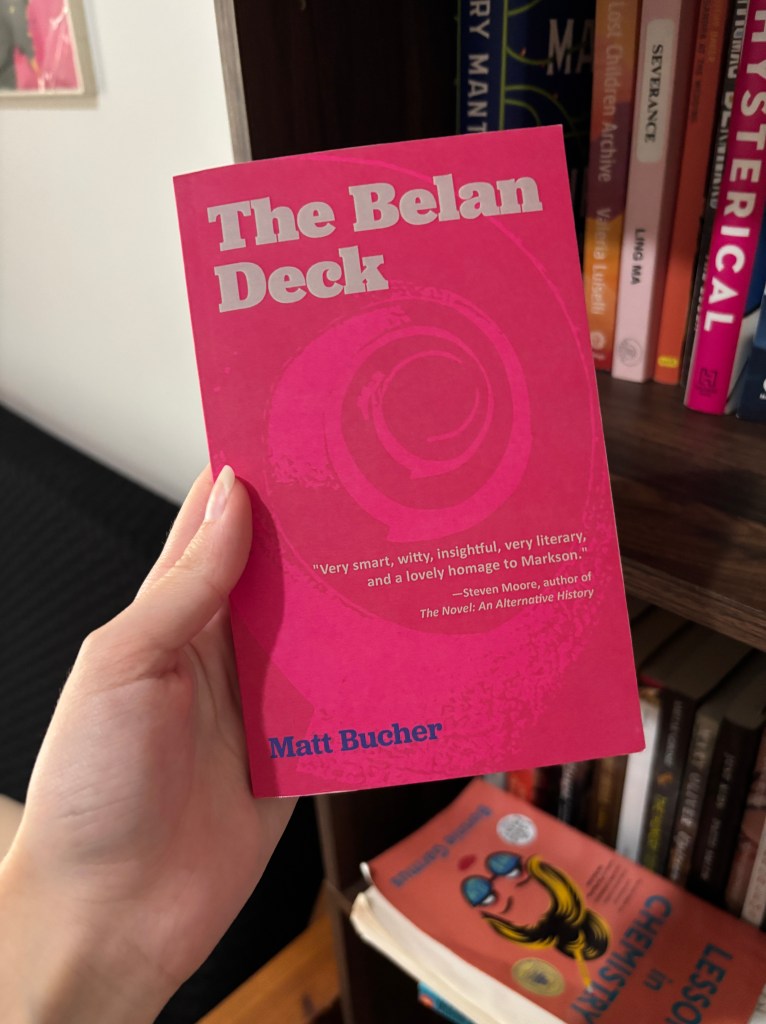
The Delan Deck by Matt Bucher– captures the ouroboros-like way in which humans invented AI, the thing that will eventually ruin human life (if it hasn’t already). Bucher fills the pages with loosely-connected trivia facts in order to illustrate the ways in which technology muzzles out human life. This story is short, making it difficult to really sink your teeth into the rich topic of how we’re stymied by technology.
I Hate the Internet by Jarett Kobek– Similarly, this book captures the waking nightmare that we have subjected ourselves to by relying on technology. Kobek points out the hypocrisy of those who post about human rights abuses on the internet using a phone that was built with slave-labor and how every time we complain about gentrification on twitter, we fuel twitter’s gentrification of San Francisco. At times, the novel doesn’t make as strong of a point as it thinks it does, complaining about war crimes in the same breath as it complains about cosplayers.
The Wedding People by Alison Espach– A depressed woman goes to a luxury hotel to kill herself only to instead become enmeshed in the lives of the wedding party that have occupied the hotel for the week. Despite this premise, the writing never becomes painstaking or desperate. The narrative is actually funny throughout. It is a nail biter until the end with incredibly well-drawn characters that put an interesting spin on the marriage plot. This is one of the first novels that I have read that actually acknowledges the pandemic and its repercussions. Unlikable characters are made redeemable enough to root for. I’m impressed by Espach’s ability to convey chemistry between two characters and a lack thereof between others. She is skilled at showing each characters’ perspective. 10/10 would recommend.
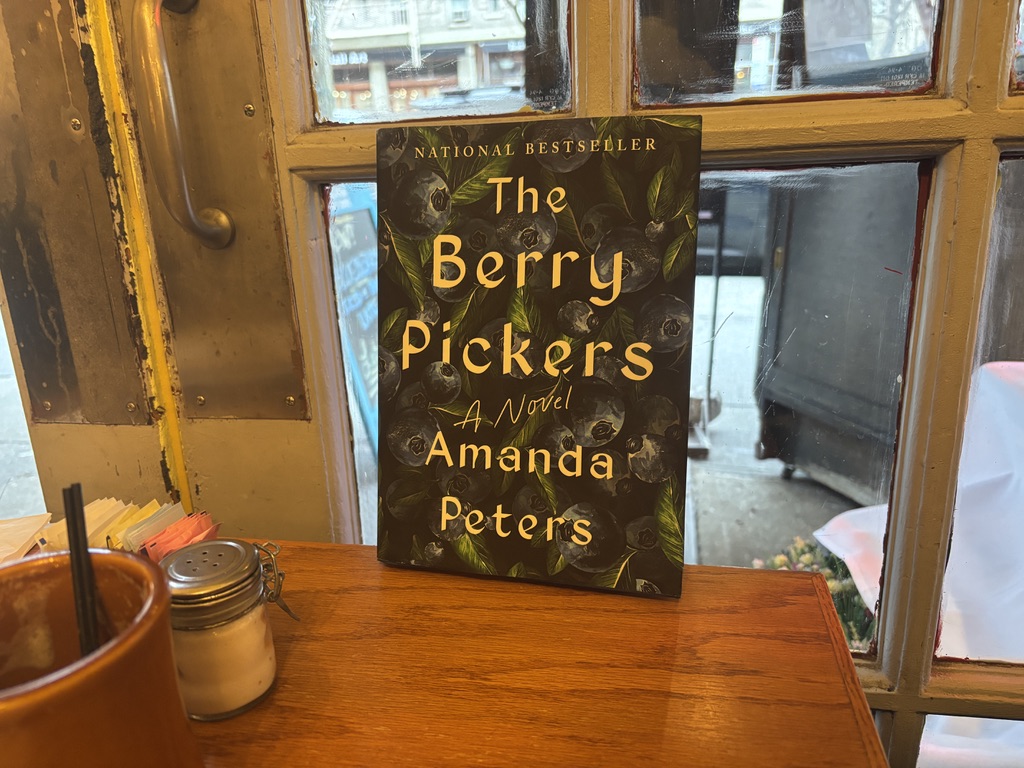
The Berry Pickers by Amanda Peters– The Berry Pickers is about a Native American family being rocked by the sudden disappearance of their youngest daughter. I read it in just a few days because that’s what a quick read it was. It was good overall, but I have questions about the realism of it. I imagine that the characters would be so much more upset by the emotional fallout of the events in this novel.
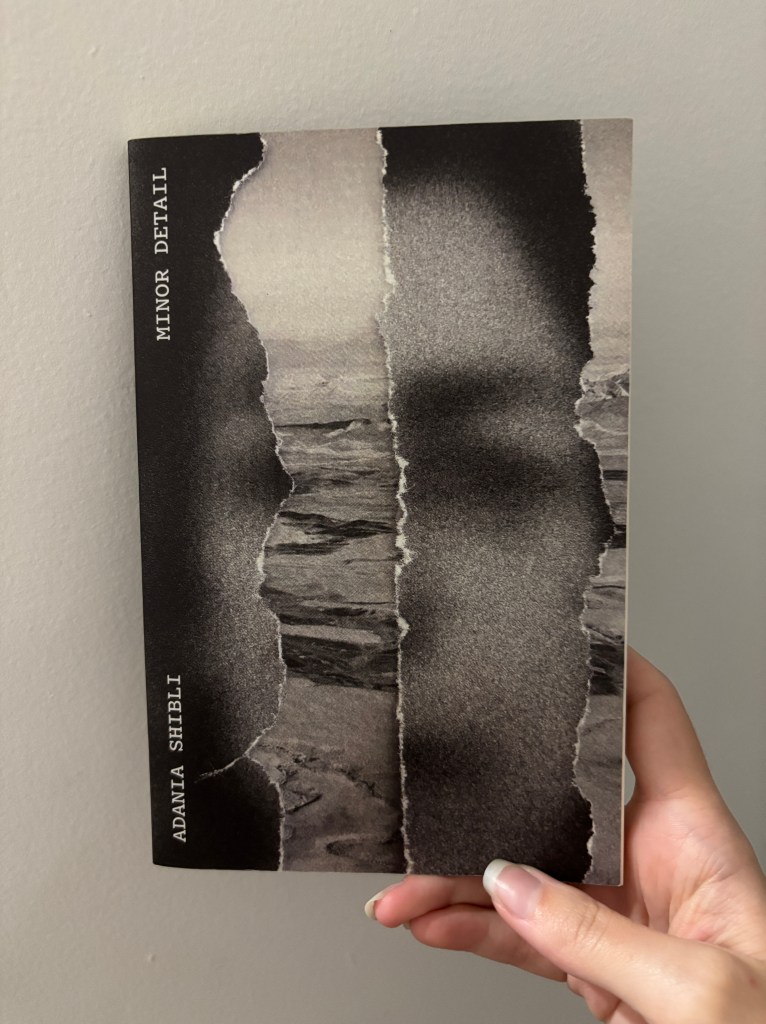
Minor Detail by Adania Shibli (trans. Elisabeth Jaquette)–This novel is based largely on a true story about a teenage bedouin woman during the days of the Nakba. It doesn’t shy away from the horrors of war, depicting a graphic rape scene. The victim’s perspective is completely muzzled out, conveying the way in which she was silenced, unknown, and disregarded. The book is only about a hundred pages long and divided into two sections. I do feel like the author could have expanded it in order to make the ending less rushed, while at the same time, she has slow beginnings in both halves of the book. The author does a good job writing subtext overall.
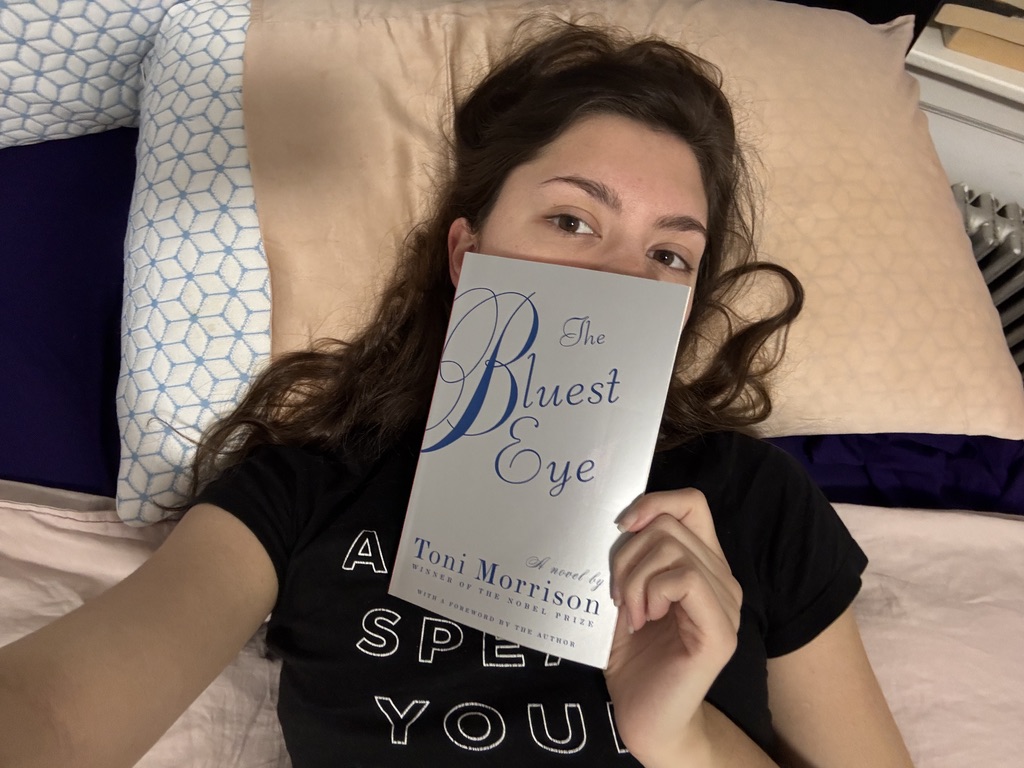
The Bluest Eye by Toni Morrison– I’m not sure what there is to say about The Bluest Eye that hasn’t already been said before. To me, it is a brilliantly written novel that never lets up. What I was struck by most while reading it was the total lack of shock value, despite the novel’s heavy subject matter. Morrison treats the horror of a young girl’s life as a matter-of-fact, which, in many ways, it is.
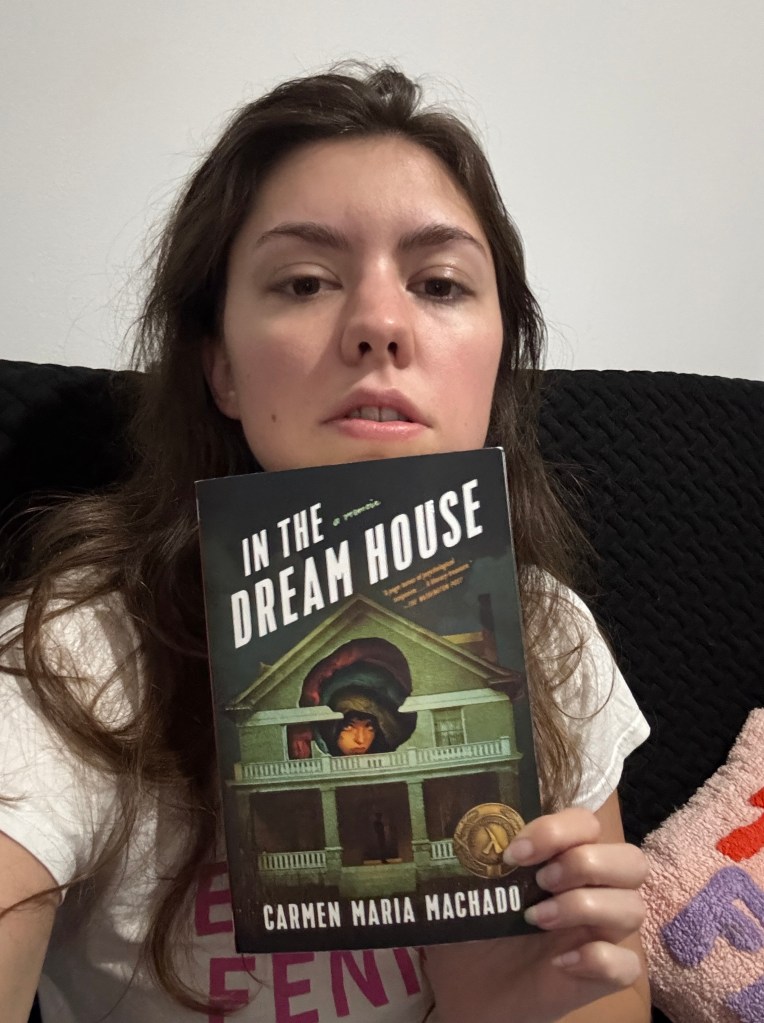
In the Dream House by Carmen Maria Machado– is part collection of essays, part poetry, part short story, but all memoir. It tackles the subject of emotionally abusive, queer relationships and the danger of making them public. Machado knows that the perception will be that the gay community is eating their own.
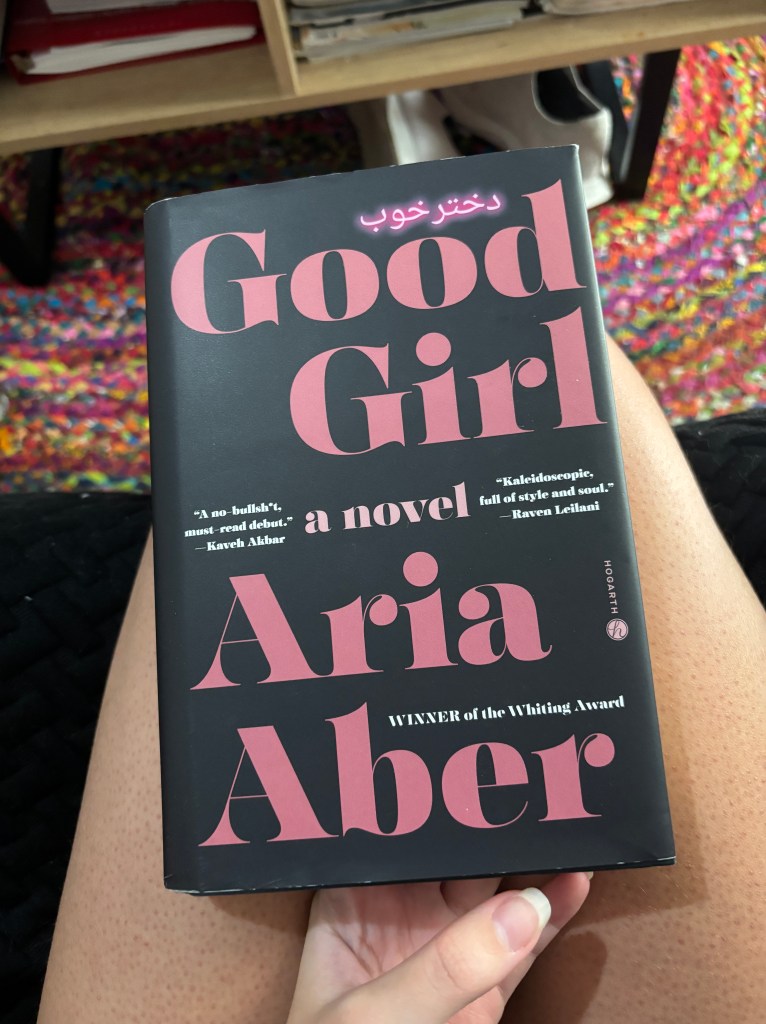
Good Girl by Aria Aber– I read this book because it was shortlisted for the Women’s Prize in Fiction. Much of the story is a litany of parties and nightclubs that the protagonist attends and all I can say is… yeah, we’ve all done that. Most modern day women have had disappointing hookups with men who have pathetic sexual predilections, and most have gone to nightclubs and done ketamine or some other designer party drug. I don’t think that it’s that deep. She dates a man who treats her poorly. I do not understand why the protagonist is attracted to him. Aber writes vaporous prose, so if that is your thing, then pick this book up.
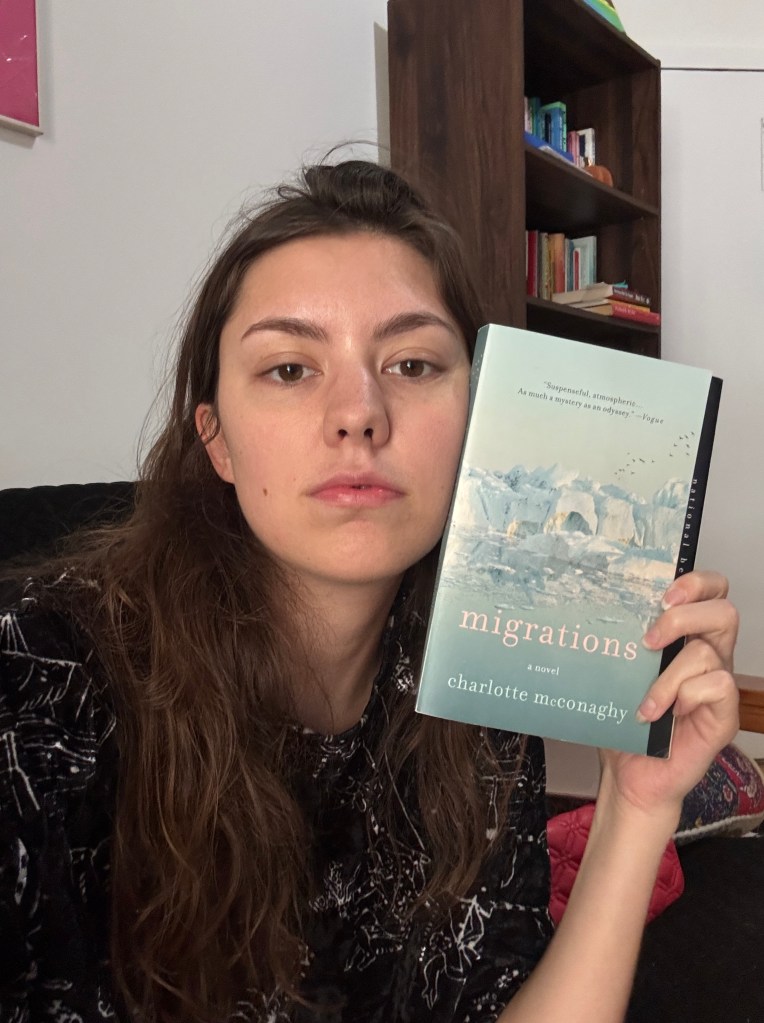
Migrations by Charlotte McConaghy– After the world has been ravaged by climate change, a woman with a past follows some ailing fisherman throughout the world to try and find the last remaining arctic terns. It feels like the author made an assortment of choices with the intention of publishing a bestseller and she was successful. It felt like at times there were transparent attempts to make her story appear more diverse without any real exploration of identity, the slightest push of the envelope to give the impression of a deep, transgressive story about social change, and a pile of dead bodies that were added into the story to turn the book into a thriller. The novel looks at the detrimental effects of climate change, which I believe should be talked about and written about more, but I wish that she had gone into further depth on the topic.
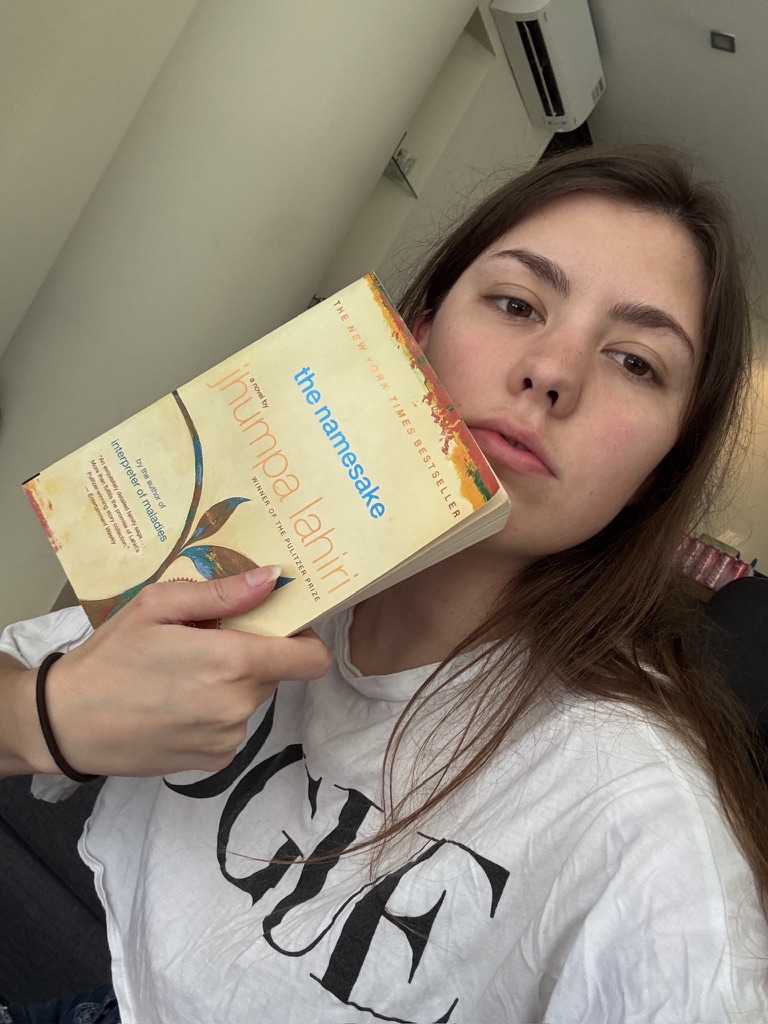
The Namesake by Jhumpha Lahiri– The novel follows a first generation Indian family in the United States. It focuses on assimilation and the ways in which we have to compartmentalize parts of our identity in order to make ourselves more palatable to the people in our lives. Lahiri’s prose glide off the page with perfect clarity. This book was a breezy, but palpable read that asks the question: what’s in a name?
The Virgin Suicides by Jeffrey Eugindes–At times his prose is clunky as he revels in an indulgent amount of details about each character that he introduces, but overall the details make the story feel vivid and real. I was mostly struck by the way in which the neighborhood boys idealize the young girls around them and, as a result, misunderstand them. The novel overall makes a strong point about sexualizing young girls and ignoring their suffering, though I still wish I had more insight into why those virgins killed themselves.
Small Things Like These by Claire Keegan– This petite book could be devoured in just a few hours and it probably will be. In a small, coal mining town in Ireland, an honest working man uncovers a devastating secret about his local church and must decide what, if anything, he will do about it. The harsh Irish winters jump off the page even in the dead of summer. The pain and suffering inflicted by the Catholic Church against young women will fill you with rage (I hope).
Liars bySarah Manguso– the narrator outlines a litany of abuses from her husband, who is a failure in many respects. In all likelihood, this book will be uncomfortably relatable to many. After pulling your hair out while reading the book, the story at least has a happy ending.
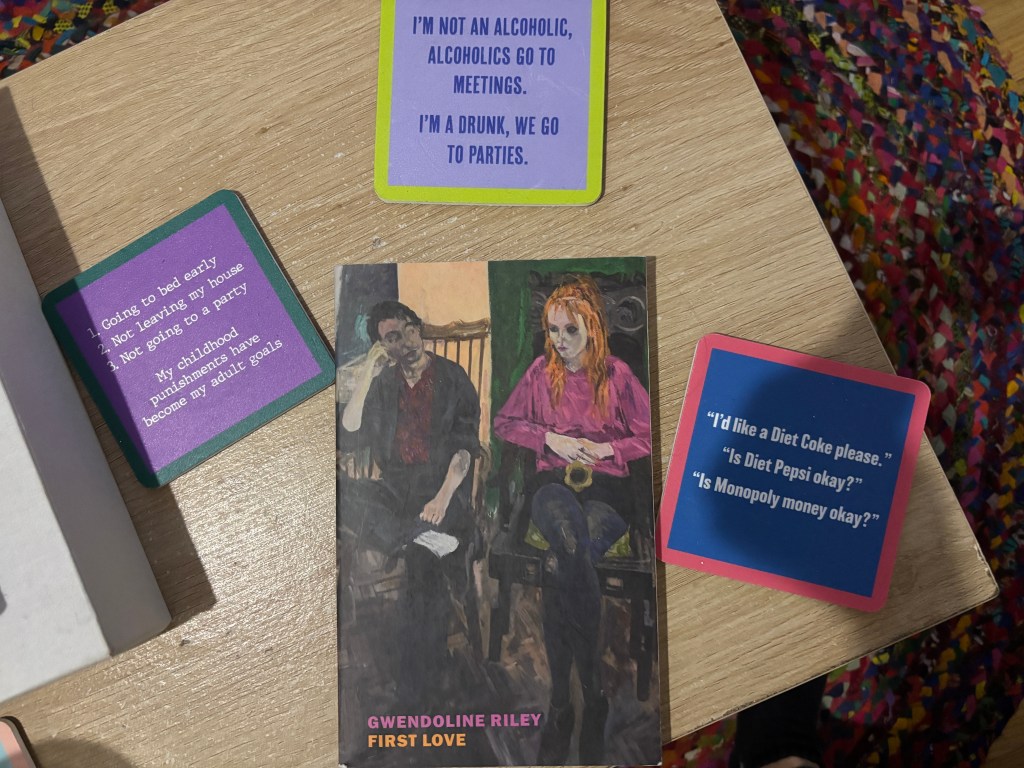
First Love by Gwendoline Riley–is a well-written, messed up tale of an emotionally-abusive age gap relationship that explores the very real way in which women can struggle to leave bad relationships when they rely on their partner for their income. It is depressing to slog through the emotional abuse that the protagonist experiences, but it is an unflinchingly honest story.
Stone Yard Devotional by Charlotte Wood–I read this Booker Prize shortlist nominee because of the New York Times review praising the book’s use of interiority. A woman at a monastery recounts the strange happenings that take place over the span of several days and poses lofty questions, such as “what is forgiveness” and “can people be morally good?” The praiseworthy interiority, while well-written, sometimes does not come with enough present action to warrant such internal monologuing.
Who Will Run the Frog Hospital? by Lorrie Moore– This novella tells the story of two female friends. It captures so much about female friendship, as the girls spend their summer carefree, laughing constantly amongst themselves, until life has other plans for them.
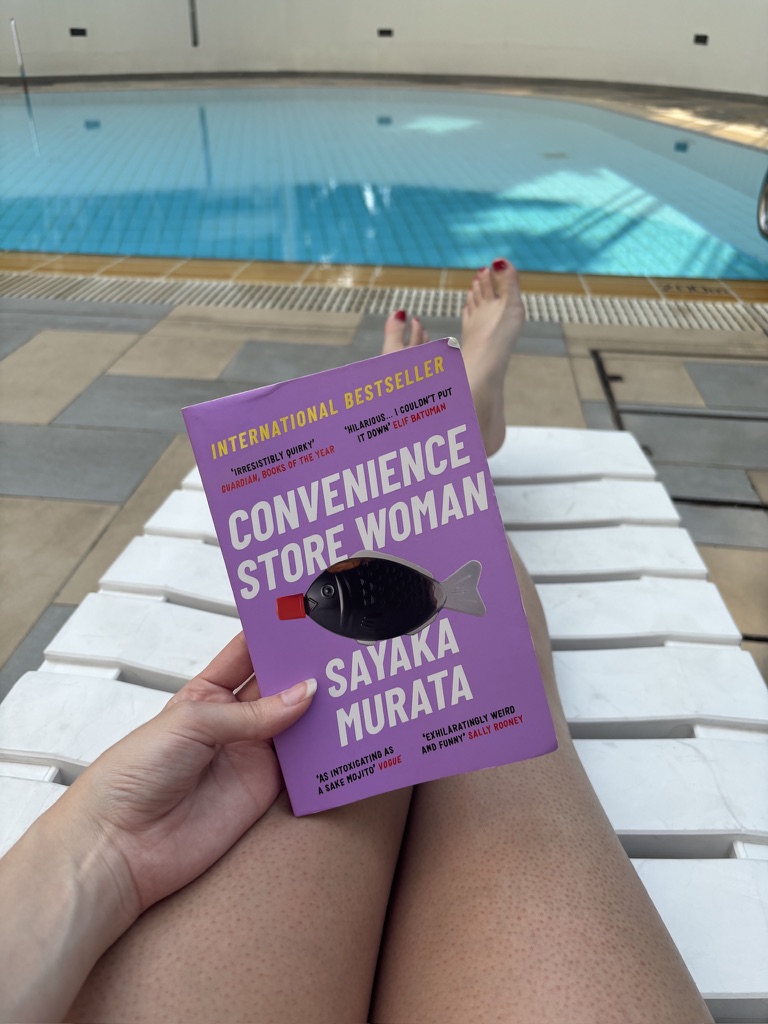
Convenience Store Woman by Sayaka Murata– In this novella, the protagonist, Keiko, is a thirty something convenience store worker. She has never been in a relationship and yet she is perfectly content, stocking shelves on display racks and never having feelings for any man or woman. Those around her fail to see anything other than what they consider to be an unfulfilling life. It is all about being misunderstood and conforming to societal expectations.
Bliss Montage by Ling Ma– A collection of short stories, each one quirkier than the last. There is little that can be said about this book other than the fact that you have to read it to understand for yourself what is going on. This collection of short stories is definitely not for everyone with its experimental and abstract writing, but many can probably find a piece that they enjoy. Favorite short story: G
📍 Bali, Indonesia
Nightbitch by Rachel Yoder– I have read many stories about women who are discontent with their lives and marriages. I had never read one where said woman turns into a dog. In many ways, this novel adheres to many tropes about motherhood: a numb-nuts husband who does not understand what she is going through, the exhaustion that comes from chasing around a lovable, but tireless toddler, and the sacrificing of a dream job for her family. But in this novel, the stresses of motherhood turn the protagonist into a carnivorous, feral creature. It is about how motherhood connects women back to the primal feelings within them. It will make you question whether you want kids and whether or not you’ve chosen the right partner in life.
Swimming in the Dark by Tomasz Jedrowski– There’s nothing like coming home at the end of a long day and cracking open a nice gay love story that takes place in 1980s Poland. Two young men fall in love in their youth, but disagree when one of them supports the nation’s socialist regime and the other one supports the promises of capitalism. It’s a tale as old as time. It was a place and an era that I knew nothing about, so I decided to read it and in doing so learned about Poland’s recent history. I felt like the first half of the story was stronger than the latter half, but that it was still good.
Election by Tom Perrotta– Those familiar with the Matthew Broderick and Reese Witherspoon film from the 90s should know about this epic story of a high school election gone wrong. Even though the story is about a high school election for student body president, you keep turning the page, hooked from the first paragraph. You sit on the edge of your seat, because you just have to know who wins the election and what it will mean in the grand scheme of things. Perrotta has a smooth turn of phrase and many tongue-and-cheek witticisms throughout the book, as he writes what should be a dull topic in such a compelling way that it becomes fascinating.
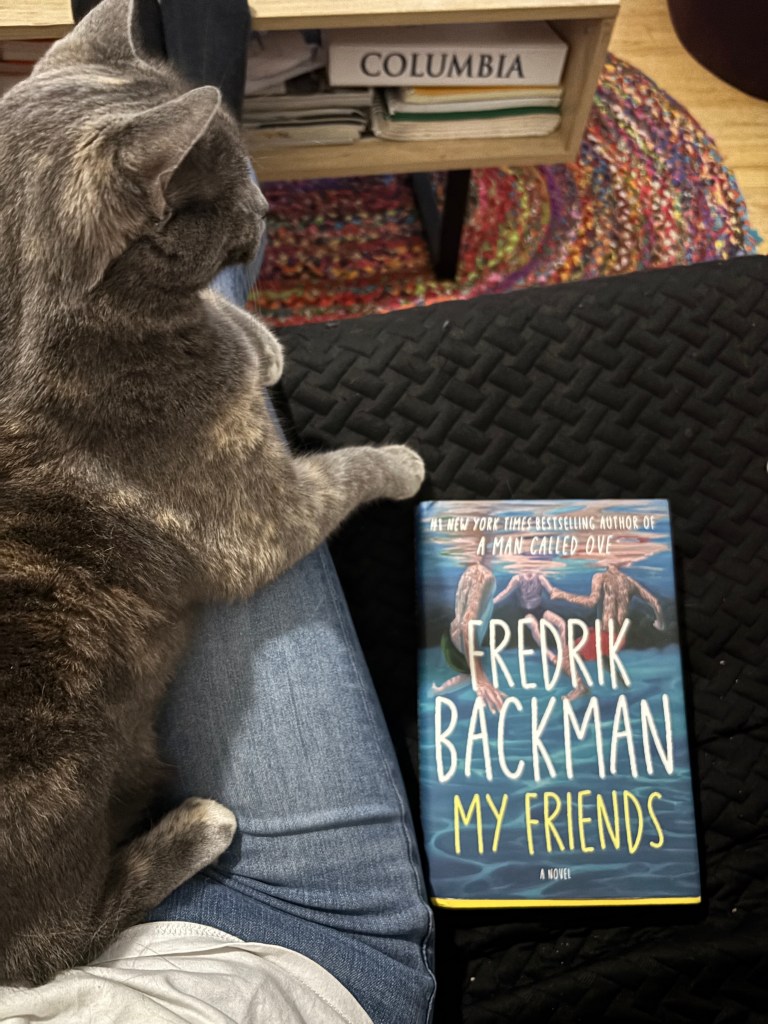
My Friends by Frederik Backman–I was absolutely down to give this book a four out of five stars review until the ending. The main character makes a worse decision than when the protagonist in Happy Place by Emily Henry decides to quit being a surgeon so that she can make pottery. The novel was charming throughout, conveying a genuine love of art and childhood, but I also felt like it was a little sappy for my tastes. Those who love art and don’t mind a questionable book ending should read this book as well.
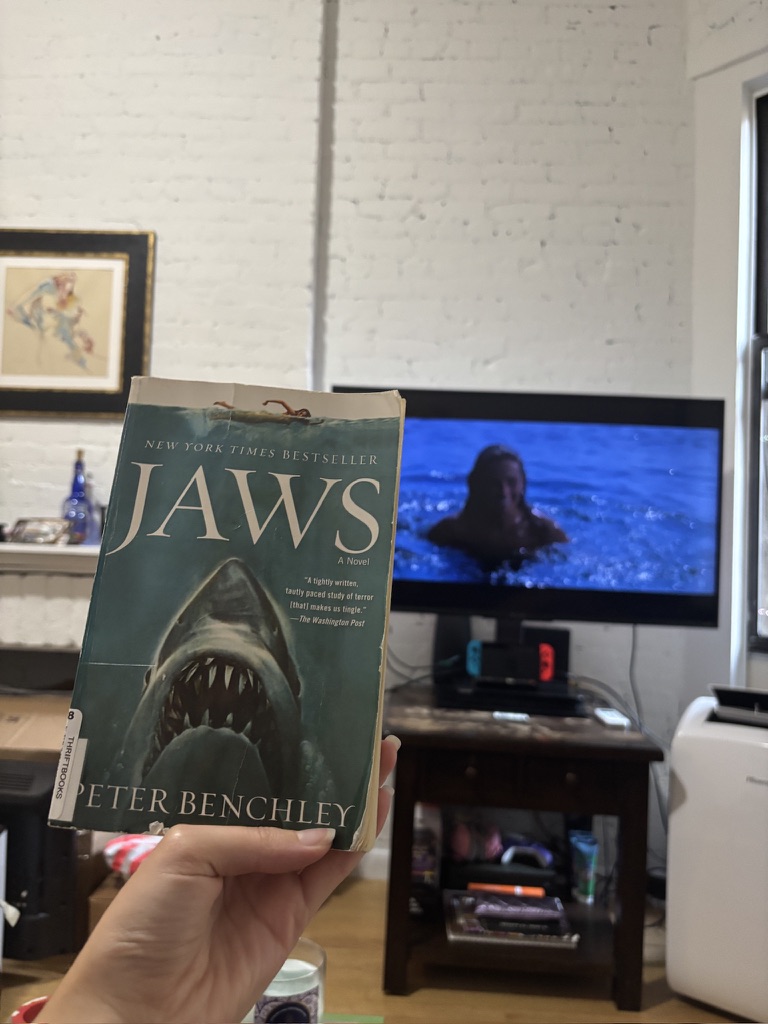
Jaws by Peter Benchley– Midway through summer, I decided to pick up the ultimate beach read: Jaws, the novel, and then the movie, that made everyone afraid to go into the water. Reading about vicious shark attacks can send a chill down your spin, even without the tight shots and iconic theme music that made the movie so legendary. Benchley is a great writer, even if he didn’t come up with the infamous “you’re going to need a bigger boat” line or the monologue about the U.S.S. Indianapolis. It is a smooth, quick read that is both entertaining and serious. To my surprise, this novel had much to do with class, infidelity, and mob dealings, being more tawdry and complicated than the simple man versus nature story that I was expecting.
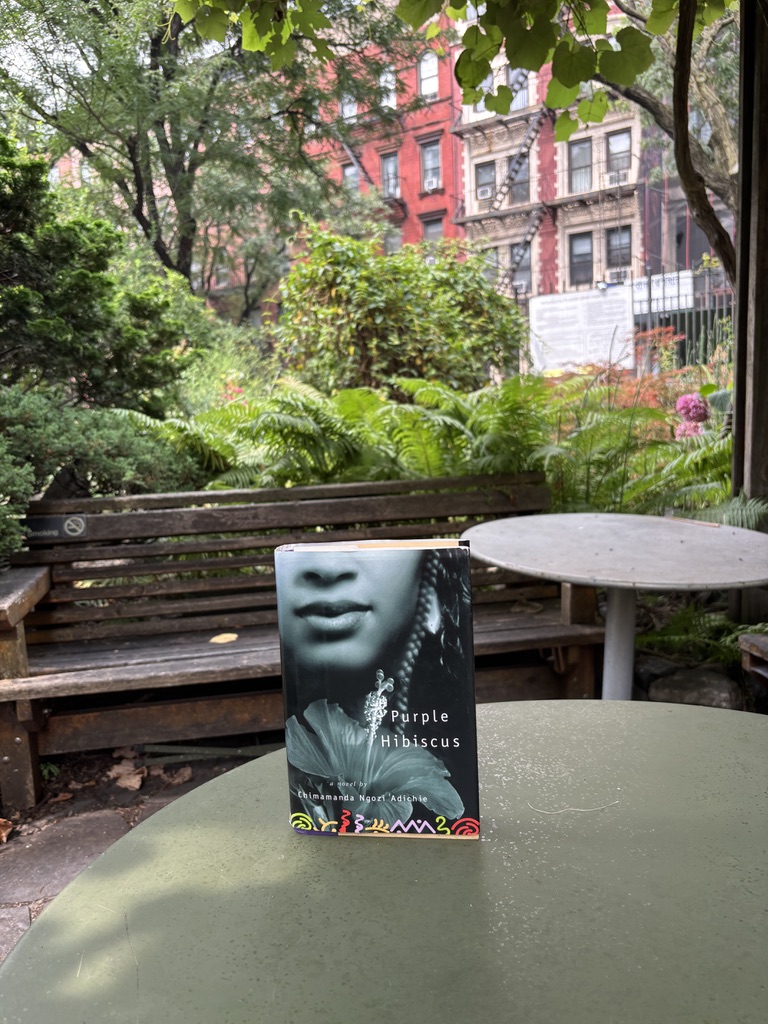
Purple Hibiscus by Chimamanda Ngozi Adichie– Brutal. Chilling. Haunting. Deeply upsetting. Purple Hibiscus tells the story of a wealthy, privileged family living in Nigeria during a time of political unrest. Nambili, the fifteen year old protagonist, lives a troubled life, devoid of any joy. Her father, who is a radical, fundamentalist Christian abuses his wife and children. The whole time I was reading it, all I could think to myself was, “this better end with his death, preferably his murder.” I won’t say whether or not that comes to pass. You read this book with a lump in your throat, filled with dread for the protagonist’s well being.
People We Meet on Vacation by Emily Henry– I read this book as a chaser after reading Purple Hibiscus when I decided that I needed to read something light and rompy. Like Emily Henry’s other rom coms, this book was cute and sweet, filling you with romantic hope. My copy was rife with typos, including getting the male love interest’s name wrong at one point (Emily Henry, fire your editor) but it was still fun to read. The men are charming. The women are quirky and relatable. The plots are endearing.
Malibu Rising by Taylor Jenkins Reid– For whatever reason, I had been fantasizing about surfing in exotic locations. Particularly, I wanted to surf in Malibu, despite having no plans, in the near or distant future, to ever go there. So when I picked up this book with Malibu in the title and surfers on the cover, I knew that I had to read it. The story really builds on itself, giving each character a backstory that is compelling to read. I understand why this book was chosen as the number one book on goodreads the year that it came out, being entertaining and reasonably thought-provoking. Anyone who feels nostalgic for the 80s will probably like this book.
Atmosphere by Taylor Jenkins Reid– Atmosphere confirmed for me something that I already knew, which was that you couldn’t pay me to ever go to outer space. I do not like enclosed spaces, wide open spaces, math, or science, all of which seem pretty essential to space travel. I also have such bad motion sickness that I can’t swing on a swing for more than a minute. Space travel is just not in the cards for me, but Reid makes it seem like you are there, leading a mission through the solar nebula as you float through time and space or leading mission control in Cape Canaveral, Florida. I was on the edge of my seat, dying to know not just how the space mission ends, but how the relationships at the heart of the novel resolve themselves.
Carrie Soto is Back by Taylor Jenkins Reid–It should be clear by now that I am having a love affair with the writing of Taylor Jenkins Reid. I appreciate Reid’s clean, clear prose, the pop culture savviness of her work, and what can be described as the female-centricness of her narratives, which she never deviates from. This work in particular features a father-daughter relationship at its heart and looks at the obsession and drive of a tennis pro. This novel, which will test your knowledge of Spanish, tackles the vitriol that female athletes face, what it means to be considered past your prime, and shows not only what it takes to have a great career, but what it takes to have an even greater comeback. If you are a fan of The Queen’s Gambit by Walter Tevis, you will likely enjoy this book as well.
Last but not least:
The Idiot by Elif Batuman–Some books are ruined by their endings. This book was enhanced by its final sentence. This novel is entirely about language and communication, the irony being the narrator’s inability to communicate meaningfully with the people in her life. The book is praised for its wry humor, which is to say that it isn’t laugh-out-loud-funny but that it thumbs its nose at society.
Even if a book isn’t in my top three or my honorable mentions, that doesn’t mean I won’t still recommend it. Here are some books that I can’t recommend enough:
Despite the diverse array of books I have read so far this year, there were some oddly specific similarities between a few of them.
Novels in which a mother is struggling with motherhood because her husband is failing her in some way and the story is so indicative of so many women’s reality that the baby isn’t even given a name:
People in a European country reflecting back on a relationship that they once had when they were younger and exposed a conflict between who they really were and the life they wanted to live:
And yet, despite all of these similarities, I still read many things that were new to me. For the first time in my life, I read books that took place in Nigeria, Poland, and Australia. Naturally, now, I would like to visit.
I am slightly behind on my reading goal (gasp) and will therefore need to have my nose stuck in books until the year’s end.
Do you agree with my review? Leave a comment (nicely) with your take on these books.
Happy reading!
The Tragic Queen,
Raquel
P.S.: Check out my previous book review of all of the books I read at the end of last year.
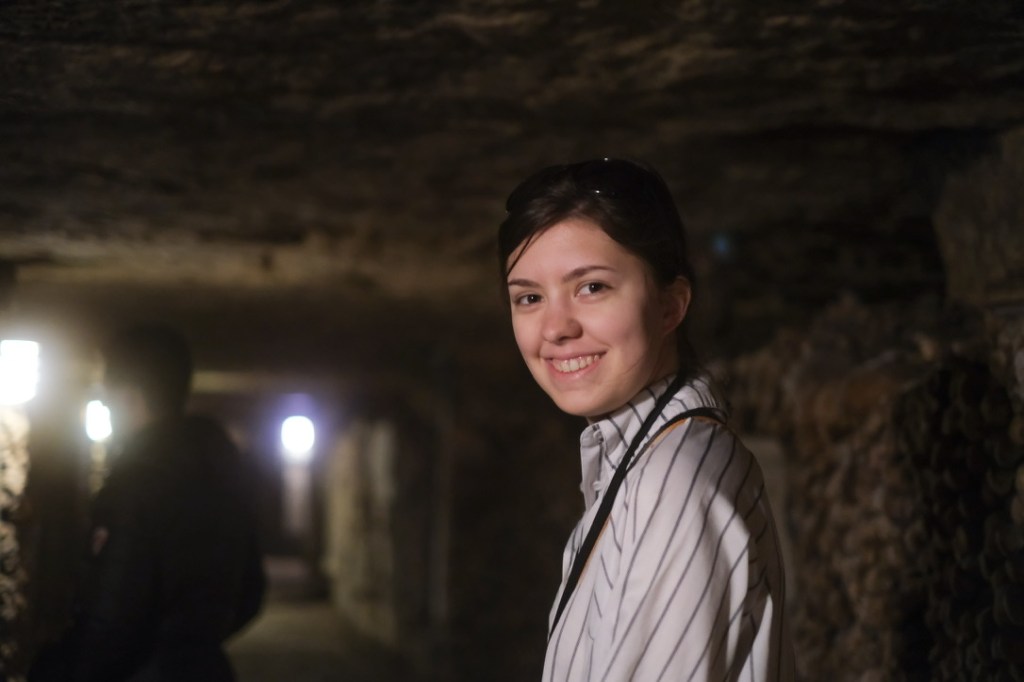
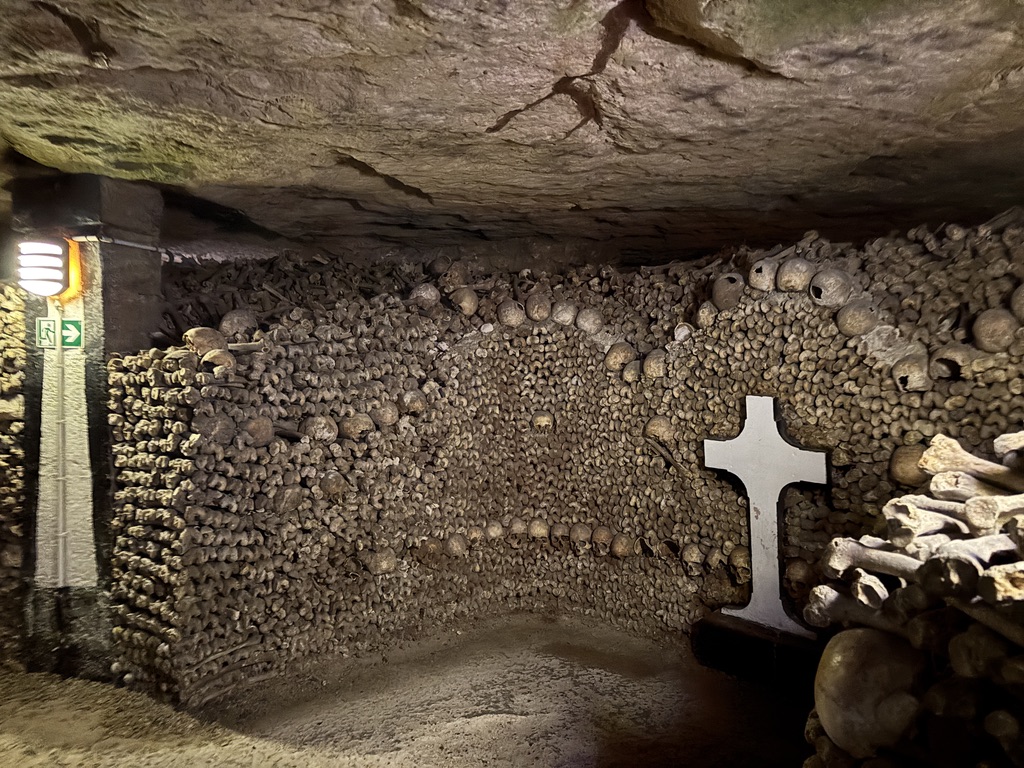
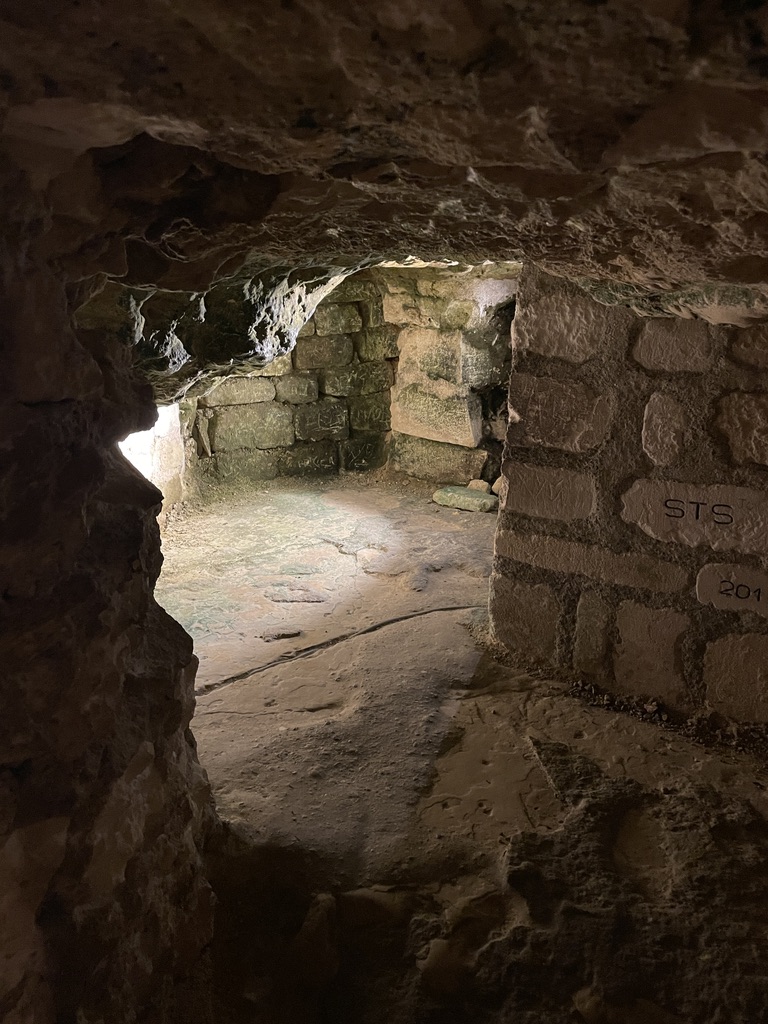
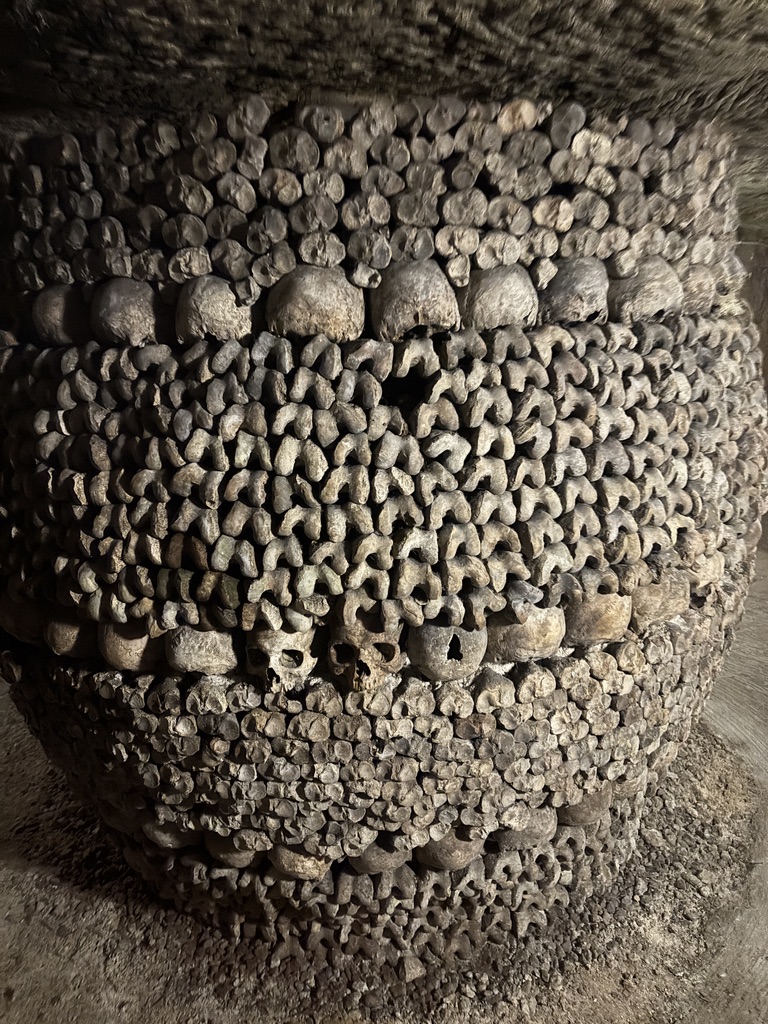
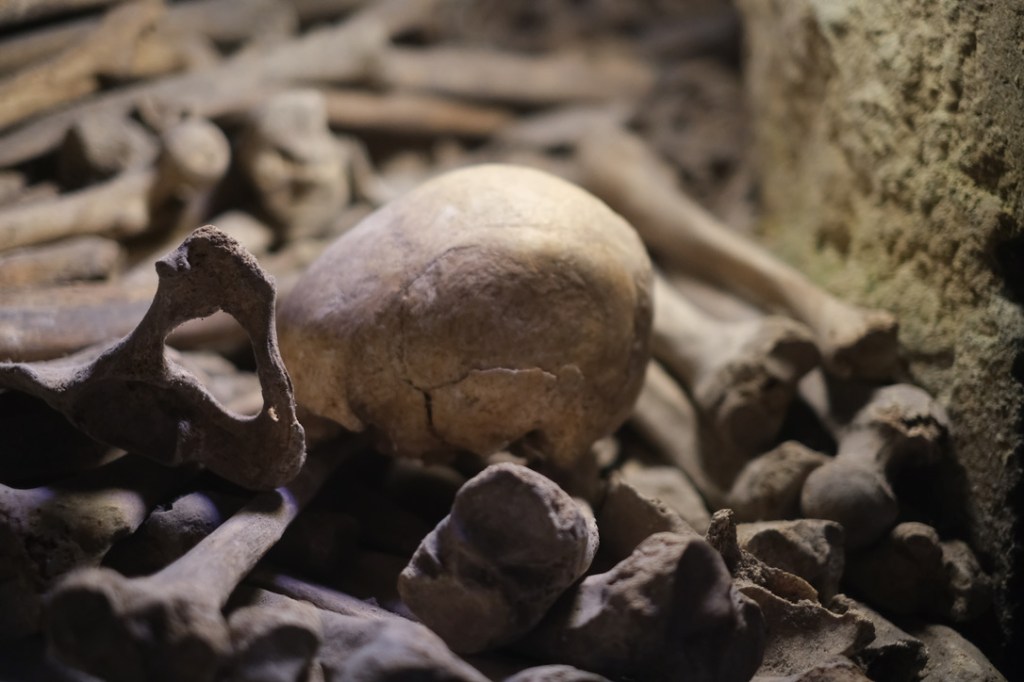
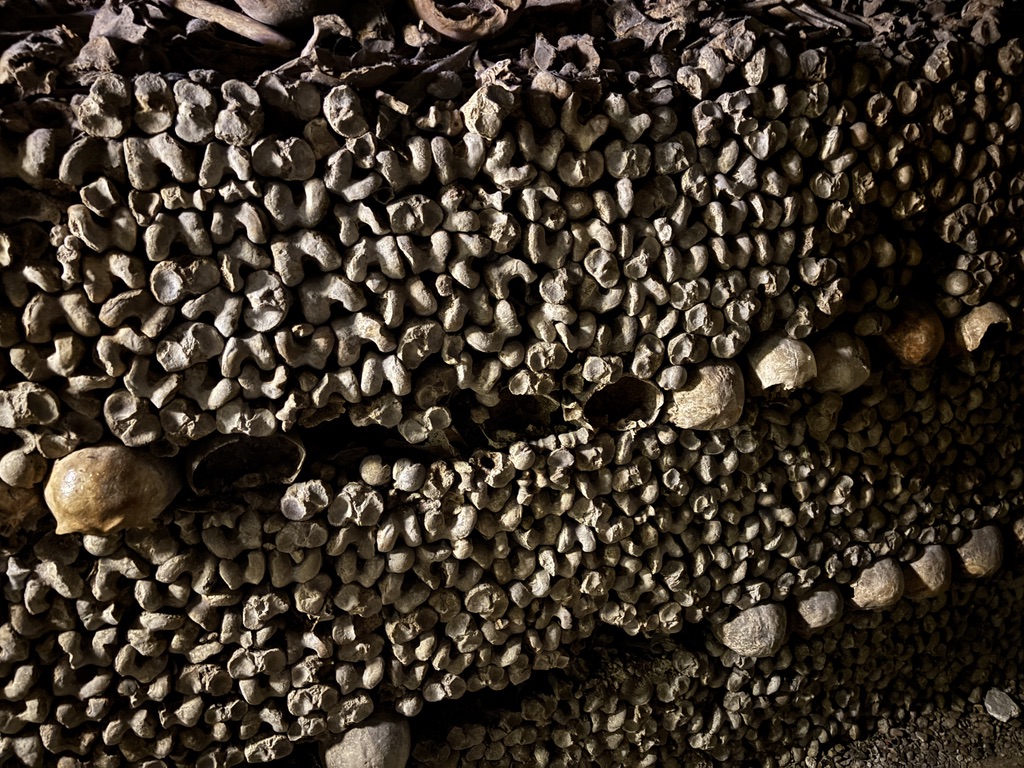
On my last day in Paris, Claire and I went to the Catacombs, going much farther than 6 feet under to see the bodies of the 6 million people buried underneath the streets of Paris.
Photo credits: Claire
The catacombs came about out of a need for mass burial after a public health crisis and now acts as a popular attraction.
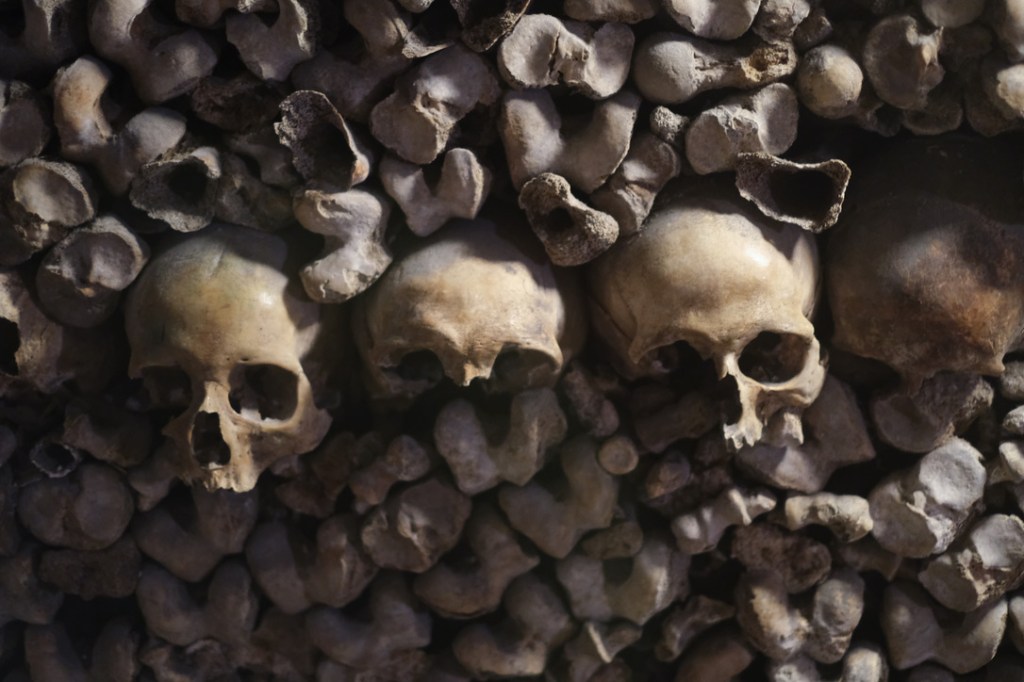
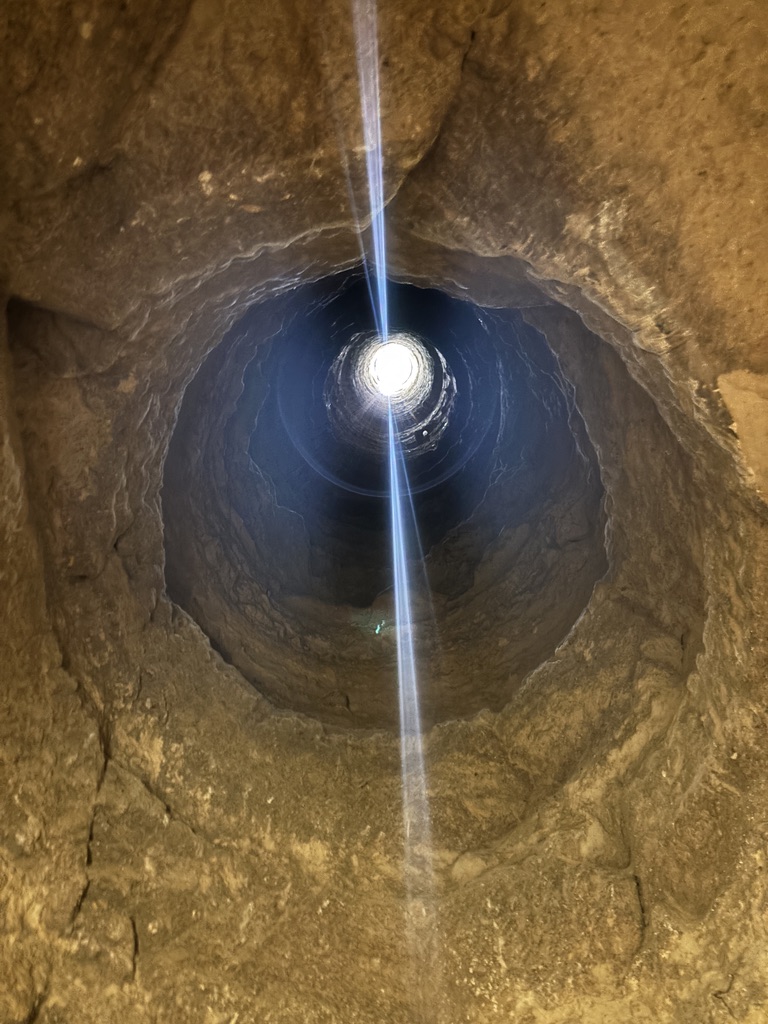
The tunnels we walked through were cool and damp, dripping wet from the rainstorm happening well above our heads. It was eerie seeing millions of skeletons stacked on top of each other while walking through a narrow, underground tunnel.
We listened to the audio explaining how the catacombs came to be. Hint: the plague was big for the catacombs numbers. I never thought that I would be able to walk past a wall of skeletons as casually as I did in the catacombs, but we walked amongst skulls wrapped around walls, down the long, winding tunnels.
Between the catacombs and Père Lachaise, I saw a decent amount of French burial grounds. After visiting Père Lachaise, a cemetery full of some of the richest and most famous people in Europe, it was shocking to see the 6 million bodies of unknown people lumped together underground.
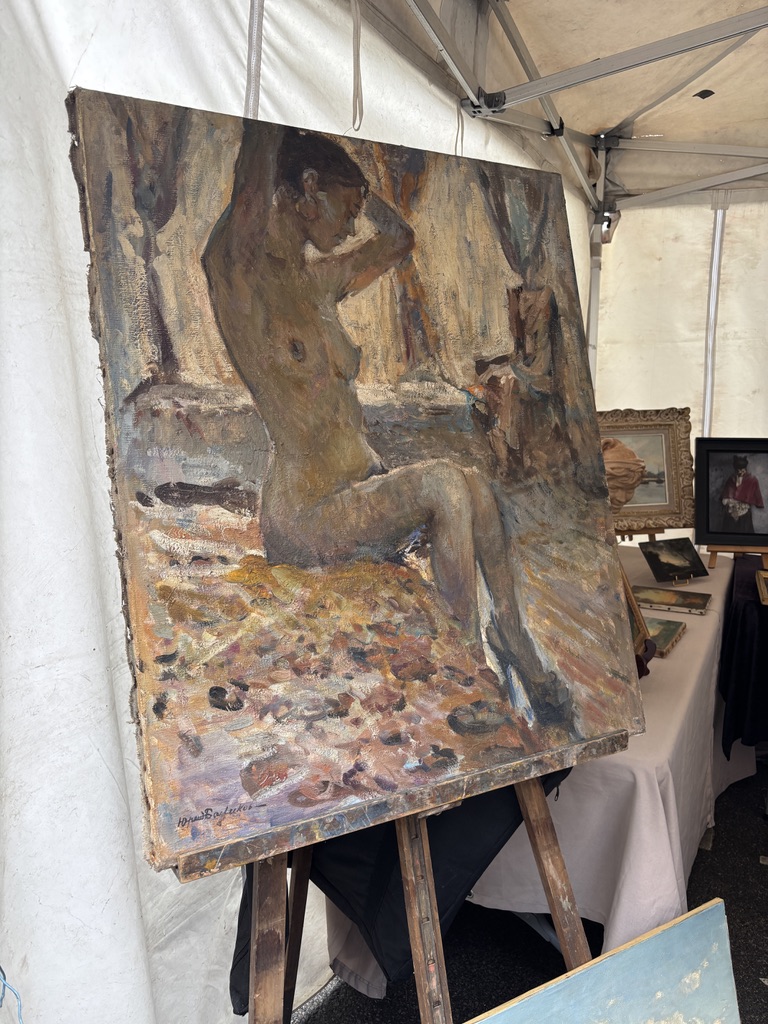
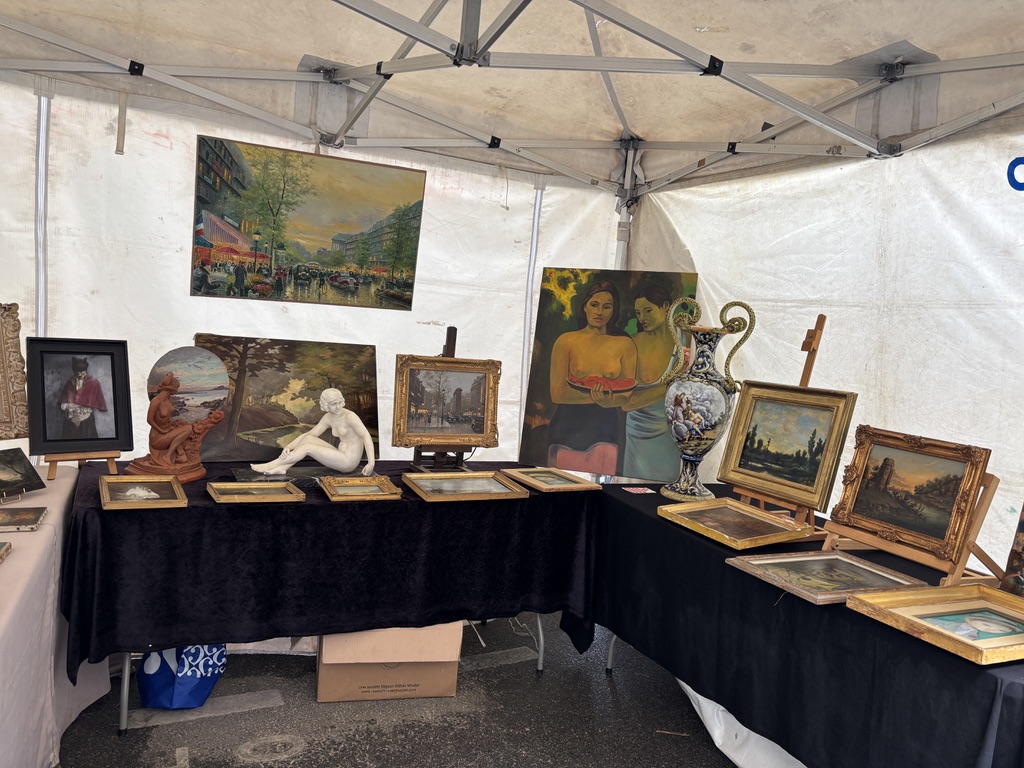
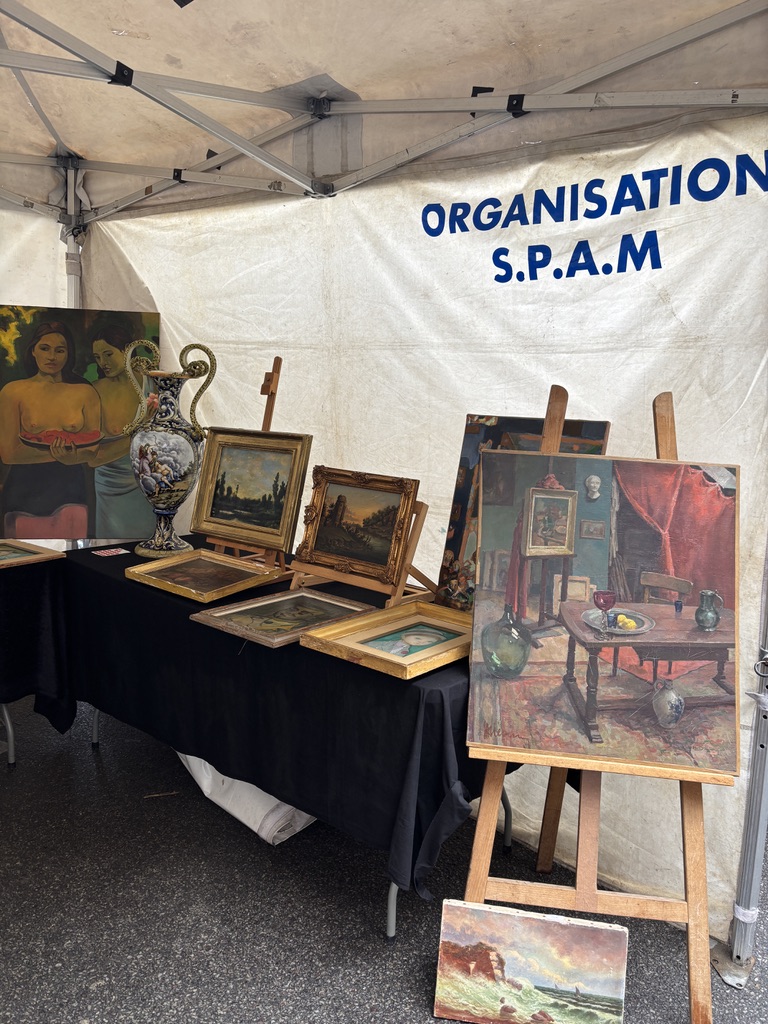
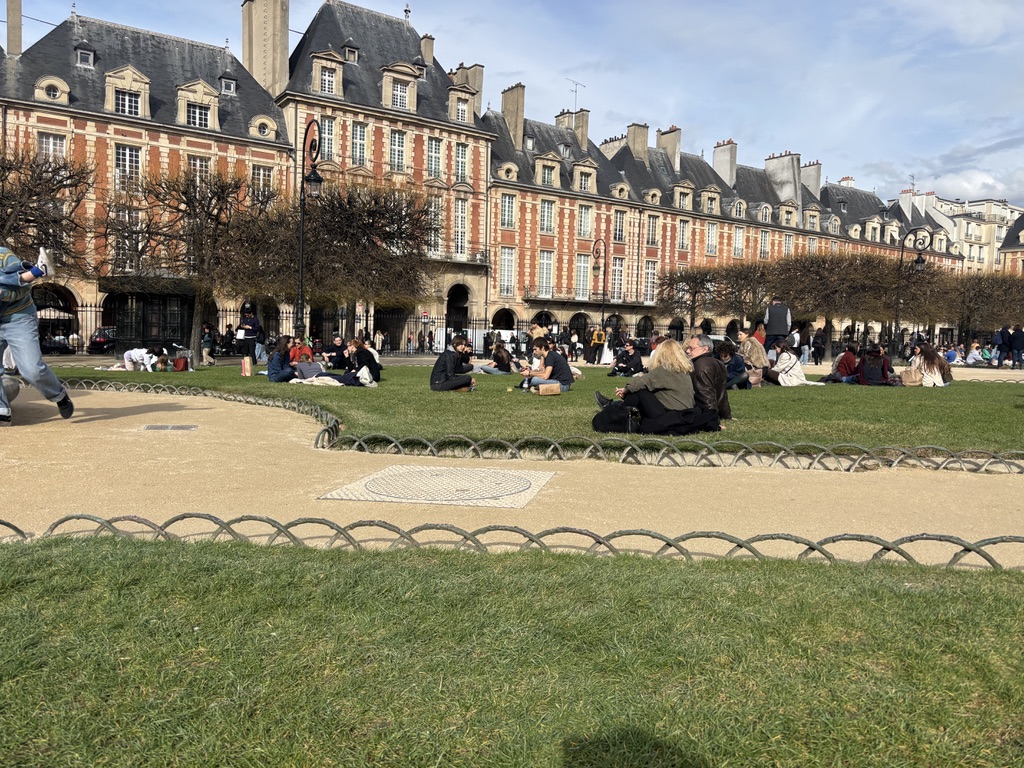
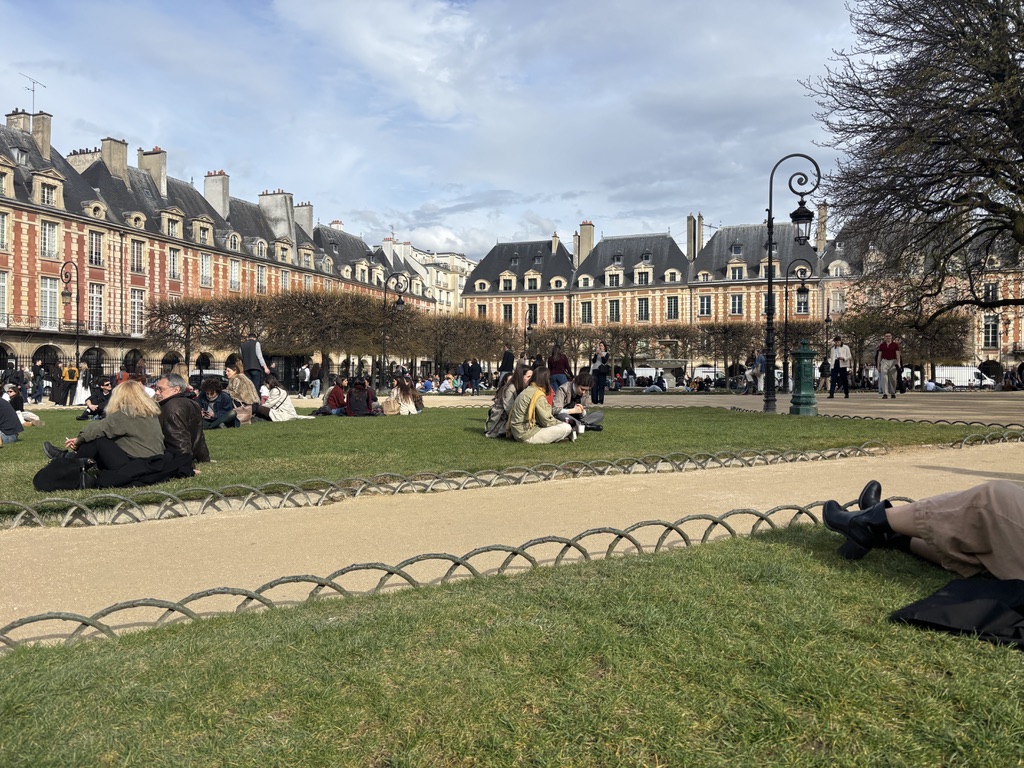
After getting a nice, chilling perspective on mortality in the catacombs, I decided to go and check out the flea market being held in the Marais district in the Place des Vosges, a park that straddles the 3rd and 4th arrondissements. Every weekend in Paris there are grand flea markets all over the city and I follow a woman on Instagram who posts nothing but where to find them each weekend. The internet is wild.
I bought a couple more chokers and looked around at the paintings, gramophones, and other antiques that they were selling. It seemed true to what I had come to expect from all of the movies I’d seen of Paris, where gramophones and old records are casually sold on every other street corner.
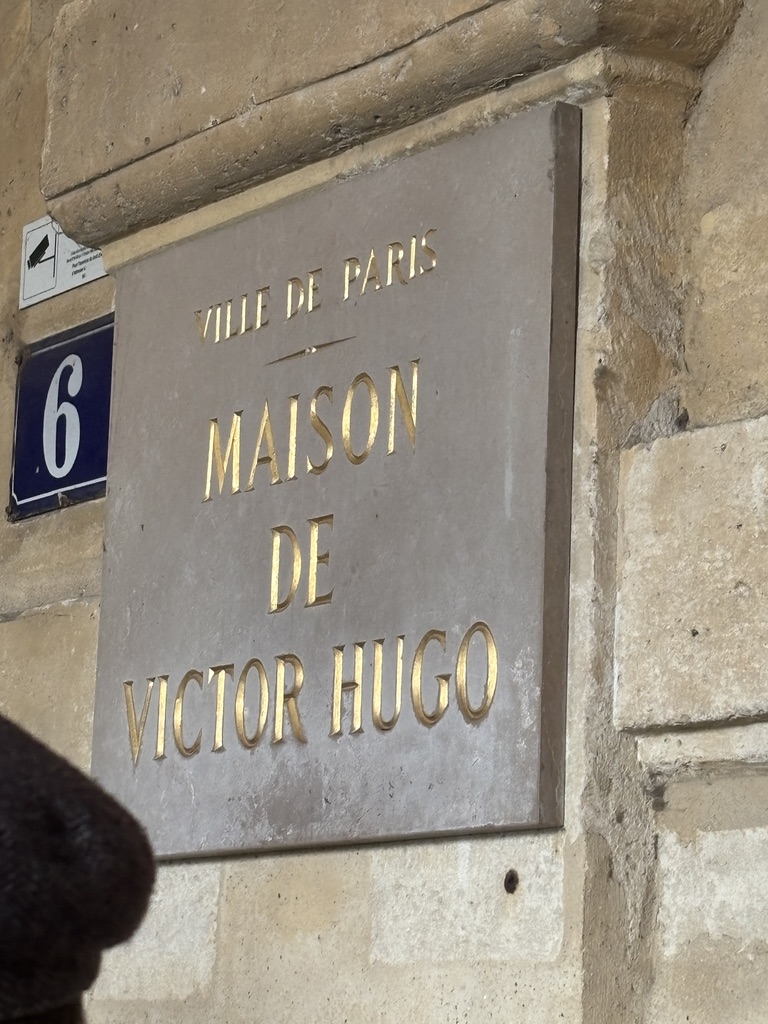
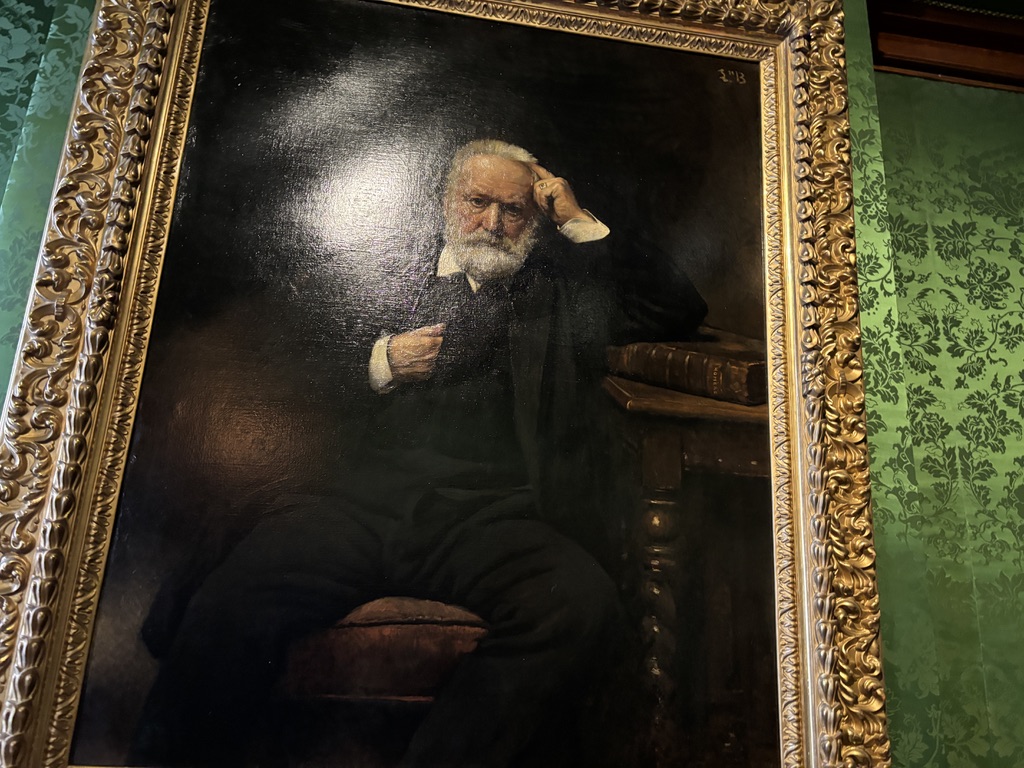
While I was there, I went to the apartment that belonged to Victor Hugo, author of Les Miserables and The Hunchback of Notre Dame, which is now a museum honoring his life. It overlooks the park, with a sweeping view of the flea market. On every wall there are massive oil paintings, many of which are of his favorite daughter who preceded him in death.
I walked through the fabulous apartment that Hugo lived in while writing his books about poverty. One of my friends later told me that after his death, they went through his financial records and found that he hired somewhere around two prostitutes a day and that all of the brothels were therefore closed on the day of his funeral because all of the women were in attendance. In case you were wondering, no, he did not die from syphilis. He died in his 80s from natural causes.
Towards the end of the day, I sat on a park bench. Couples walked by on dates, college students laid out on the grass, and kids ran around playing soccer in a way that made me both nostalgic and melancholy, because I will never be that young again.
I was ready to leave Paris the next day, carting my painting with me. I’d had a dreamy first trip to the city, drifting into shops and cafes, with walks along the Seine interspersed throughout. I spent my time eating unbelievable food and getting lost in the charms of the city. This trip has inspired me to learn French (right after I finish learning Italian and Spanish, the two other languages I started but never finished studying).
And to my friend Claire: thank you for hosting me, introducing me to proper French food, and for giving me my first taste of Paris. Without Claire, I would have bumbled my way around Paris, mispronouncing every word (I did that anyway). Instead, the two of us stayed up watching Audrey Hepburn movies at night and it enhanced my experience tenfold to watch Cary Grant chase Audrey Hepburn through a metro station that I would use the next day.
I never went to the top of the Eiffel Tower, but I always like to leave something for the next trip. There are always smokey jazz bars, burlesque shows, and more Audrey Hepburn films to watch (I still haven’t seen Paris When it Sizzles).
The good news is that I was able to do it all over again with my trip to Asia a few weeks later. Get ready for more pictures of food, stories about wily monkeys, and a beautiful tropical paradise.
Off to my next big adventure!
So until next time, Paris!
Au Revoir!
The Tragic Queen,
Raquel P.S.: Check out how I spent the previous day in Paris when I went on a spree
For my second to last day in Paris, I decided to spend my time walking around, looking for stores to shop in. At first Paris seemingly did not have a bunch of places for me to throw my money at, unlike Italy, where I couldn’t walk down a street without seeing something in a window display that I wanted to own.
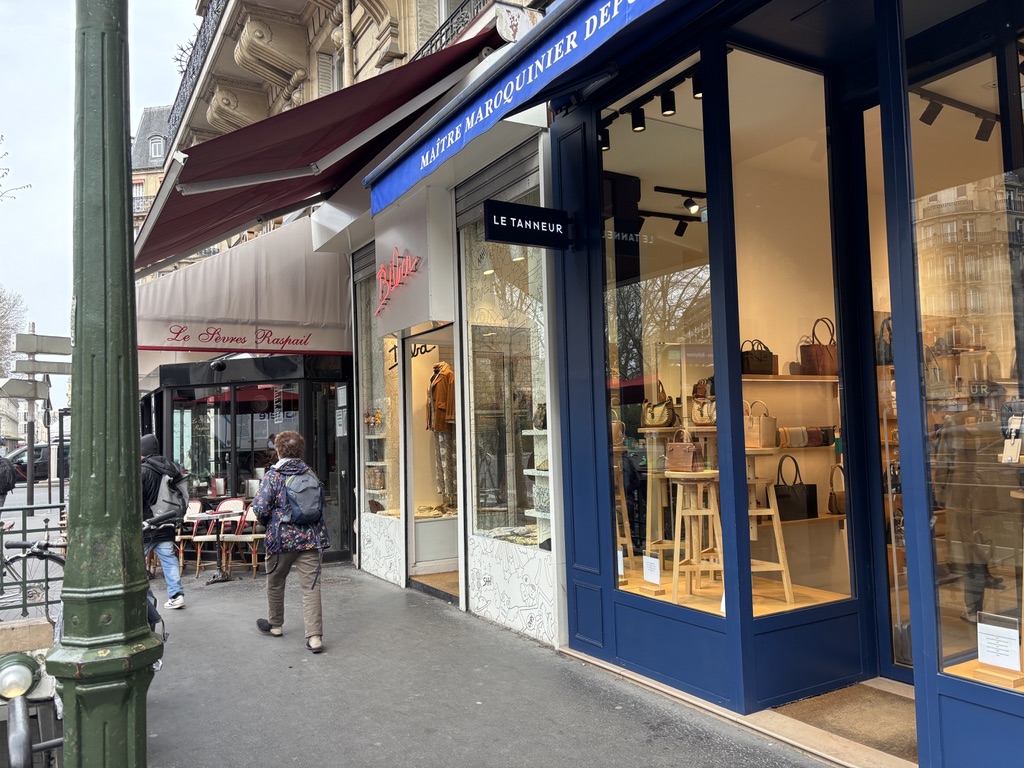
A random French shop
Everything seemed not quite right and with the kind of money they were asking for, everything had to be pretty right. I popped into a few jewelry stores, trying on crystal chokers and listening to the shop girls tell me how each choker worked with my hair. It was the kind of Paris shopping spree I had dreamed about when I was a little girl, twirling in front of my mirror in a tutu and fairy wings.
Crossing the Seine to get my shopping done
Sometime after lunch, I found a place called Free “P” Star, a reasonably-priced second hand store wedged between the high-toned shops of the Marais. This interestingly named clothing store is a definite young people’s shop, with its neon lighting and pop music blaring over the air waves. It could rival Abercrombie and Fitch for its headache-inducing medley of unnecessarily loud music and bizarre lighting that makes it difficult to see the clothes that you’re buying.
Stopping for a drink
All of the clothes were inexpensive but trendy, the kind of outfits that you would wear on a night out. I walked away with a vinyl jacket, a red velvet jacket, and a pair of black velvet pants.
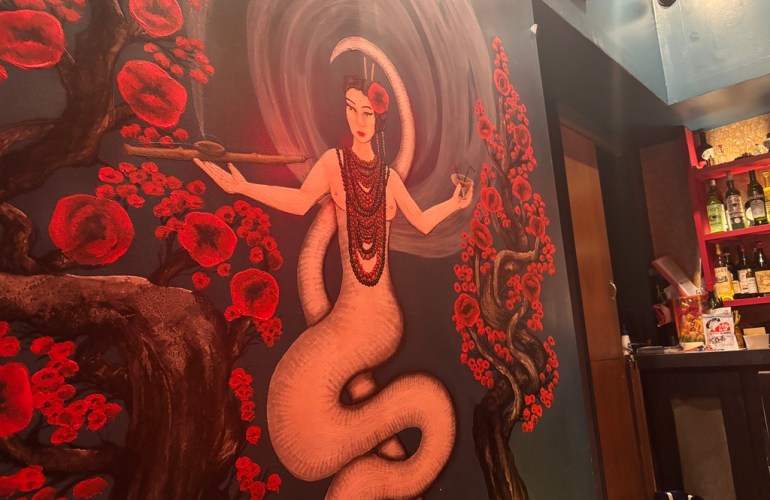
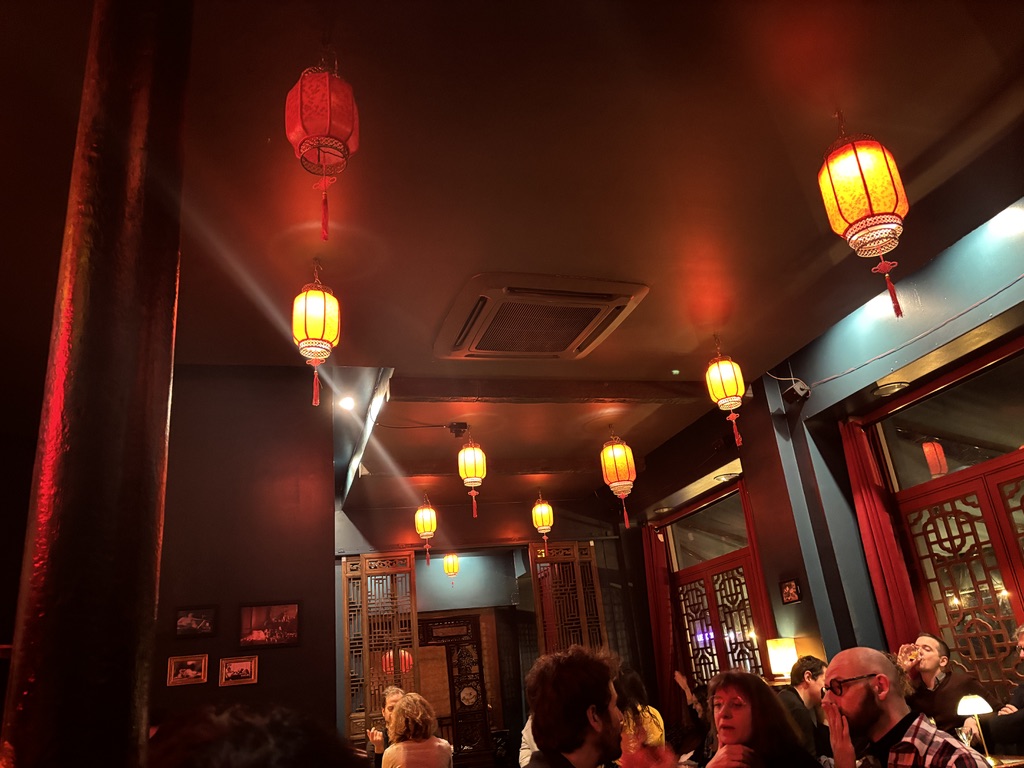
For dinner, Claire and I went to “Red Poppy,” a tapas bar in Paris’s Chinatown district. The place is adorned with paper lanterns, graffiti-style murals, and hand drawn menus with cocktails ranging from light to heavy.
So far I have been to a bunch of art museums, seen the Palace of Versailles, visited Notre Dame Cathedral, walked through Pere Lachaise Cemetery and, now, I had just had a day of checking out cool secondhand shops and even cooler bars. My trip to Paris was exceeding all expectations.
After drinking a few cocktails on the heavier side of the menu, we called it a night. I went to bed and got ready for my last day in Paris.
Towards the end of my trip, I ventured outside of Paris to check out the Palace of Versailles.
These dudes
Claire told me that it was something I absolutely had to see when visiting France for the first time, so I took the train and made my way to the palace.
The Palace of Versailles, once the home of two of the world’s most infamous monarchs that sparked one of the greatest revolutions in world history, is now casually situated along a busy French street that is teeming with Ubers.
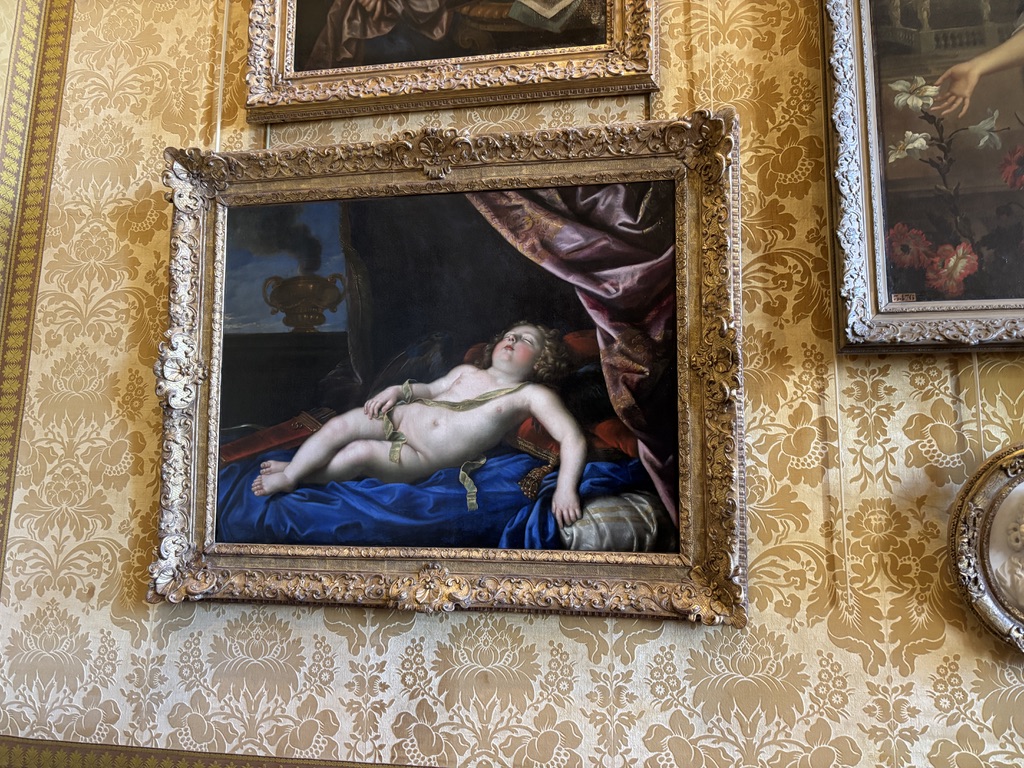
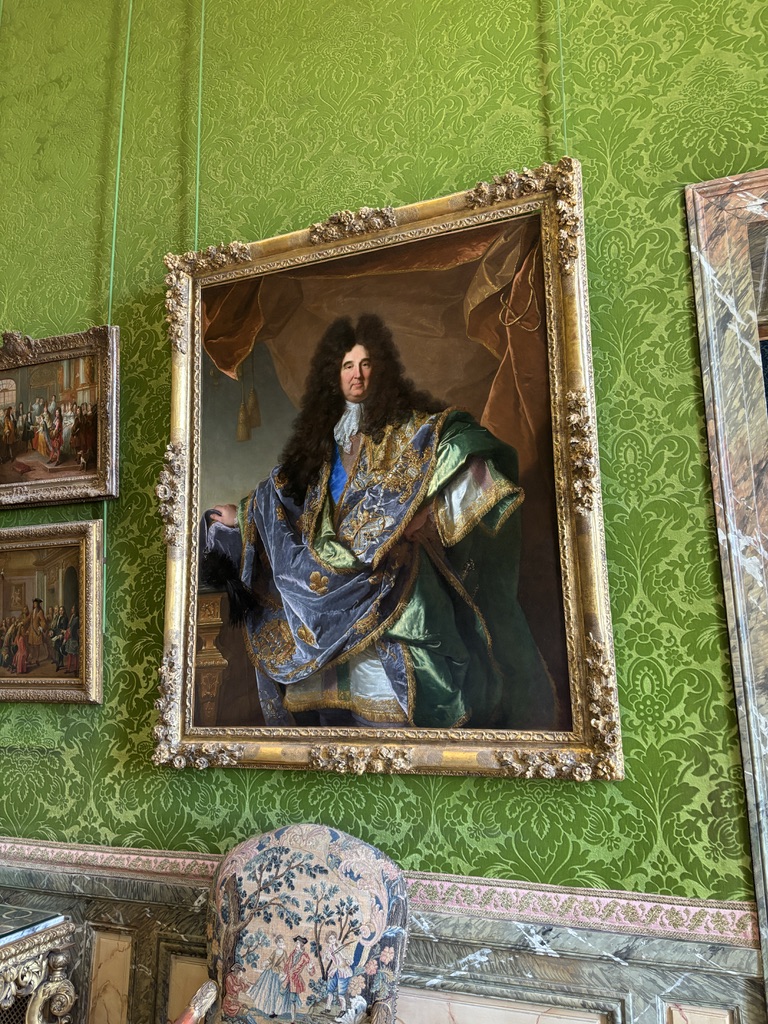
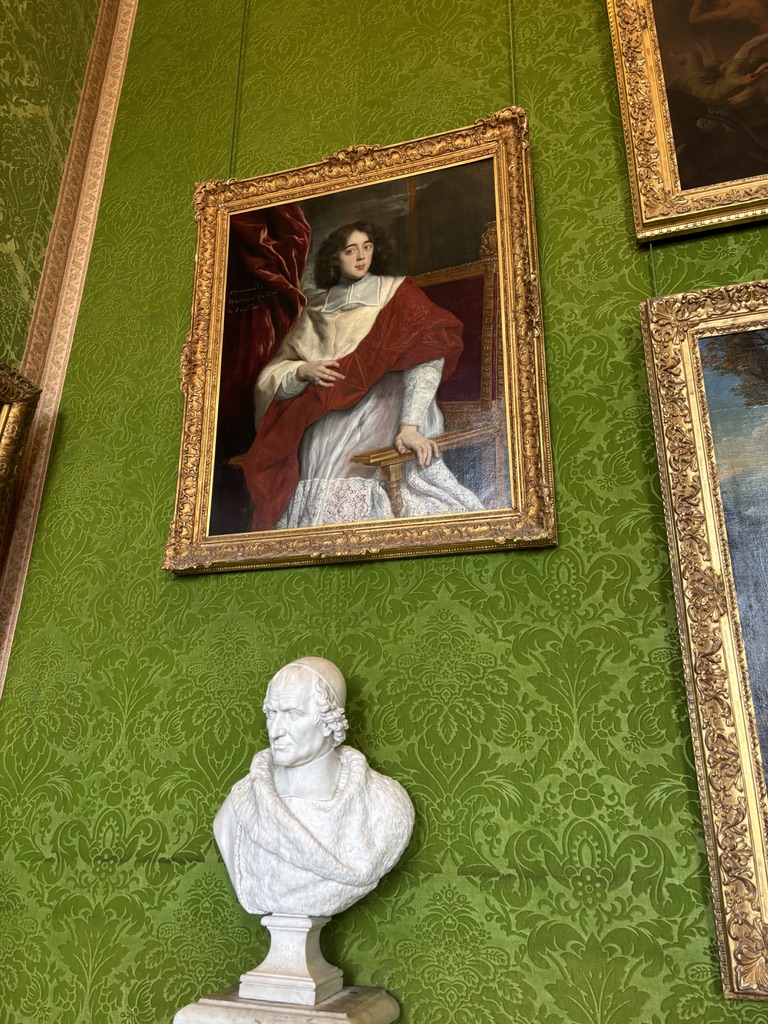
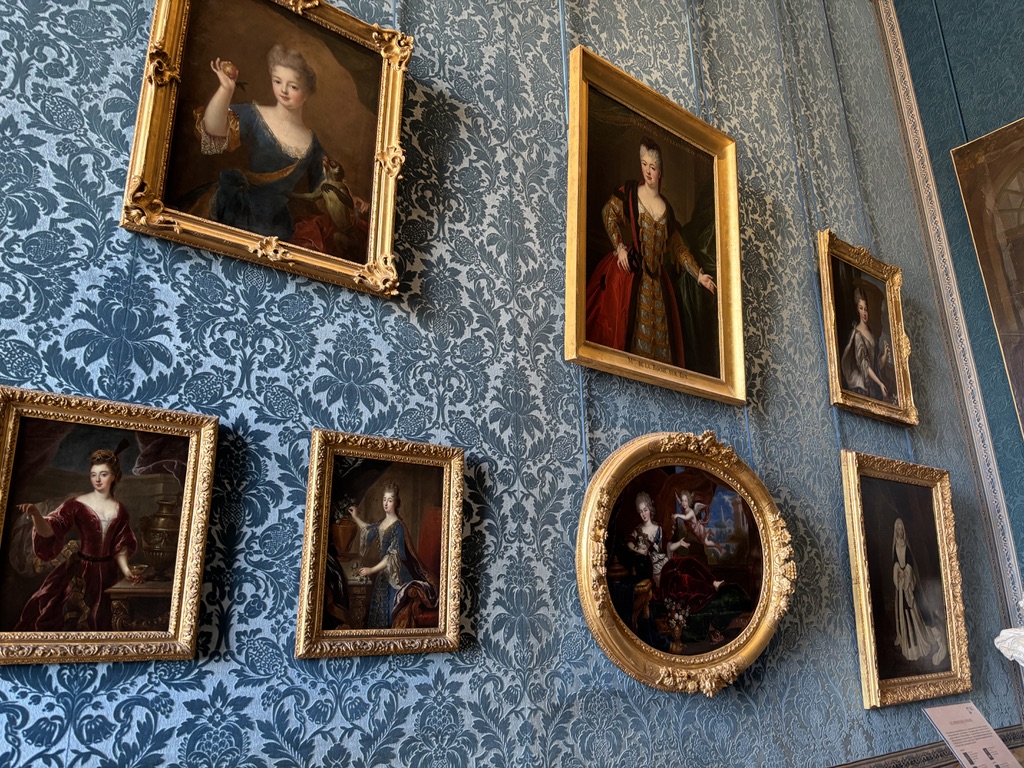
The palace lived up to its reputation, with its Rococo style and its countless paintings along the walls, including this one of Marie Antoinette. I took a picture with my fellow tragic queen and moved along.
I had a picnic at the Gardens of Versailles, (a moveable feast, if you will) eating an apple, cookies, and a croque de monsieur, while drinking rosé and reading my book. It was a meal fit for a queen.
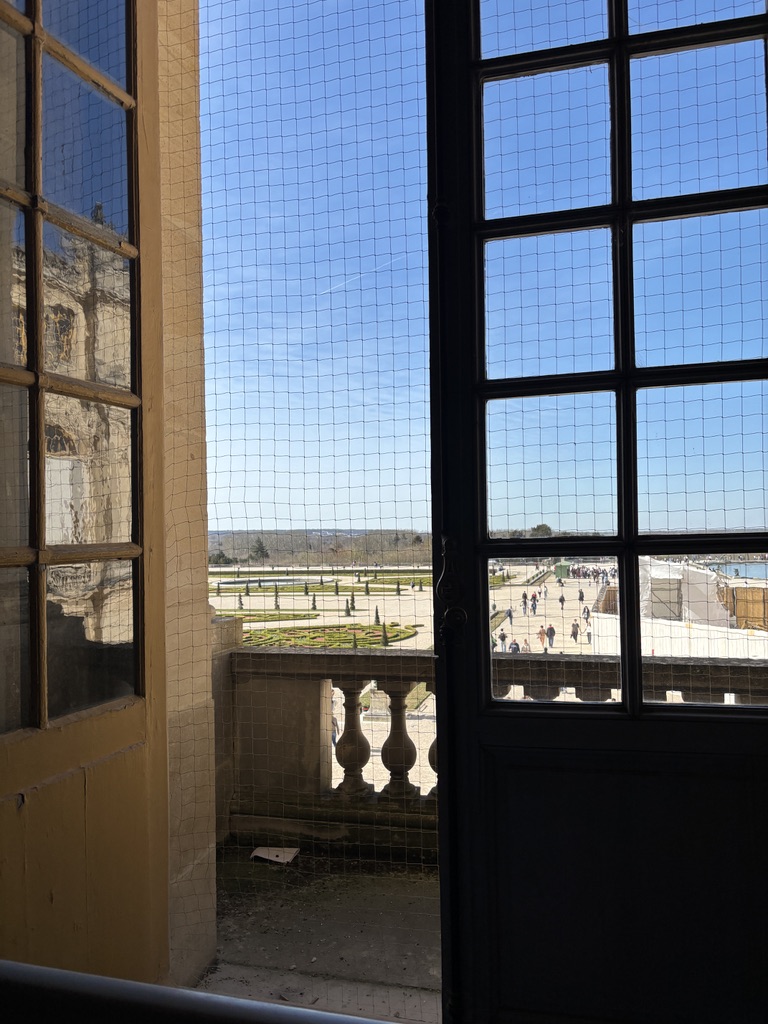
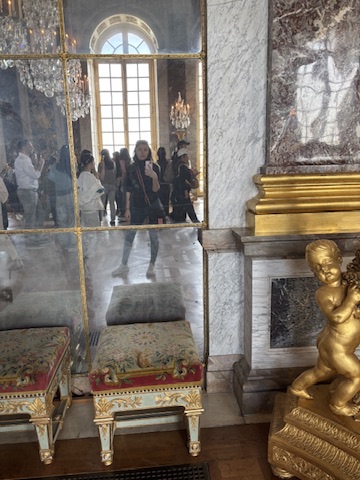
I see now why they cut off the royals’ heads. After roaming the manicured gardens and the wholly unnecessary, but very cool, hall of mirrors, it was easy to see that they were in fact living in unspeakable grandeur.
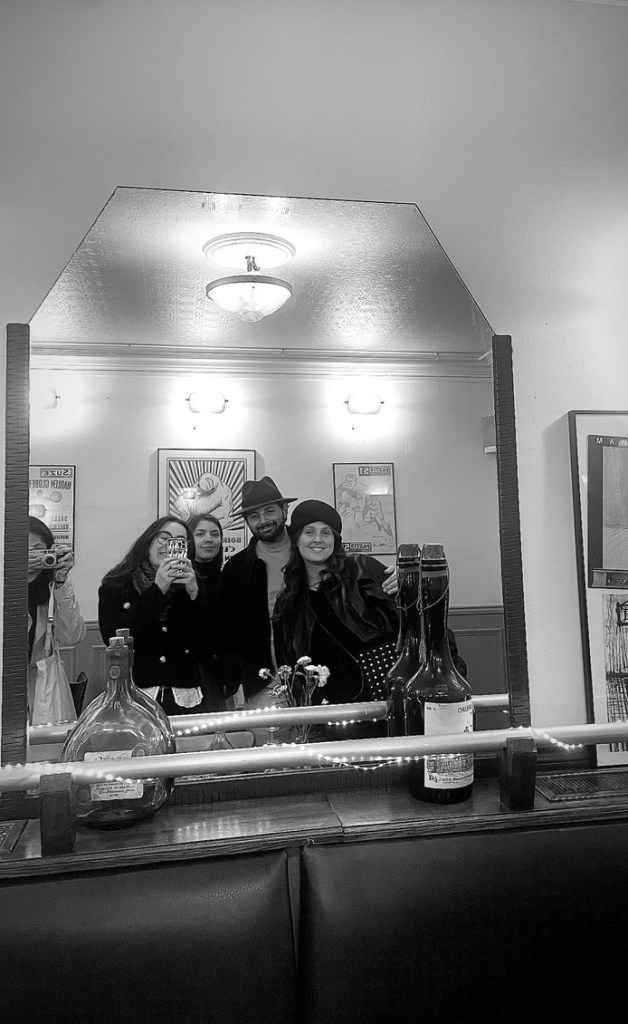
A room built for a mirror selfie
I walked around outside, amazed at how the palace kept expanding into the horizon. I walked past the ponds and rolling lawns until my feet hurt, solidifying for me just how grand the Palace of Versailles really is. I called it a day once I could barely feel my feet.
After I got back from Versailles, I had dinner with some friends of mine and Claire’s, at a restaurant called Le Compères, where I ate bone marrow for the first time and decided that bone marrow tasted incredible.
Over dinner, I got to hear about my friends at law school. They got to hear about the novel that I am working on and the clumsy description that I always give of the plot.
Everyone who told me that I needed to check out the Palace of Versailles was right. I’d had a fun day navigating the churn of tour groups throughout the palace, before enjoying the mild spring weather and a good book in the gardens. I took my time; it’s not everyday that you get to see a decadent palace where every wall is gilded in gold.
At this point, I was nearing the end of my trip and only had two more days to leave my mark on the city.
The Tragic Queen,
Raquel
P.S.: Check out my previous blog post about my visit to the Louvre
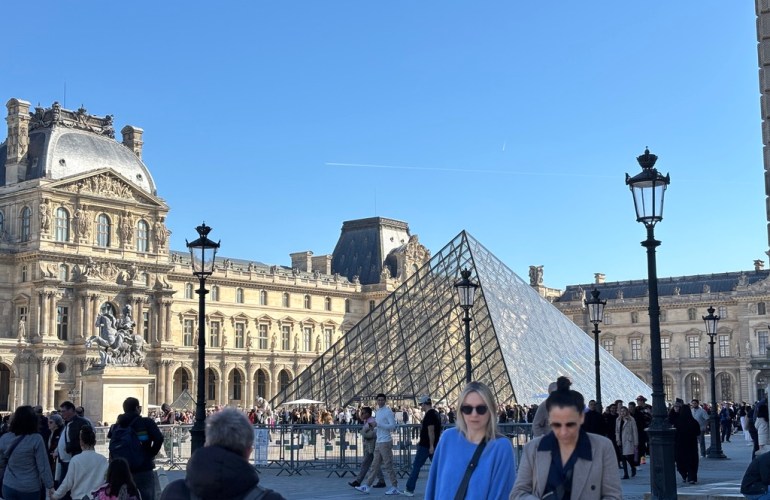
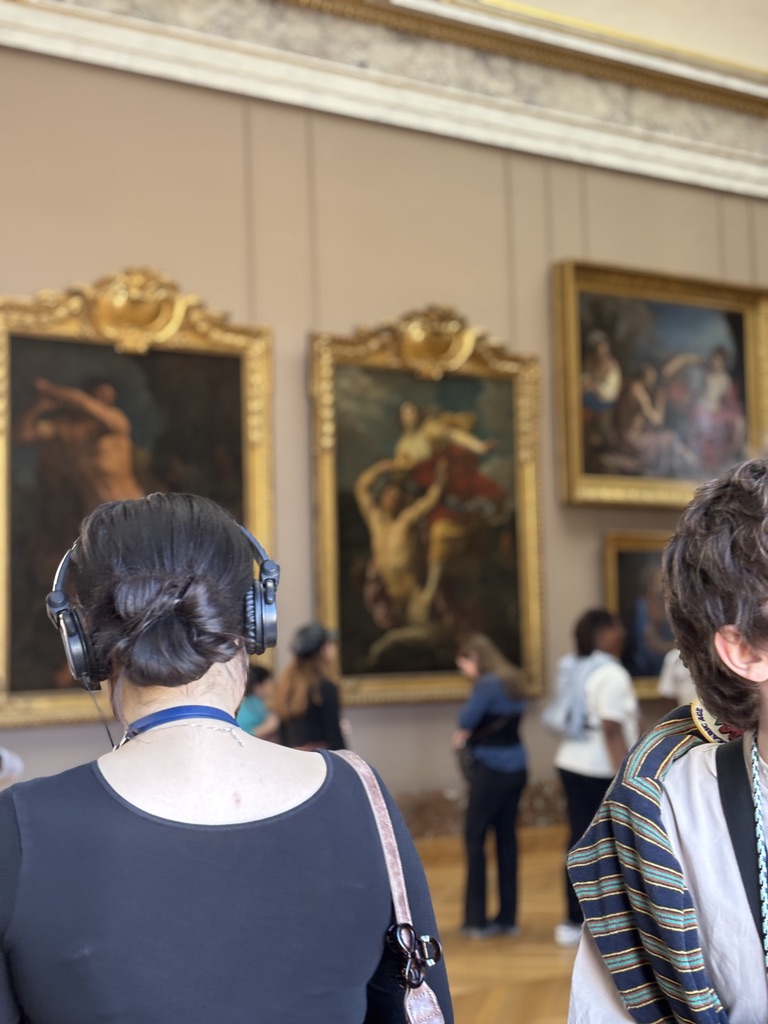
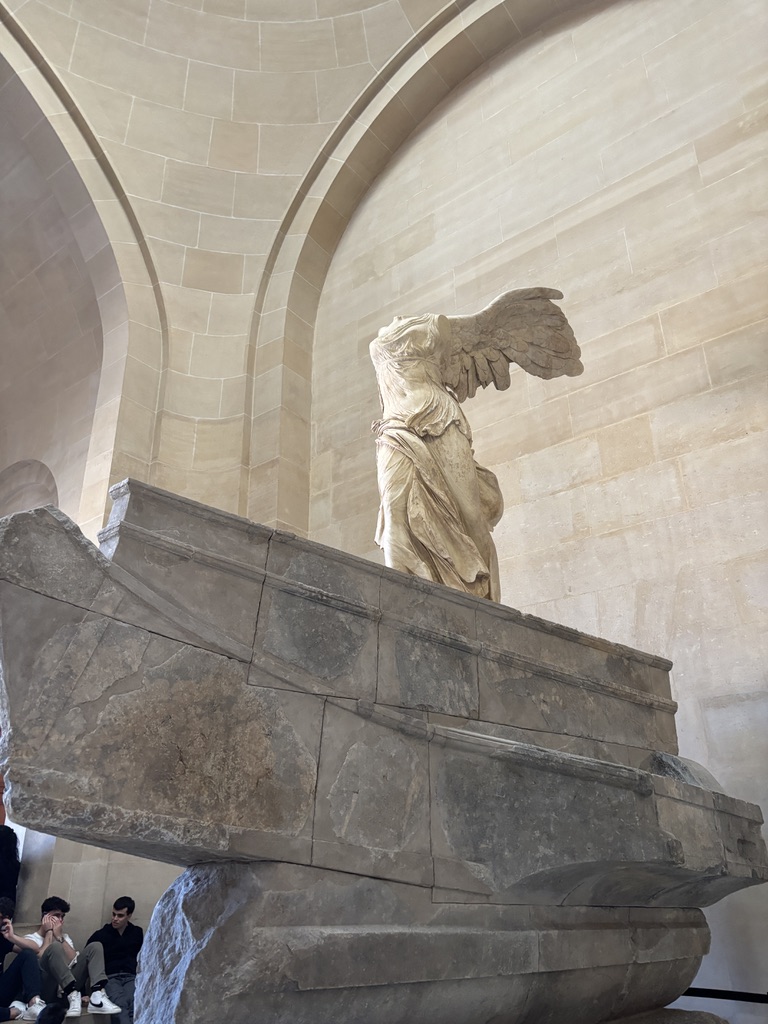
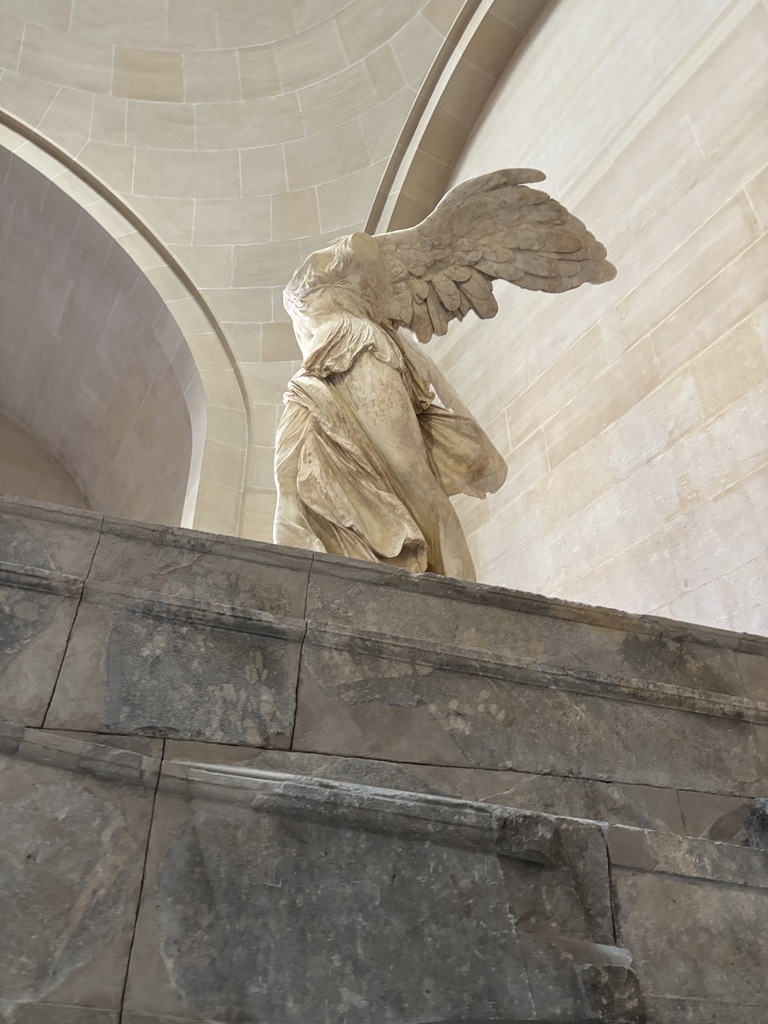
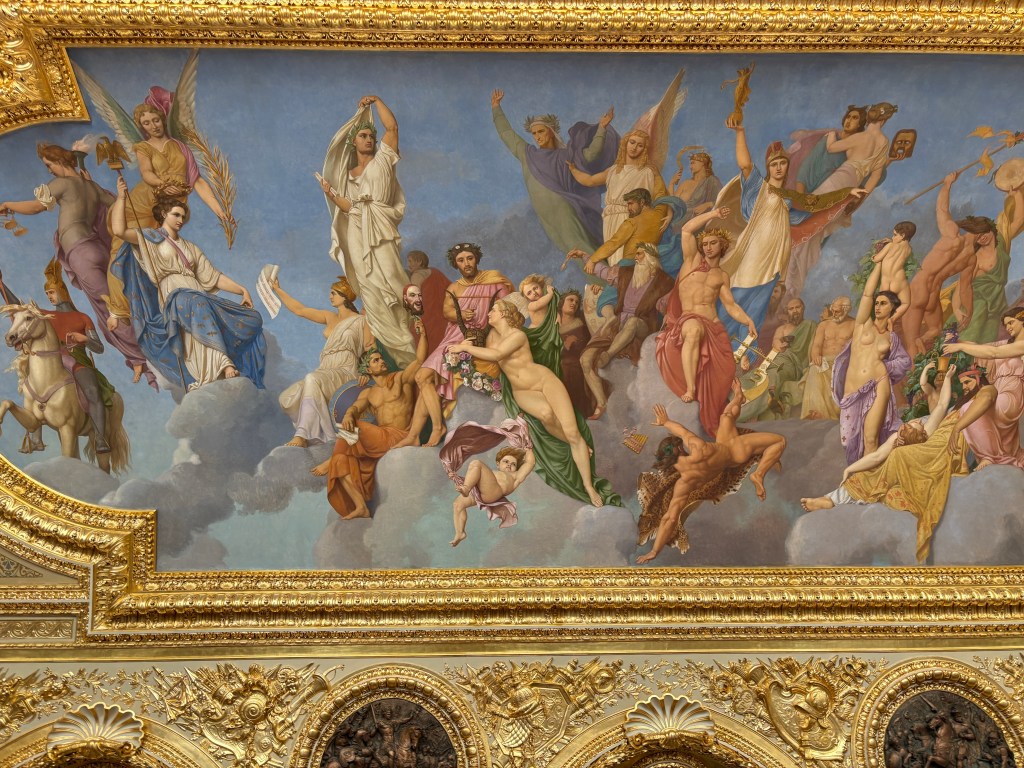
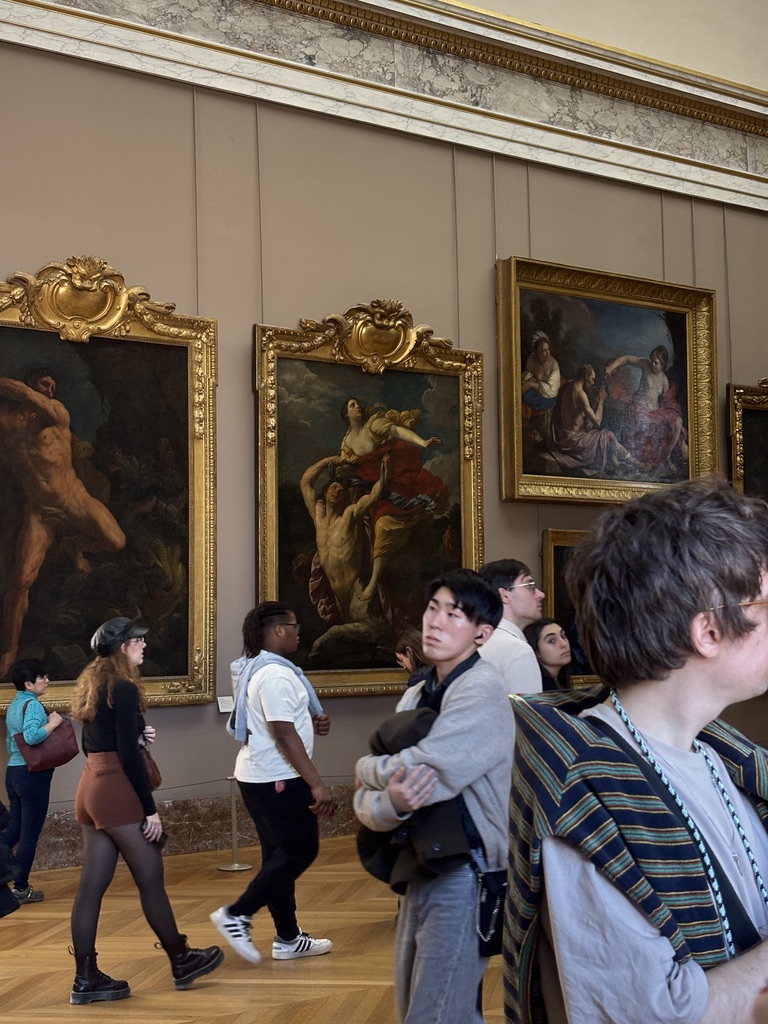
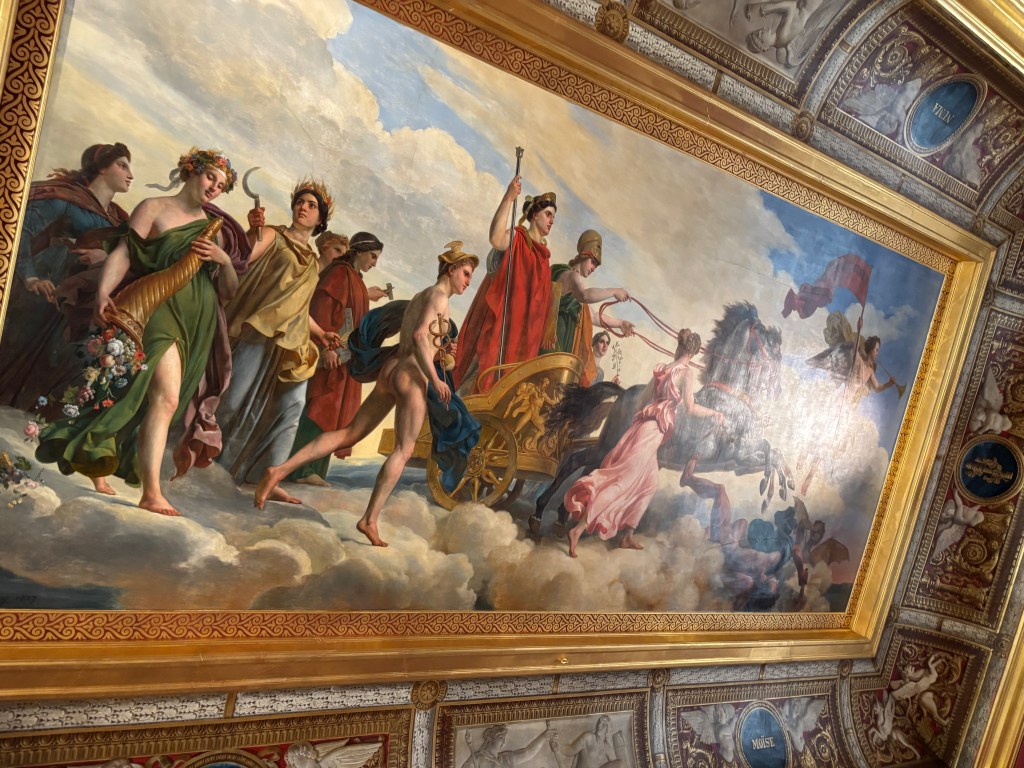
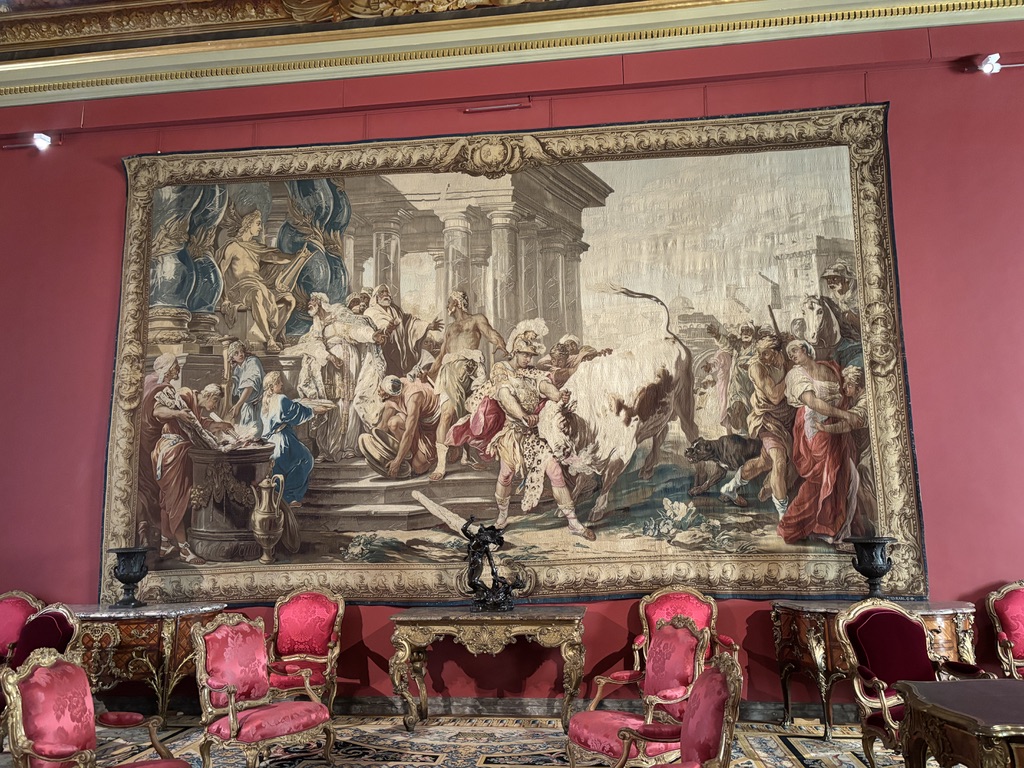
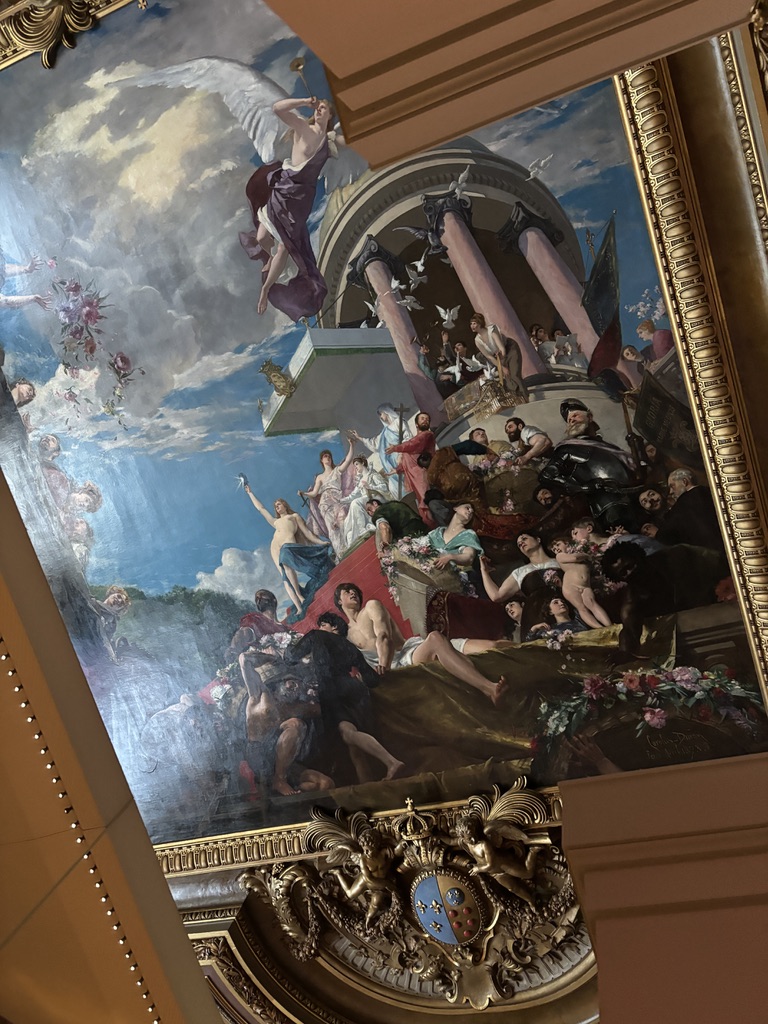
I woke up the next day and went straight to the Louvre in order to see, at long last, the greatest art museum in the world. I had been dreaming about going there since childhood, ready to see some of the world’s best artwork all in one place.
Even the name of the museum seemed to roll off my tongue when I was a kid.
For breakfast that morning, I went to Cafe Marly, the cafe at the Louvre, having champagne and tea for breakfast, because I’m the pinnacle of good health. Sitting there, I had a perfect view of the museum.
For those who have never been, the Louvre is probably bigger than any of you are imagining. In order to do it properly, a person should probably spend at least two days walking through it.
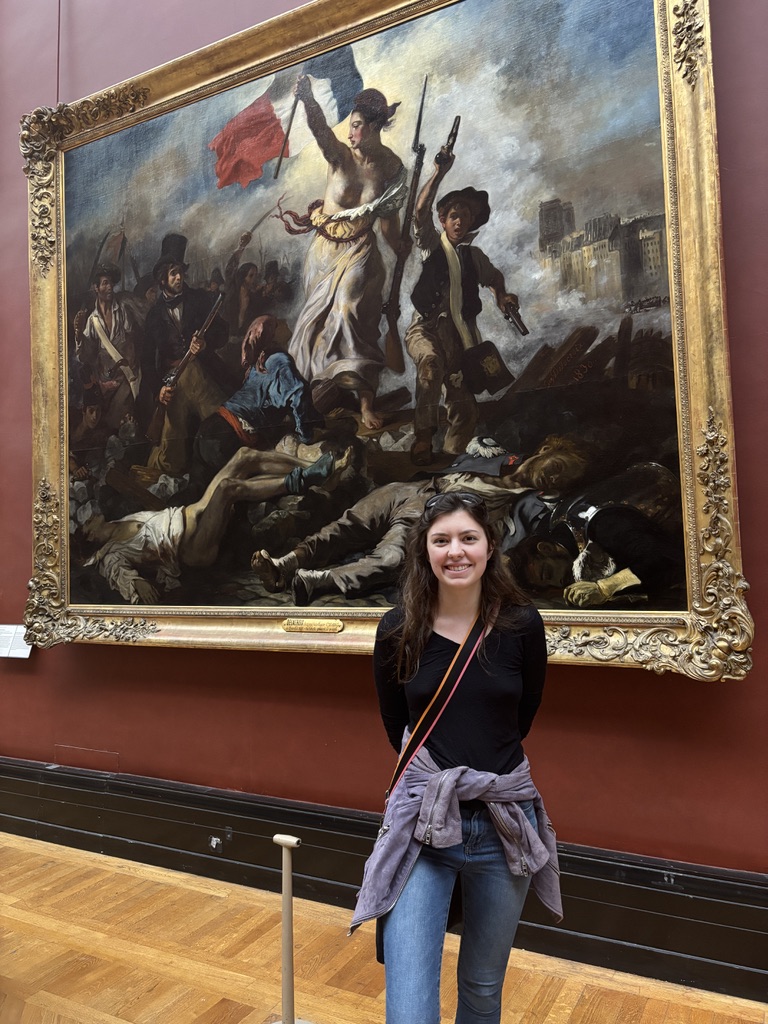
I saw countless beautiful paintings, many of which I’d seen before as refrigerator magnets and postcards, but could now stand in front of, as a real painting with brushstrokes and texture.
After looking at hundreds of paintings, I saw the main attraction.
A massive crowd surrounds the Mona Lisa at all times, with tourists body-checking each other in order to get a photo. People rushed up to take their selfies with the Mona Lisa, not even looking at it. When it was my turn to get up there, I tried to stare and study the painting, before taking a photo of the most photographed painting in the world.
People were churned in and out, standing behind a velvet rope. Everyone crowds around the painting, while quietly ignoring the Wedding of Cana painting taking up the entire wall across from it.
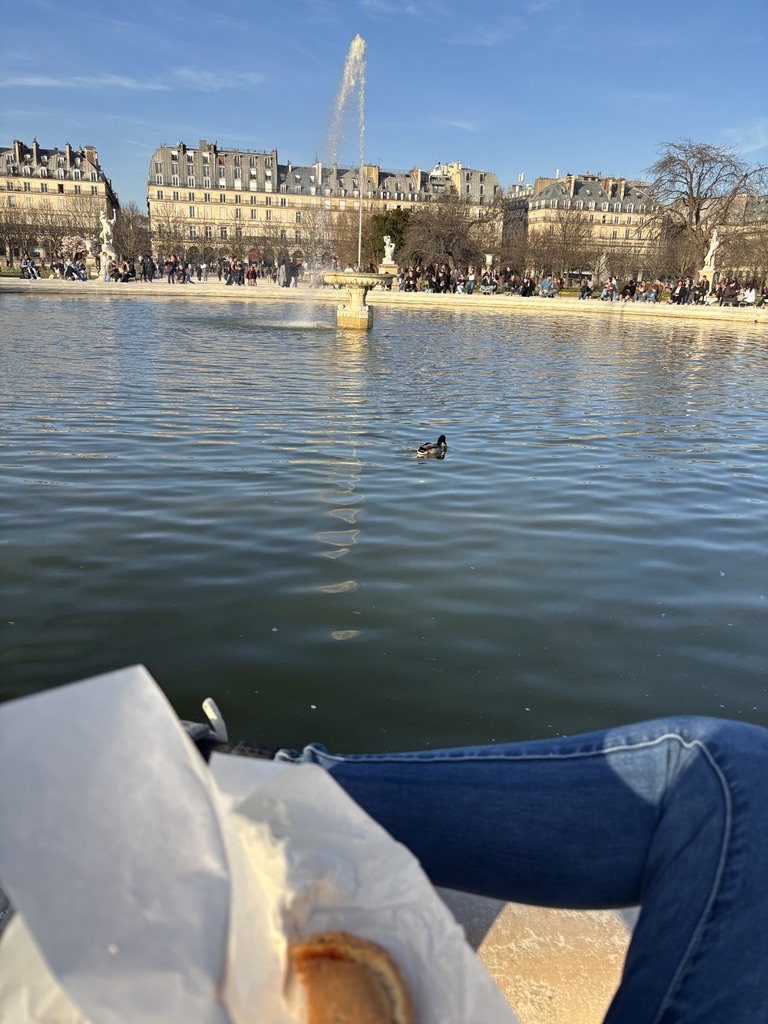
After I was done in the Louvre, I walked through the tuileries, getting a sandwich from a food truck and then tossing pieces of bread at the ducks in the pond, which I was almost certainly not allowed to do.
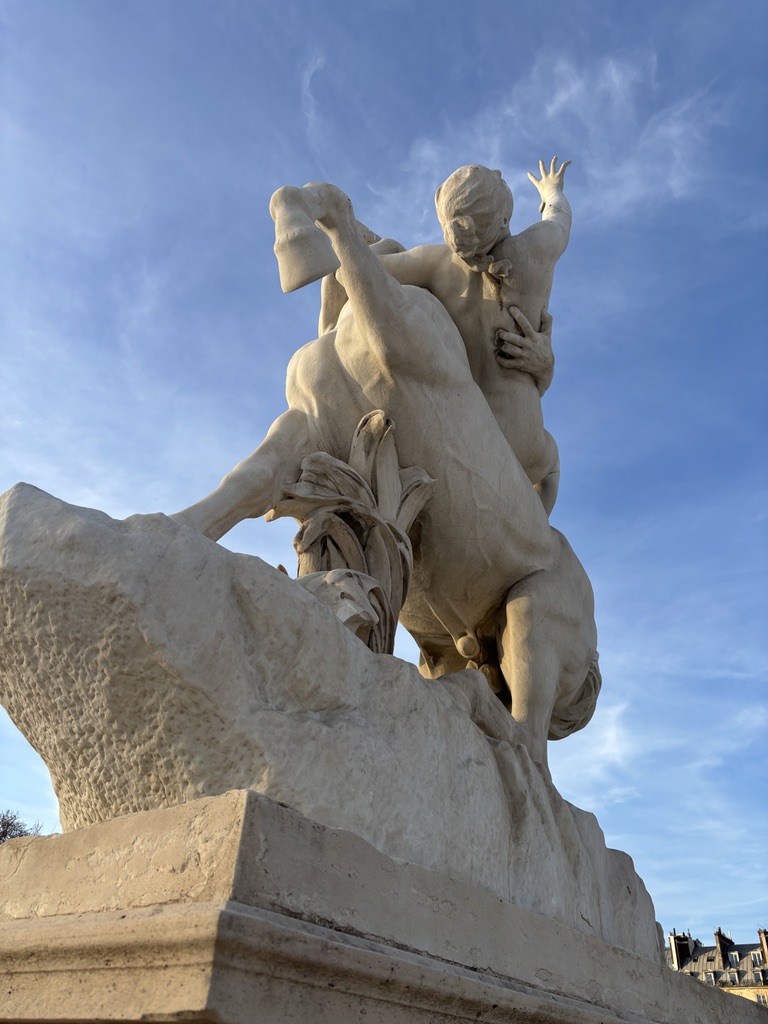
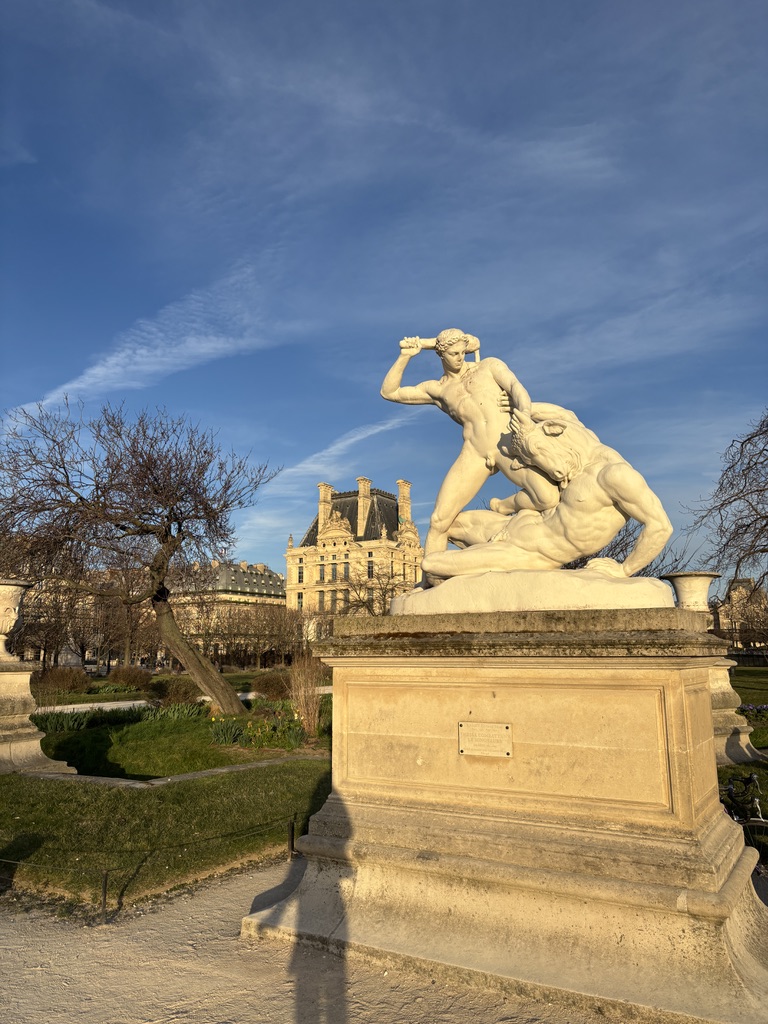
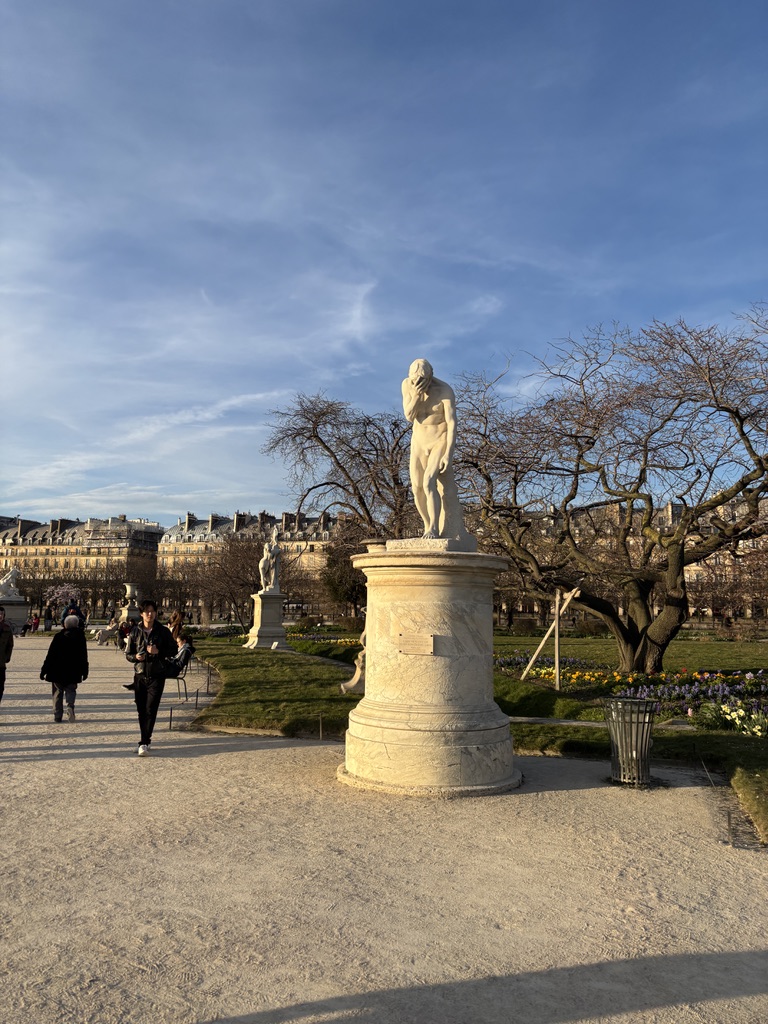
I admired the sculptures in the garden and the violin playing of a guy who was chased off by a security guard shortly thereafter.
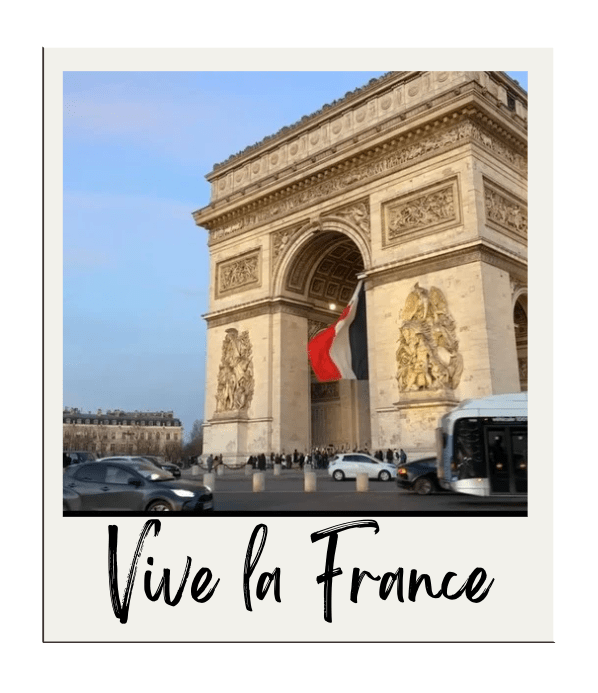
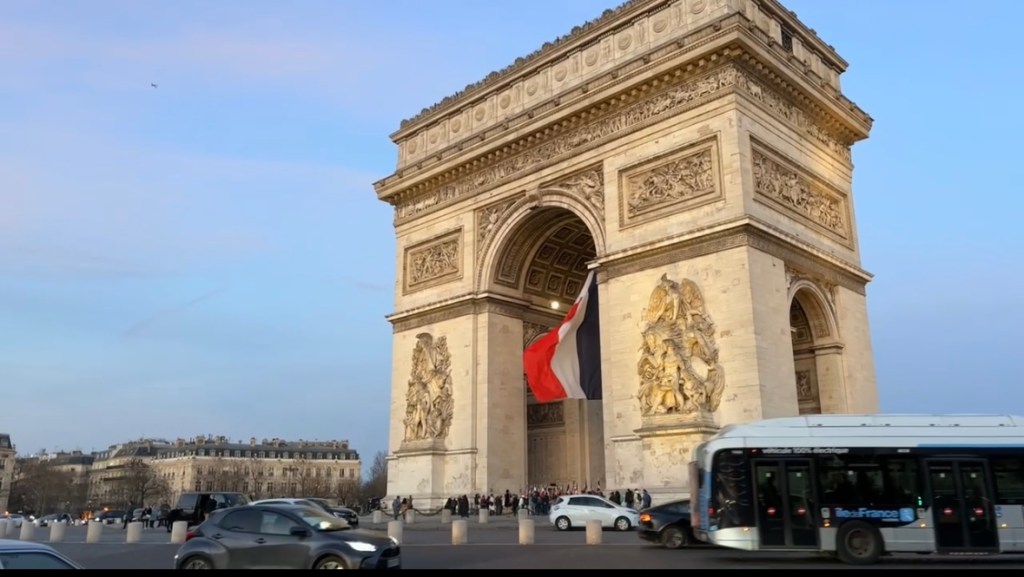
From there, I walked down the Champs-Élysées to the Arc de Triomphe, the monument to Napoleon’s military victories many moons ago and the French Revolution. The Arc de Triomphe is accessed through an underground tunnel, not by running across several lanes of traffic like in a game of frogger.
While walking underground, I passed several people in marching band uniforms who were carrying musical instruments. Then I passed several people in military uniforms who were carrying assault rifles. A military display had just wrapped up, ending with the French flag waving over my head as I stood underneath the Arc de Triomphe.
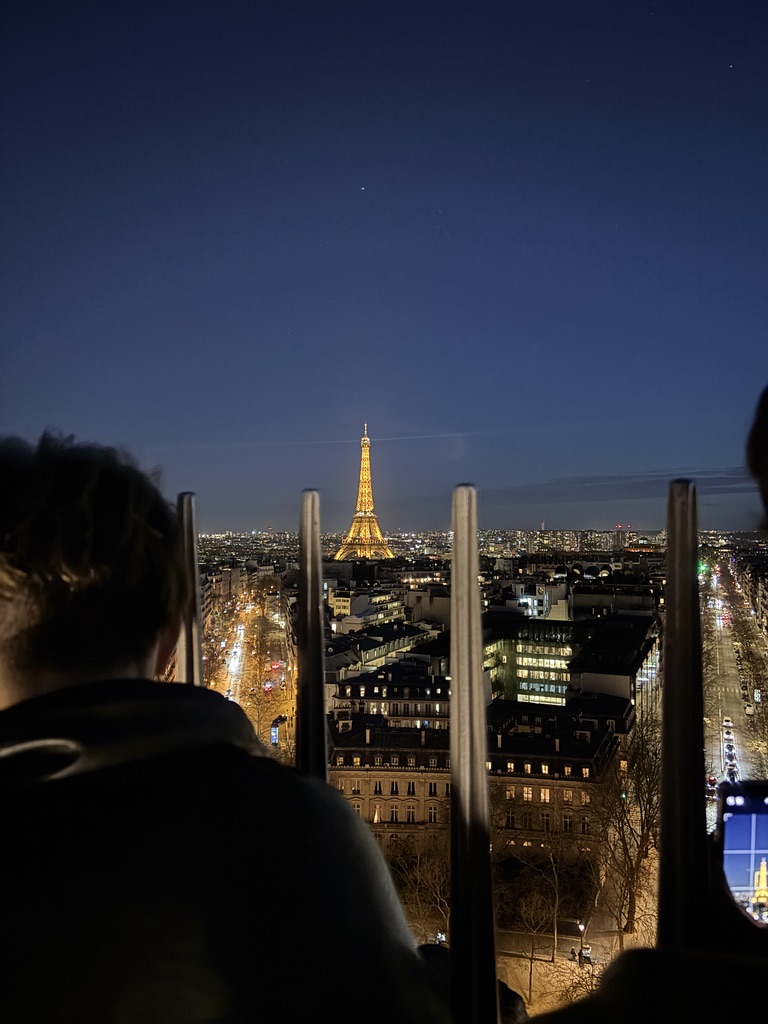
Standing at the top of the arc, I got an incredible view of the city. By now, it was night time and after glimpsing the Tuileries Garden as the sun was setting, I was able to see the City of Lights while it was all lit up. From the top of the Arc de Triomphe, I could see the Eiffel Tower and its beam cutting across the sky.
Between the cafe at the Louvre, the Mona Lisa, my stroll through the Tuileries, and standing at the top of the Arc de Triomphe, it was a day of sweet views. I saw the sights from all angles, enjoying beautiful art, sculpture gardens, and the city at night from one of its most famous landmarks.
The Tragic Queen,
Raquel
P.S.: Check out how I spent the previous day in France
“When spring came, even the false spring, there were no problems except where to be happiest.”
–Hemingway, “A Moveable Feast”
After my couple of days of art museums, opera, and a cemetery, I decided to focus on purchasing two of the main things that I love: books and paintings.
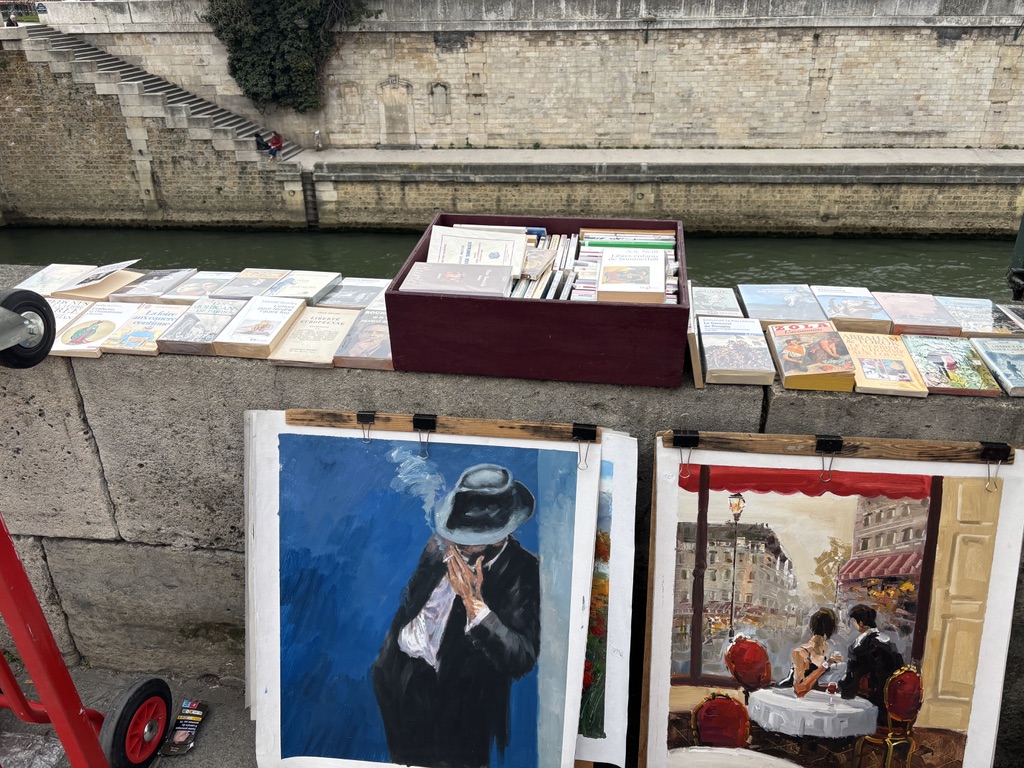
Together, my aunt and I went in search of art. I’d seen enough movies and tv shows that romanticized the Parisian art scene to make me believe that there would be a starving artist on every street corner, hawking their wares to only the truest of art lovers (I’ve seen Titanic). That is a pretty old brochure for the city of love, as I learned when I walked the streets not seeing any intrepid young painters with easels sketching in the streets.
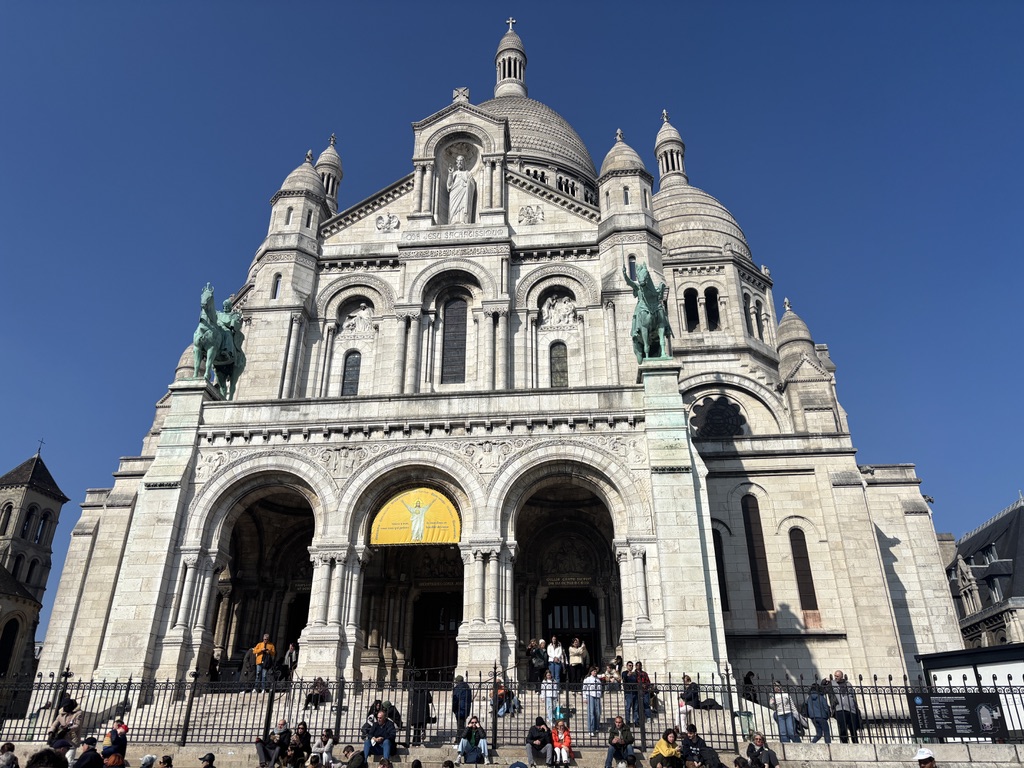
Undeterred, we ventured up Montmartre, one of the most picturesque parts of Paris, in order to get a view of the city from the basilica on top of the hill. We didn’t find any art there, but continued on throughout the city.
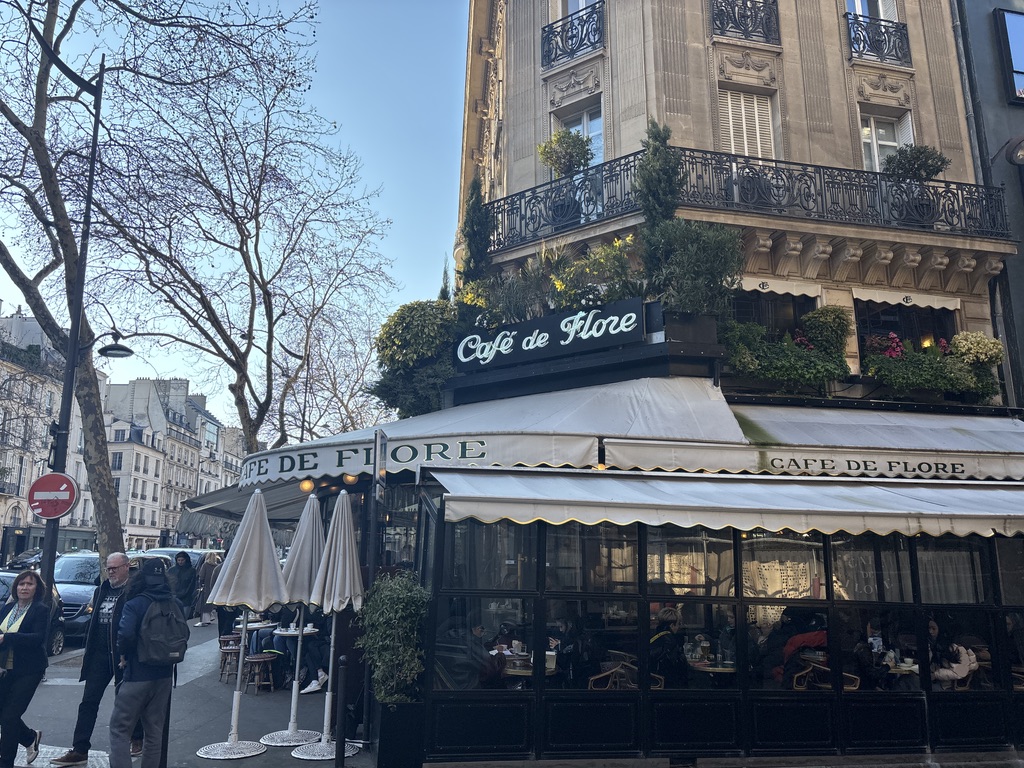
No trip to Paris would be complete for an aspiring writer without making a pit stop at Cafe De Flore, an old stomping ground of Hemingway, Simone De Beauvoir, and Sartre, among others.
Despite what other people will tell you about how the cafe is stodgy, overrun with tourists, and Instagram-famous (the biggest cardinal sin) I am willing to defend it.
It is still a cute, charming French cafe with a lot of history. And, most importantly, it remains a good place to get a glass of wine.
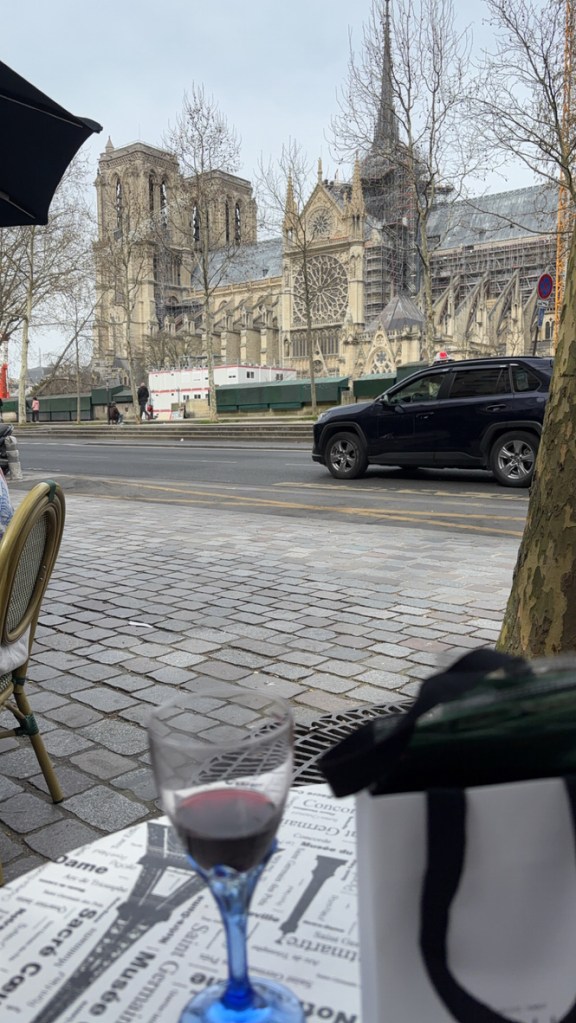
After lunch, we walked down the street to Shakespeare & Co., an English-language bookstore that supported the likes of Hemingway, Fitzgerald, and Joyce back in the day. It sold Hemingway’s first novel and still maintains a line out the door most days. It sits across the street from Notre Dame Cathedral right along the Seine.
Walking down the street in the late afternoon, my aunt and I found an art gallery, which is how I wound up buying a nude painting of a woman. It is an incredibly beautiful piece of art that I want to hold onto forever and pass on to my family members once I die.
It was a good day of shopping, drinking, and art purchasing. My new books are on my shelf. My painting will soon be on display in my apartment. The day left its mark.
The Tragic Queen,
Raquel
P.S.: For more ideas about what you can do in Paris, check out my previous blog post about my trip to the Musée d’Orsay and Opéra Bastille.
When I booked my ticket for Paris, there was one thing I knew that I wanted to do for sure: spend a day in the Musée d’Orsay and have lunch at the cafe inside. The Musée d’Orsay is one of the greatest art museums in the world, carved out of a hollowed-out train station that now houses some of the most famous art in the world. I have wanted to visit it since I knew it existed. Walking through it takes an entire day, so I planned on doing just about nothing else, wanting to feel like I had all of the time in the world.
My aunt and I met up and we walked the entirety of the museum. My father is the type of person who walks up to a painting, stares at it for twenty minutes, then backs away from it, and stares at it for another twenty minutes, studying every brushstroke and paint fleck. My aunt is not such a person. She could walk into a gallery, do a 360 turn, and then walk off, satisfied that she had gotten everything she needed from the paintings.
Like most people, I’m somewhere in the middle.
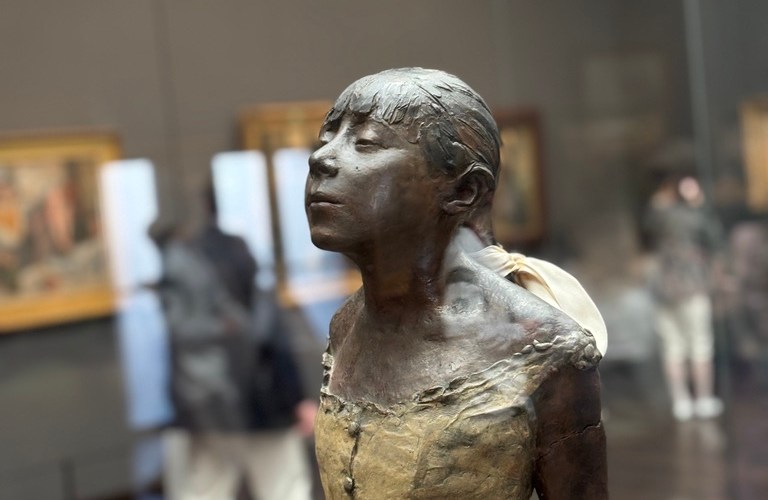
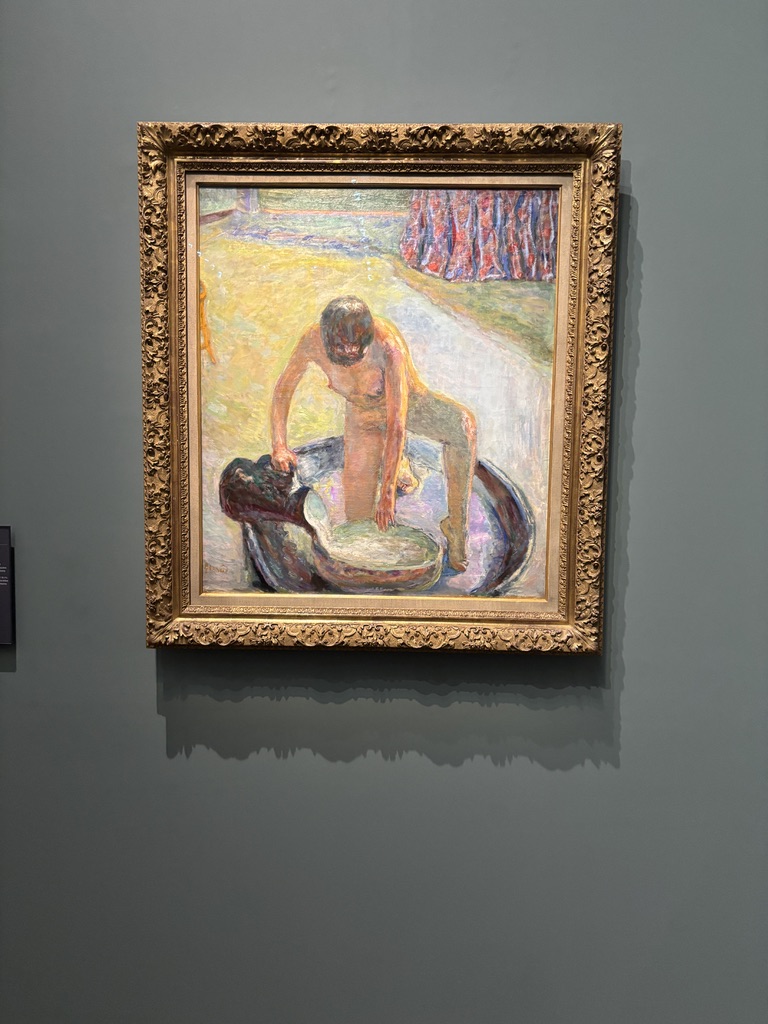
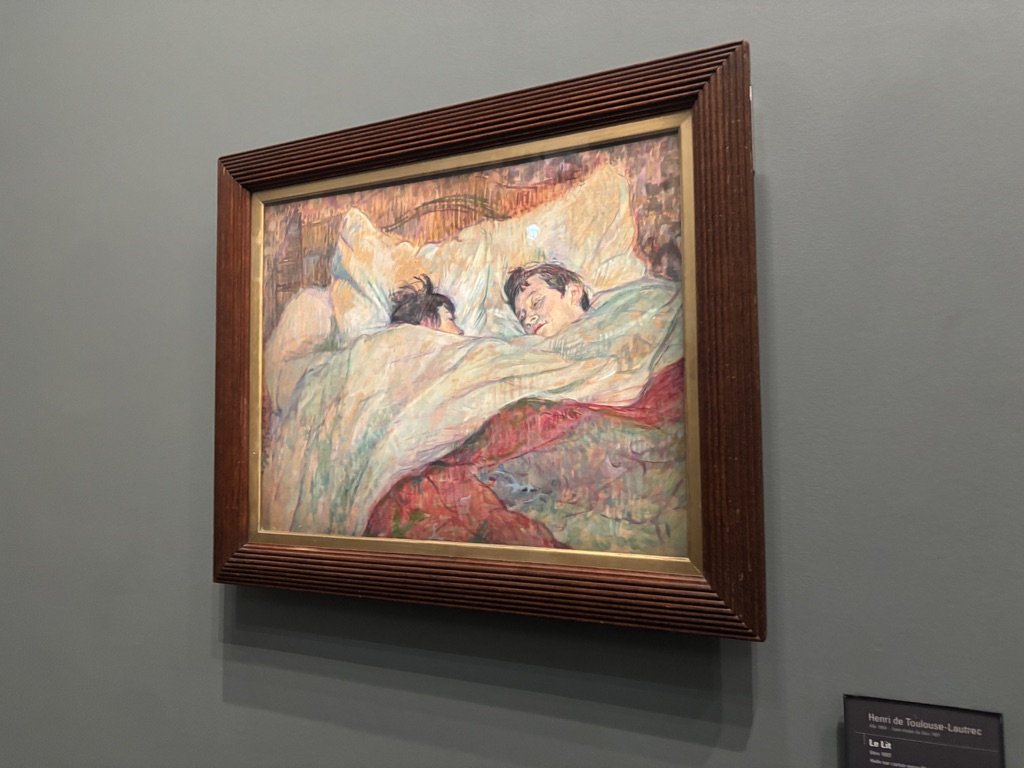
We made it through the museum in record time in comparison to how my father would have done it, but I still felt like I savored all of the artwork. I saw all of the paintings that I wanted to see, starting with the “Birth of Venus” by Cabanel, which my parents have a print of hanging in their house. Seeing it in person is an entirely different experience, one that also makes you want to lay naked in the middle of the ocean with knee length hair while a bunch of cherubs careen over you.
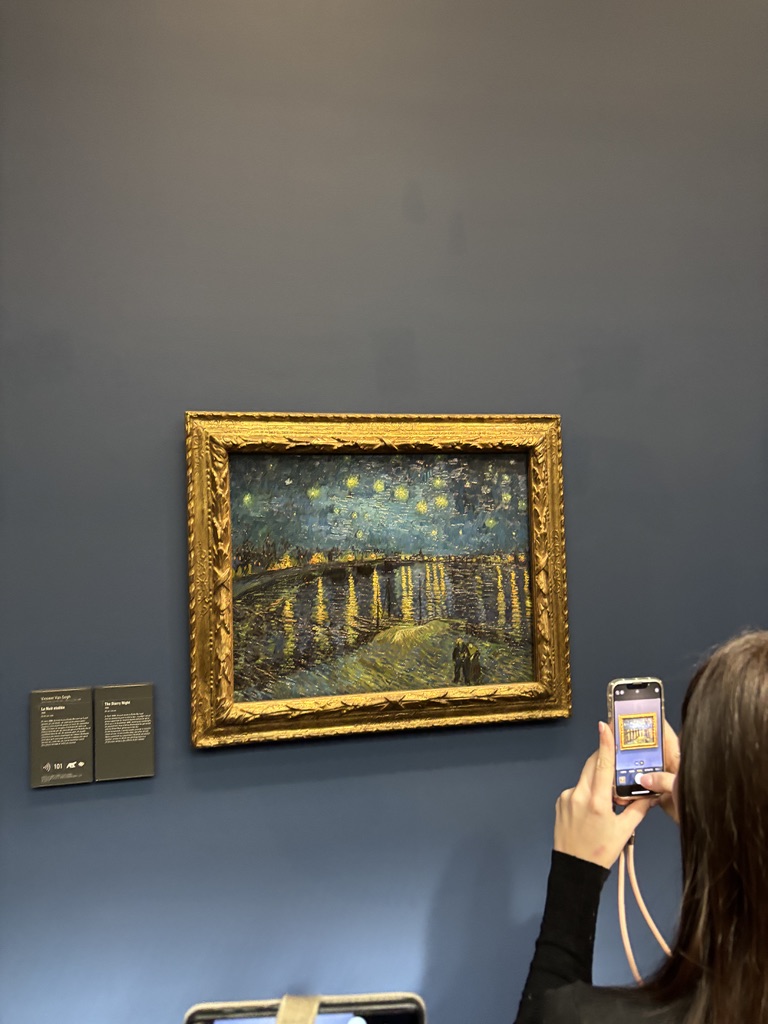
We checked out the Van Goghs, the Picassos, crossing off everything on my list except for Monet’s waterlilies (which weren’t on display and which I’d already seen). It was nothing but stunning paintings as far as the eye could see.
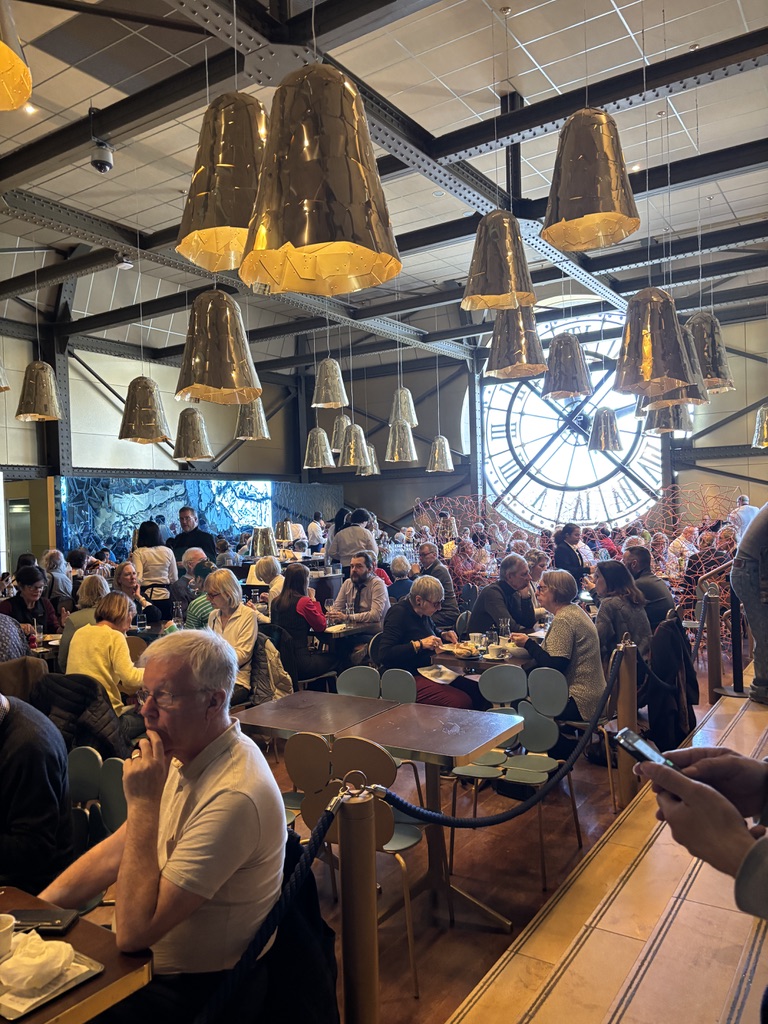
We stopped to have lunch in a cafe that was behind a clock face that overlooked the Seine, sipping wine and chatting about the art that we had seen so far.
After the Musée d’Orsay, I got ready to see the opera with Claire, one of my favorite people to go to the opera with. We saw Pelléas et Mélisande by Debussy, a French opera about…well, we weren’t quite sure what it was about. The show started and Claire and I promptly dozed off, taking high-priced naps at the Opéra Bastille. For me, it was jet-lag. For her, it was the rigors of being a full time law student. Either way, we were tired.
From what we did see of the performance, it was beautiful. There were loud, perfect voices ringing out towards the ceiling and actual children who could sing better than me. Nothing humbles me quite like going to the opera or ballet and seeing the talent of the stars on display, being made to look effortless.
After that, we called it a night.
Between the art museum and the opera I had the kind of day that most people expect to have when visiting Paris, one in which there is no shortage of art and culture. It was a blissful day of admiring some of the greatest artwork in the world, followed by the soothing tones of opera music.
Who can ask for a better day in Paris?
The Tragic Queen,
Raquel
P.S.: Check out how I spent my previous day in Paris

































































































 The Tragic Queen